
Everything Nepal nationals need to know about work visa in Bahrain. Steps, costs, documents, timeline — complete 2025 guide.
View details
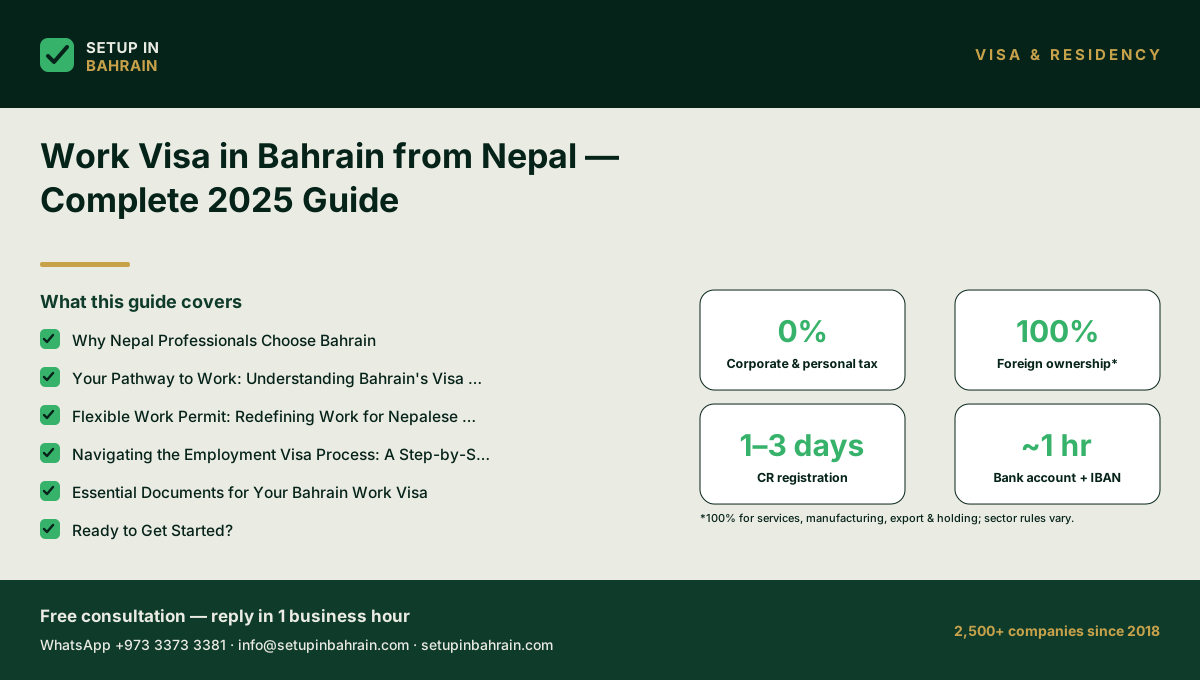
Everything Nepal nationals need to know about work visa in Bahrain. Steps, costs, documents, timeline — complete 2025 guide.
Bahrain Business Guides for Nepal Citizens
Bahrain stands as a beacon of opportunity in the Middle East, particularly for professionals and skilled workers from Nepal. Over recent decades, the Kingdom has solidified its reputation as a business-friendly, progressive nation with a high quality of life and a robust labour market. For Nepalese individuals seeking international career prospects, Bahrain offers direct pathways, a supportive environment, and financial advantages that set it apart from its regional neighbours.
This comprehensive guide is designed to provide clear, actionable insights into securing a work visa in Bahrain from Nepal in 2025. It synthesises the latest regulations, processes, and practical advice, ensuring you have all the necessary information for a successful transition.
Why Nepal Professionals Choose Bahrain
Bahrain has become an increasingly popular and strategic destination for Nepalese professionals and workers, and for compelling reasons. Its appeal lies in a unique blend of economic opportunity, progressive policies, and a welcoming society, further strengthened by long-standing ties between the two nations. As of 2025, an estimated 35,000 to 40,000 Nepali nationals reside in Bahrain, forming a strong, established community.
* Economic Stability and Growth: Bahrain boasts a diversified economy with strong growth in sectors like financial services, FinTech, oil & gas, construction, hospitality, and IT. These industries actively recruit international talent, offering robust career prospects and stable employment. * Strategic Location: Positioned as a gateway to the Gulf Cooperation Council (GCC) market, Bahrain offers excellent connectivity and strategic advantages for businesses and professionals looking to expand their reach. Direct flights from Kathmandu make travel convenient.
* Tax-Friendly Environment: One of Bahrain's most attractive features is the absence of personal income tax. This means 100% of your hard-earned salary stays in your pocket, making it a highly rewarding financial destination. * High Quality of Life: Bahrain offers a modern, multicultural lifestyle with excellent infrastructure, world-class healthcare, education, and entertainment options.
It is a family-friendly country with a strong expatriate community, and the cost of living remains manageable compared to other major Gulf states like Dubai or Abu Dhabi. * Progressive Regulatory Environment: The Kingdom is renowned for its forward-thinking regulatory framework, particularly in its labour laws. The Labour Market Regulatory Authority (LMRA) has spearheaded reforms that protect workers' rights and streamline processes.
Notably, Bahrain pioneered reforms to the traditional "kafala" (sponsorship) system in 2009, years ahead of many regional counterparts, allowing workers greater freedom and mobility. * Ease of Doing Business: For entrepreneurs and investors, Bahrain consistently ranks high for its ease of doing business, supported by transparent regulations and supportive government initiatives. * Strong Nepalese Community: There is a large and well-established Nepalese community in Bahrain, providing a familiar cultural environment and a strong support network for newcomers.
Employers in Bahrain are also very familiar with the excellent work ethic and skills of the Nepalese workforce, often recruiting through established agencies and direct channels. English is the business language for most positions, eliminating the need for an Arabic language test. * Freedom of Salary Repatriation: Crucially for Nepalese professionals, there are absolutely no restrictions on repatriating your salary back to Nepal.
This is a significant advantage, especially when considering Nepal Rastra Bank's strict foreign investment approval requirements and the 25% corporate tax for businesses trying to operate from Nepal with foreign ownership. Bahrain’s sophisticated and reliable banking sector makes international transfers quick and efficient.
Your Pathway to Work: Understanding Bahrain's Visa Options
All work visas in Bahrain are expertly managed by the Labour Market Regulatory Authority (LMRA). The LMRA is dedicated to creating a fair and efficient labour market, ensuring the rights of both employers and employees. Bahrain's labour reforms, particularly the ability for expatriate workers to change jobs without their current employer's permission, are a testament to its progressive stance.
There are four main types of work visas relevant to individuals seeking to work in Bahrain from Nepal:
1. Employment Visa (Employer-Sponsored)
This is the most common and traditional type of work visa, where a registered Bahraini employer sponsors your permit to work.
* Who it's for: Individuals who have secured a job offer from a Bahraini company. Best for salaried professionals and skilled workers. * Key Features: * Your prospective employer initiates and manages the application process on your behalf through the LMRA Expatriates Portal. * Upon initial approval, you will first receive an entry visa to travel to Bahrain.
* Once you arrive in Bahrain, you complete further formalities (medical exam, biometrics) to obtain your official "work permit card" and residency permit. * Cost: The employer pays a fee of BD 96 per year (BD 192 for the standard two-year permit). This fee is legally borne by the employer, not the employee. * Validity: Typically issued for two years and is renewable. * Work Restriction: Generally tied to a single employer.
However, workers can change jobs freely as per LMRA regulations.
2. Flexible Work Permit (FWP) – The Game Changer
Launched in 2021, the Flexible Work Permit (FWP) is a revolutionary permit that offers unprecedented freedom for expatriates by completely eliminating the need for an employer sponsor.
* Who it's for: Freelancers, digital nomads, consultants, independent contractors, or anyone who wishes to work without being tied to a single employer. It is an ideal option for skilled professionals from Nepal looking for independent work and autonomy. * Key Features: * Self-sponsored: You apply for this permit yourself; no employer sponsorship is required. * Work for multiple clients/employers: The FWP allows you to work for any number of clients or employers in Bahrain, providing incredible flexibility.
* Cost: BD 450 for the two-year permit. This fee is paid by the applicant. * Validity: Issued for two years and is renewable. * Work Restriction: You are your own sponsor and can work for multiple clients/employers simultaneously.
3. Training Visa
This visa is designed for individuals coming to Bahrain for professional training, internships, or skill development programs.
* Who it's for: Students or professionals undergoing structured training programs or internships with a registered Bahraini company. * Key Features: Requires sponsorship from a training institution or company. * Cost: BD 48 (paid by the company providing training). * Validity: Up to 6 months, depending on the length of the training program. * Work Restriction: Restricted to training only; not for full-time employment.
4. Investor-as-Employee Visa
If you plan to establish your own company in Bahrain and also draw a salary from it, this category is relevant.
* Who it's for: Entrepreneurs from Nepal who own a company (e.g., a Bahraini With Limited Liability or WLL) and wish to work as an employee within their own entity. * Key Features: Requires setting up a registered business in Bahrain. A Bahrain WLL can be 100% owned by one person and has a minimum capital requirement of BD 1. However, a minimum capital of BD 1,000 is strongly recommended for smoother bank account opening and investor visa approval processes.
Your company acts as your sponsor. * Cost: BD 96 per year (paid by your company). * Validity: Typically tied to the company's registration and is renewable, usually for two years.
Flexible Work Permit: Redefining Work for Nepalese Professionals
The Flexible Work Permit (FWP) is undoubtedly a game-changer for many Nepalese professionals, offering independence that traditional visas cannot match. It fundamentally shifts the power dynamic, moving away from traditional employer-employee dependency towards individual empowerment.
Imagine being an IT consultant, a digital marketer, a graphic designer, or a business development expert from Nepal. With the FWP, you are no longer constrained by a single employment contract. You can:
* Offer your services to multiple companies: This diversifies your income streams and expands your professional network rapidly. * Work on a project basis: Ideal for specialists who prefer short-term engagements. * Embrace the digital nomad lifestyle: If your work is location-independent, the FWP allows you to base yourself in Bahrain and serve clients locally and internationally. * Control your working hours and terms: You dictate your engagements, fostering greater work-life balance.
This permit is perfect for skilled Nepalese individuals who have proven expertise and are looking for autonomy and flexibility. It aligns perfectly with the global trend towards remote work and the gig economy, offering Bahrain as a stable, attractive hub for this new way of working.
Who Qualifies for FWP from Nepal?
This permit is designed for a wide range of skilled professionals, including:
* Freelance web developers, graphic designers, content writers, and digital marketers. * IT professionals working for multiple clients. * Consultants in finance, education, or business. * Remote workers employed by overseas companies who wish to reside in Bahrain.
FWP Requirements: No Detours
To successfully apply for the Flexible Work Permit, ensure you gather the following:
Valid Passport: Minimum 6 months validity from your intended date of entry into Bahrain. Proof of Income/Clients: Evidence of your freelance work, contracts with clients, invoices, or letters of intent from potential clients in Bahrain or elsewhere. A monthly revenue of at least BD 1,000 is preferred. Proof of Skills/Qualifications: A portfolio of your work, professional certifications, or relevant academic degrees that demonstrate your expertise.
Health Insurance: Proof of comprehensive health insurance coverage in Bahrain is mandatory for the entire duration of your permit. Budget approximately BD 150-200 per year for basic coverage. Bank Statements: Recent bank statements (e.g., last 6 months) demonstrating sufficient financial stability to support yourself in Bahrain, with a minimum balance of BD 500. Police Clearance Certificate (PCC): An official certificate from Nepal stating you have no criminal record. This must be less than 6 months old.
Passport-sized Photographs: Recent, high-quality, white background photographs. Medical Fitness Certificate: Issued by an LMRA-approved clinic in Bahrain after your arrival (cost BD 40-60).
FWP Step-by-Step
Online Application and Pre-approval: Submit your online application via the LMRA portal (www.lmra.gov.bh) with all supporting documents. Estimated processing time for pre-approval is 10-15 working days. Entry Visa: Once pre-approved, LMRA issues a 2-week entry visa. You use this visa to travel to Bahrain. Medical Examination & Biometrics: Within 5 days of arrival, you must complete a mandatory medical check and biometric registration at an LMRA-approved centre. This ensures public health safety and verifies your identity.
FWP Card Issuance: After medical and biometric clearance, your FWP card will be issued within 10 working days. You can then legally commence work for multiple clients immediately.
Navigating the Employment Visa Process: A Step-by-Step Guide
If you've secured a job offer with a Bahraini employer, here's a realistic step-by-step breakdown of how the Employment Visa process unfolds:
Step 1: Job Search and Offer Letter * Actively search for jobs in Bahrain in demand sectors. * Once successful, you will receive a formal offer letter or employment contract from your Bahraini employer. This is the crucial first document, outlining your position, salary, and terms of employment.
Step 2: Employer Applies for Expatriate Employee Quota * Your employer takes the lead. They will first apply to the LMRA through their online Expatriates Portal to ensure they have an available "quota" or unused work permit slot for an expatriate employee. This typically takes 5-7 working days.
Step 3: Employer Applies for Your Entry Visa * Once the quota is approved, your employer submits an application for your temporary entry visa (valid for 2 weeks) to the LMRA. * The LMRA reviews the application for compliance with Bahraini labour laws and ensures there are no suitable Bahraini candidates for the role. * Upon approval, an entry visa will be issued in your name (electronically).
Your employer will send you a copy, which you'll need to present at immigration upon arrival. The cost of this entry visa (BD 5-10) is paid by the employer.
Step 4: Travel to Bahrain * Fly to Bahrain. At the airport, present your passport and the entry visa. You will typically receive a 2-week temporary stamp. It is advisable not to leave Bahrain during this period unless you have received your official work permit card.
Step 5: Medical Examination * Within 5 working days of your arrival, you must undergo a mandatory medical fitness examination. * This must be done at one of the LMRA-approved clinics in Bahrain (a list is available at LMRA.gov.bh). The cost typically ranges from BD 40 to BD 60. The exam checks for communicable diseases (e.g., HIV, Hepatitis B & C, TB) to ensure public health safety.
Step 6: Fingerprinting and Biometrics * After your medical clearance, you'll need to visit an LMRA service centre to provide your fingerprints and other biometric data. This is a standard security measure and aids in identity verification for your residency permit.
Step 7: Work Permit Card Issuance * Your employer submits your medical report, passport copy, and signed contract to LMRA. Once all medical and biometric formalities are completed and cleared, the LMRA will issue your official work permit card. This card (cost BD 10) is your legal authorization to work in Bahrain. Your employer will usually collect this card and provide it to you.
Step 8: Residency Permit Issuance (CPR Card) * Concurrently with or shortly after your work permit, your residency permit (also known as your CPR card or Bahrain ID) will be processed. This card serves as your official identification in Bahrain and allows you to live in the country.
Essential Documents for Your Bahrain Work Visa
Gathering the correct documents is paramount for a smooth visa application process. Ensure all documents are valid, clear, and where necessary, attested.
For Employment Visa (Employer-Sponsored):
Valid Passport: Minimum 6 months validity from your intended date of entry into Bahrain, with at least 2 blank pages. Job Offer Letter/Employment Contract: A formal, signed document from your Bahraini employer outlining your position, salary, and terms of employment. Educational Certificates: Copies of your degrees, diplomas, or professional qualifications relevant to your job. Professional Experience Certificates (if applicable): Letters or certificates from previous employers detailing your work history and roles.
Police Clearance Certificate (PCC): An official certificate from Nepal stating you have no criminal record, obtained from Nepal Police. This must be less than 6 months old when submitted. **Passport-sized Ready to Get Started? Our team specialises in helping Nepal entrepreneurs navigate Bahrain's process quickly and correctly. Get Free Consultation
More for Nepal founders
Ready to start from Nepal?
Tell us your goal — we map the right route, timeline and cost, then handle the filing.
Looking for a different nationality? See our master guide on the Bahrain Work Visa by Nationality.