
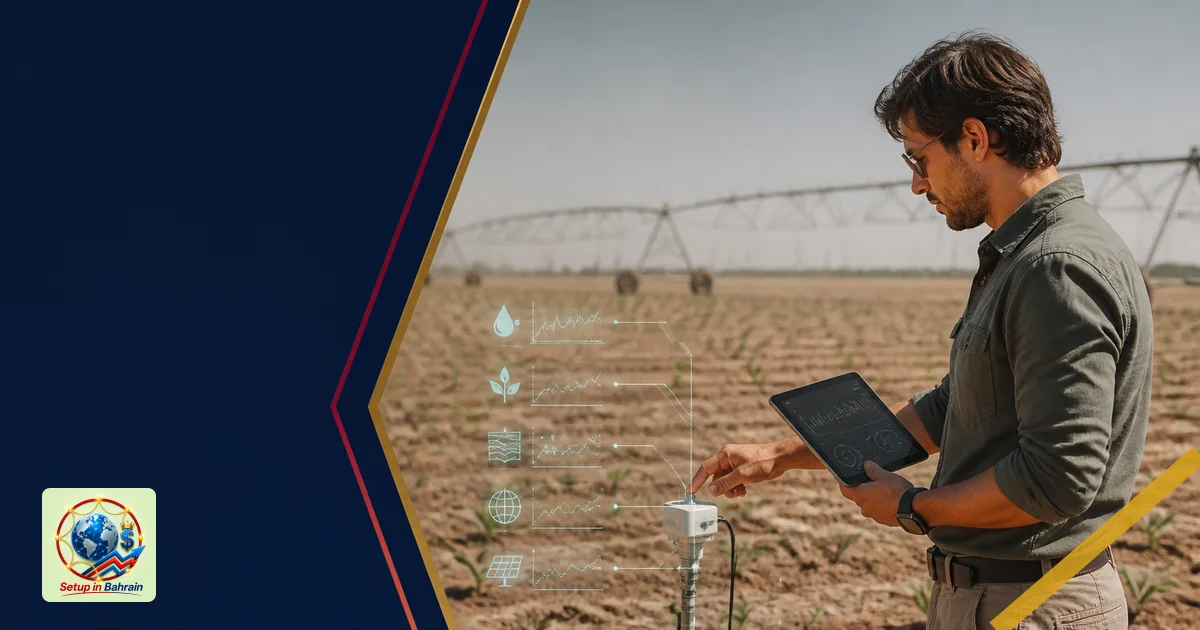
Israel Innovation Authority identifies five tech areas to fight desertification
The Israel Innovation Authority and C4IR Israel have highlighted five technology areas they believe can help countries address desertification. They urge moving from isolated pilots to integrated, real-world deployments. The report covers water systems, climate-resilient agriculture, soil restoration, environmental intelligence, and renewable energy as key levers, and notes that desertification threatens livelihoods for hundreds of millions of people across many countries.
What the report changes about approach to desertification
The report pushes for combining multiple technologies in real-world systems rather than running small, separate pilots. It suggests that desertification is not just about expanding deserts but also about land degradation in dry regions caused by practices like over-cultivation and overgrazing. While the Global scope is noted, the emphasis is on practical, tested deployment in diverse climates to build resilient food and water systems.
Key facts to know
- Five technology areas are named: water systems, climate-resilient agriculture, soil restoration, environmental intelligence, and renewable and distributed energy.
- Desertification affects more than 170 countries and directly impacts about 250 million people; the livelihoods of roughly 1 billion people are at risk according to the report.
- The message stresses moving beyond isolated pilots to integrated solutions that work in real-world conditions.
Who is affected
The report discusses broad impacts in arid and semi-arid regions where land degradation limits farming and water access. In general terms, communities that rely on land and water resources for farming, grazing. Livelihoods are the main groups noted as at risk due to desertification, with the potential for widespread economic and food-security consequences if degraded land is not restored.
Practical next steps
- Invest in integrated projects that address multiple facets of land health, rather than separate pilot programs.
- Adopt technologies that improve water efficiency, climate-resilient farming practices, and soil restoration methods where applicable.
- Incorporate environmental intelligence tools to monitor land health and guide decisions.
- Explore renewable and distributed energy options to support agricultural resilience in dry regions.
Limits and questions to consider
The report calls for broader deployment but does not specify country-by-country rollout plans or funding mechanisms. It also notes that outcomes depend on adapting technologies to local contexts, governance, and infrastructure, which means results may vary by region and require tailored strategies.
Which sources did Setup in Bahrain review?
Setup in Bahrain reviewed the following source material before preparing this explanatory article.
The links remain visible so readers can inspect the evidence, compare dates and context, and confirm current requirements with the relevant authority.
- fertilizerdaily.com — evidence source reviewed for this article.
Information and responsibility notice: This article is general information based on the cited material available when published. It is not legal, tax, immigration, medical, financial, banking, or investment advice; it does not create a professional-client relationship; and it is not a guarantee of outcome, availability, accuracy, or eligibility. Rules, schedules, prices, and third-party information can change. Confirm material decisions with the relevant authority and an appropriately qualified adviser before acting.