
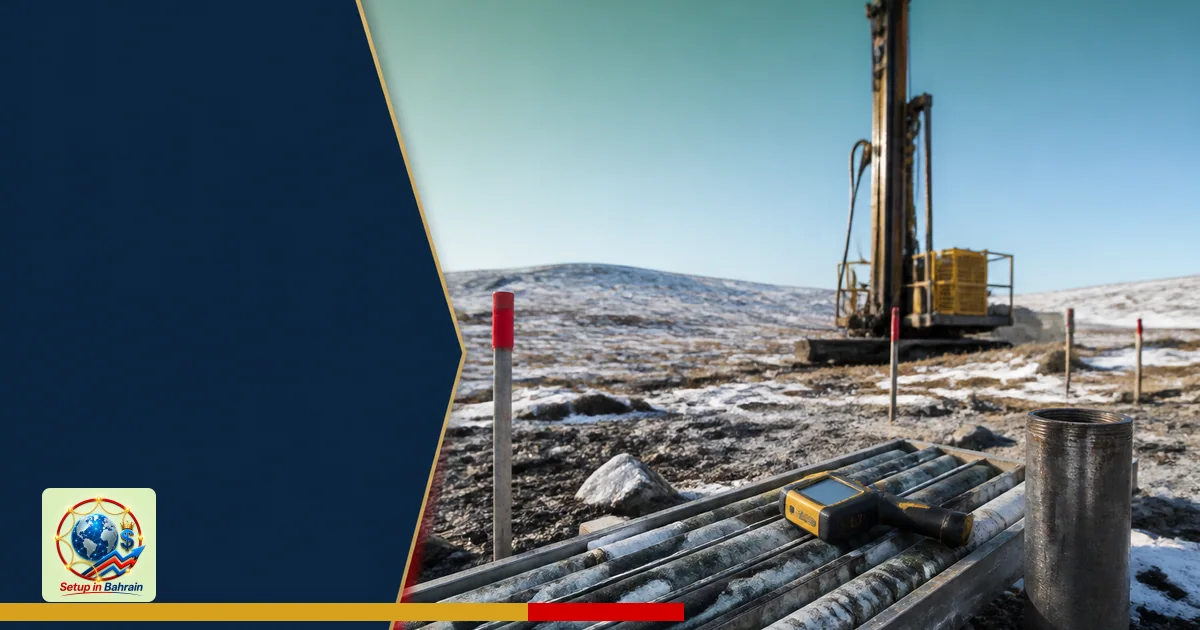
Azincourt Energy reports initial drilling results at Snegamook uranium deposit
Azincourt Energy says two drill holes at the Snegamook uranium deposit in Labrador, Canada, have produced initial results from its 2026 program. The company describes early measurements in radiometric equivalents and notes the holes followed up on a historical high-grade intersection. The news is technical and preliminary, with no current production; it reflects the early stage of exploration where results indicate potential but require more work to confirm significance.
What changed in the drilling program
Azincourt has completed 540 meters of drilling in the first two holes of its 2026 program at the Snegamook deposit, part of the Harrier Project in Labrador. The company reports the initial results using radiometric equivalent grades (eU3O8), a proxy for uranium content measured by radiation detectors, rather than final chemical assay numbers. The two holes targeted the south end of the deposit, aiming to confirm a historical high-grade intersection shown in a past sample (0.97% U3O8 over 0.5 meters; a 10 cm check sample of 2.71% U3O8 from 2025). The first drilled hole (SN0045) was located 1.5 meters from the historical intersection with a 45-degree inclination to twin the historic zone. The results are described as initial and require further drilling and independent lab assays to verify.
Key facts to understand
U3O8 is a standard shorthand for triuranium octoxide, a common form of uranium used in reporting ore grades. In exploration, companies often publish Radiometric Equivalent Grades (eU3O8) before full chemical assay results are available, as these provide a quick, non-destructive estimate of uranium mineralization. The Snegamook deposit is described as part of a larger Harrier Project located in Labrador, Canada. The news describes drilling progress and early data, not a resource update or production decision. No production has begun; results are an early step in assessing potential mineralization.
Who is affected or involved
The announcement involves Azincourt Energy Corp. and its investors, potential partners, and stakeholders in Canada’s mineral exploration sector. Local communities near Labrador and regulators may follow exploration outcomes, as progress can influence regional mining activity and environmental oversight. The article does not indicate any immediate impact on local residents or specific regulatory approvals beyond ongoing exploration activities.
Practical next steps for readers
1) Monitor for follow-up drill results and laboratory assay confirmations to validate the initial eU3O8 figures. 2) Look for additional drilling gaps and expansion holes to define the extent of mineralization. 3) Watch for any corporate updates on resource estimates, permitting progress, or partner interest. 4) If you are an investor, consider the early stage nature of results—radiometric grades can change with full assays. 5) For non-investors, note that exploration results are preliminary and do not indicate current mining or production plans.
Limits and questions to consider
Important limitations: the data released are preliminary radiometric estimates, not final assay results; they reflect two drill holes in a specific area and do not define a resource. Questions to watch for include how subsequent holes align with the historical high-grade result, whether eU3O8 correlates with chemical assays, and what timelines the company provides for additional drilling and potential project milestones.
Which sources did Setup in Bahrain review?
Setup in Bahrain reviewed the following source material before preparing this explanatory article.
The links remain visible so readers can inspect the evidence, compare dates and context, and confirm current requirements with the relevant authority.
- investingnews.com — evidence source reviewed for this article.
Information and responsibility notice: This article is general information based on the cited material available when published. It is not legal, tax, immigration, medical, financial, banking, or investment advice; it does not create a professional-client relationship; and it is not a guarantee of outcome, availability, accuracy, or eligibility. Rules, schedules, prices, and third-party information can change. Confirm material decisions with the relevant authority and an appropriately qualified adviser before acting.