
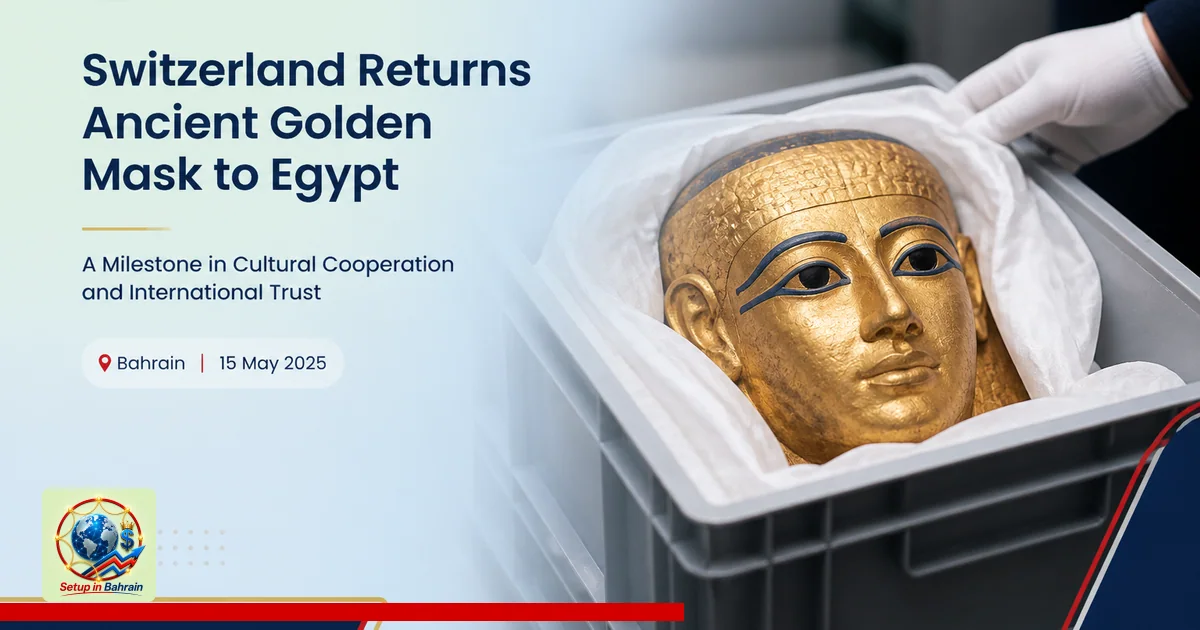
Switzerland Returns Ancient Golden Mask to Egypt
Switzerland has returned a 2,000-year-old golden funerary mask to Egypt, describing the item as part of efforts to protect cultural heritage and combat illicit trafficking of antiquities. The handover occurred in Bern, following authentication of the artifact as Egyptian. Egypt has long sought to recover antiquities taken abroad, and this case continues a broader pattern of museum objects being returned after intergovernmental cooperation.
What happened
The Swiss Embassy in Cairo announced that Switzerland has returned a more than 2,000-year-old golden funerary mask to Egypt. The mask, from Egypt’s Ptolemaic period, was seized by Swiss customs in 2022 and later authenticated as an Egyptian artifact. The formal handover took place in Bern, where Swiss Federal Councilor Elisabeth Baume-Schneider delivered the mask to Egypt’s ambassador. Swiss officials described the action as part of ongoing cooperation to protect cultural heritage and fight illicit trafficking of cultural property.
Key facts you should know
Context: The item is a gold mummy mask, tied to Egypt’s ancient funerary practices. The return is described as part of Switzerland’s broader effort to repatriate cultural objects to their countries of origin, with around 80 cultural objects returned to Egypt by Bern since 2011.
Authication: After seizure, Swiss authorities examined the mask and confirmed its Egyptian origin. The formal handover was conducted at a diplomatic event in Bern.
Who is affected
Egyptian authorities gain a material artifact with cultural and historic significance, potentially impacting national museums and scholarly study. Switzerland cites ongoing cooperation with Egypt and a commitment to preventing illicit trafficking of antiquities. The event underscores diplomatic relations tied to cultural heritage recovery efforts between the two countries.
Practical next steps
For researchers and the public, the mask’s return may open opportunities for Egypt to study the object within its own museums or shared exhibitions. Other countries may look to similar cooperation as a model for returning artifacts. Journalists and researchers should verify future claims about additional repatriations via official government or museum announcements, rather than secondary reports.
Limits and questions
The news describes a single artifact’s return and notes broader cooperation, but it does not specify how the value or display rights of the mask will be managed within Egyptian institutions. It also does not detail ongoing investigations or the full scope of Switzerland’s cultural-heritage policies beyond this case.
Which sources did Setup in Bahrain review?
Setup in Bahrain reviewed the following source material before preparing this explanatory article.
The links remain visible so readers can inspect the evidence, compare dates and context, and confirm current requirements with the relevant authority.
- africandigest.com — evidence source reviewed for this article.
Information and responsibility notice: This article is general information based on the cited material available when published. It is not legal, tax, immigration, medical, financial, banking, or investment advice; it does not create a professional-client relationship; and it is not a guarantee of outcome, availability, accuracy, or eligibility. Rules, schedules, prices, and third-party information can change. Confirm material decisions with the relevant authority and an appropriately qualified adviser before acting.