
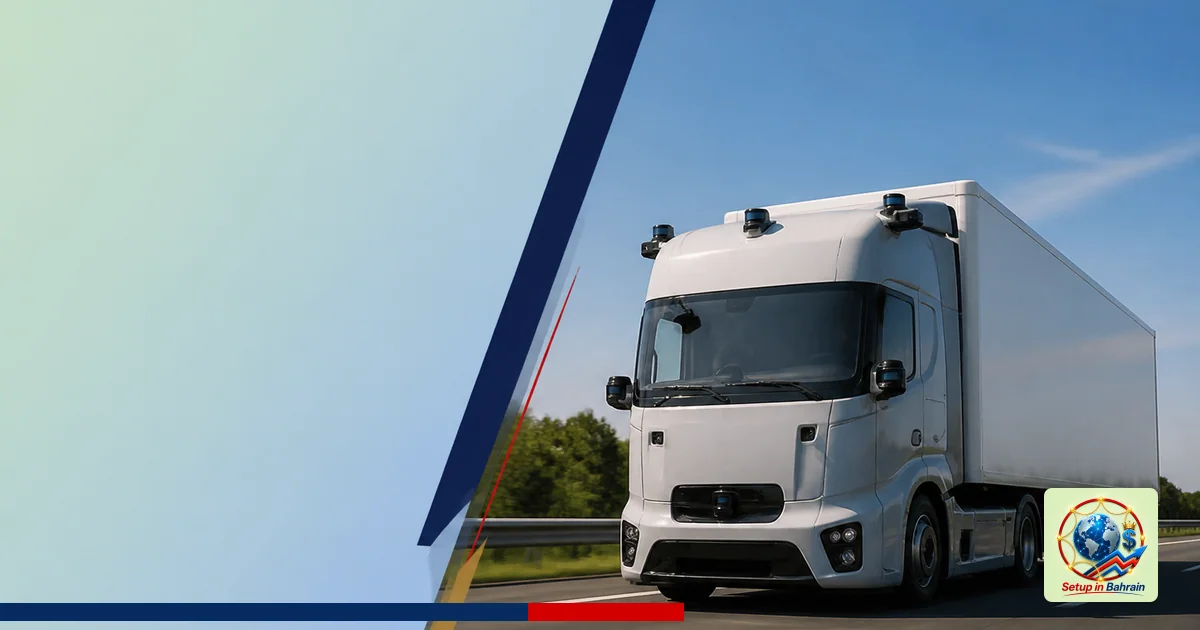
Lidl tests Germany’s first driverless cab-less truck on public road
A pilot program in Germany has put the first cab-less autonomous truck (SAE Level 4) into daily logistics work on a public road. The truck operates without a driver or safety operator aboard, and a following car with a driver must accompany it during the initial phase.
What changed
Two companies—E-truck maker Einride and the retailer Lidl—announced a trial using a cab-less electric truck on a short, about 400-metre route between a Lidl warehouse/distribution center and a Lidl store in Edermünde, Hesse. The truck is limited to 25 km/h by a permit from the German national road authority. A car with a driver must follow the autonomous truck, as described by Handelsblatt, and loading/unloading during the first phase is handled by a second vehicle nearby. The operation is described as a pilot under an official permit, not a full rollout.
Key facts in plain terms
- Vehicle type: An electric, cab-less truck designed to operate without a driver on board (SAE Level 4).
- Route length: About 400 metres on a public road in Germany.
- Speed limit: Up to 25 km/h under the permit.
- Escort: A separate car with a driver follows the autonomous truck during the pilot.
- Loading/unloading: Carried out by a second local vehicle in the initial phase.
- Regulatory basis: The pilot operates under an official permit from Germany’s Federal Motor Transport Authority (KBA).
Who is affected
Businesses involved include Lidl, a supermarket chain, and Einride, a logistics technology company. Local traffic and nearby pedestrians may notice a truck operating without a driver on a short test route under supervision and with a separate escort vehicle during the trial period.
Practical next steps
- Watch for official updates from Lidl, Einride, or German transport authorities for any expansion or changes in the permit.
- Expect further demonstrations or longer test runs if the pilot meets safety and logistics benchmarks.
- Public road tests like this typically rely on controlled routes, escort vehicles, and strict speed limits, so broader adoption would require additional approvals and infrastructure work.
Limits and questions
Details about long-term reliability, cost savings, and safety outcomes are not provided. The description emphasizes a limited, supervised pilot rather than a scalable rollout. No information is given about other jurisdictions or how this would affect drivers’ jobs in the broader logistics industry.
Which sources did Setup in Bahrain review?
Setup in Bahrain reviewed the following source material before preparing this explanatory article.
The links remain visible so readers can inspect the evidence, compare dates and context, and confirm current requirements with the relevant authority.
- eletric-vehicles.com — evidence source reviewed for this article.
Information and responsibility notice: This article is general information based on the cited material available when published. It is not legal, tax, immigration, medical, financial, banking, or investment advice; it does not create a professional-client relationship; and it is not a guarantee of outcome, availability, accuracy, or eligibility. Rules, schedules, prices, and third-party information can change. Confirm material decisions with the relevant authority and an appropriately qualified adviser before acting.