
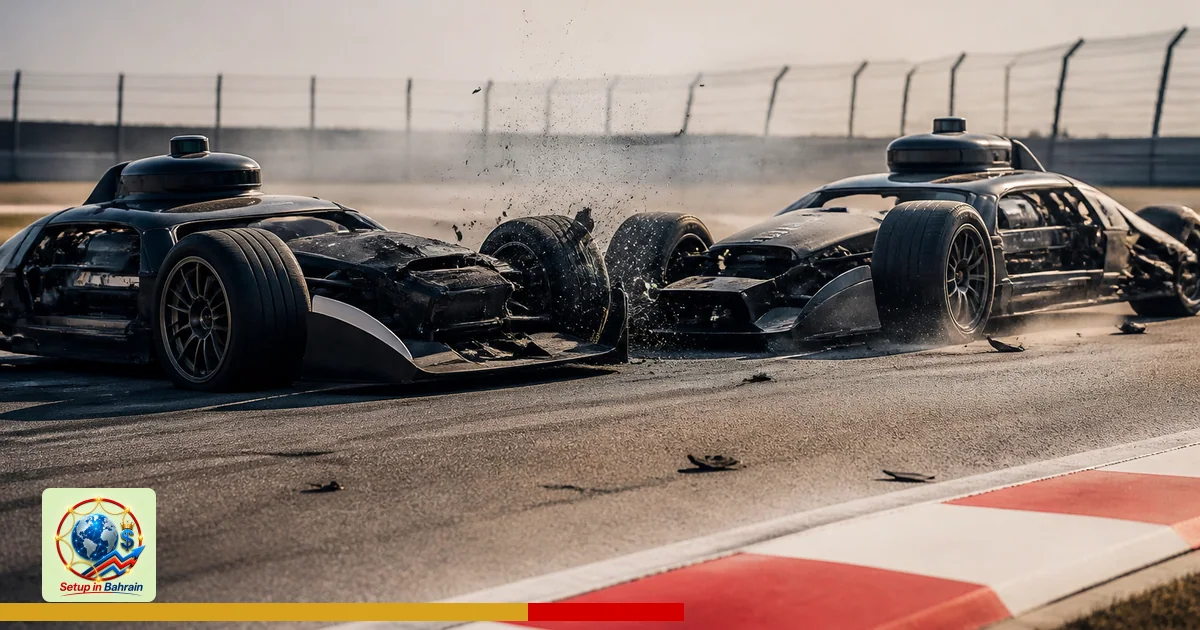
Two driverless cars crash at 155 mph in Imola race context
Two driverless race cars collided at a high speed during an event in Imola, Italy. The incident involved a PoliMove autonomous car and a vehicle from Unimore during a race organized by the Abu Dhabi Autonomous Racing League (A2RL). Officials described the moment as a crash but stressed there were no reported injuries. The episode has sparked discussion about how fast autonomous systems should operate in testing and competition settings, and what safety measures are needed as automation advances.
What happened and who is affected
During a high-speed autonomous racing session at the Autodromo Internazionale Enzo e Dino Ferrari in Imola, a PoliMove driverless car struck a slowing vehicle from Unimore. The collision occurred at roughly 155 mph (250 km/h). There were no reported injuries to drivers or spectators, according to event organizers, but the incident prompted immediate safety checks and an stoppage of the session.
Key facts you should know
- Event took place at Imola, Italy, under an autonomous racing framework (A2RL).
- The two cars involved were driverless/automated systems, not human-driven.
- The crash happened at very high speed, around 155 mph.
- Authorities and organizers paused the event to review safety procedures and vehicle behavior rules.
- There were no reported injuries based on initial statements.
Who is affected or involved
The teams behind PoliMove and Unimore vehicles, plus event organizers (A2RL), are directly involved. Spectators and stakeholders in autonomous racing may be evaluating how high-speed driverless systems respond in close-quarters scenarios. Regulators and safety reviewers may scrutinize the incident to refine testing standards and in-race safety protocols.
Practical next steps and what to watch
Experts may look at software decision-making during high-speed maneuvers, sensor fusion reliability, and fail-safes for collision avoidance. Likely next steps include a formal incident report from organizers, a technical review by the teams, and possible adjustments to race rules or test limits. If you follow autonomous-vehicle testing, watch for updates about safety requirements, such as mandatory braking tests, stricter speed caps in certain zones, and enhanced monitoring during sessions.
Limits of the information available
Current details are limited. The initial report notes a crash with no injuries but does not publish technical data on causes, sensor readings, or software decisions. Readers should await official investigations for complete, verified facts before drawing conclusions about vehicle performance or safety implications.
Which sources did Setup in Bahrain review?
Setup in Bahrain reviewed the following source material before preparing this explanatory article.
The links remain visible so readers can inspect the evidence, compare dates and context, and confirm current requirements with the relevant authority.
- pressnewsagency.org — evidence source reviewed for this article.
Information and responsibility notice: This article is general information based on the cited material available when published. It is not legal, tax, immigration, medical, financial, banking, or investment advice; it does not create a professional-client relationship; and it is not a guarantee of outcome, availability, accuracy, or eligibility. Rules, schedules, prices, and third-party information can change. Confirm material decisions with the relevant authority and an appropriately qualified adviser before acting.