
Explore how Bahrain’s labor market reforms in 2026 impact business setup costs, including hiring fees, compliance changes. And overall investment...
Quick Summary
- Company formation: Standard BHD 1,340 with 3 months of office address; Gold BHD 1,700 with 6 months; Premium BHD 2,150 with 12 months and a cabin, officer table and chair, and two guest chairs. No formation package includes visas, including Premium. Investor/work visas are priced separately: BHD 755 for one year or BHD 953 for two years, in addition to the formation package. Ask for a written, itemized quotation confirming government fees and all inclusions before payment.
- Ask for a written, itemized quotation confirming government fees and all inclusions before payment.
- Company renewal packages: BHD 530 with 3 months of office address; BHD 980 with 6 months; BHD 1,520 with 12 months. These are separate renewal packages, not visa fees.
- No corporate tax on profits.
- We have served 2,800+ clients from 44+ countries and maintain records to substantiate that total where needed. We have 113 Google reviews; reviews represent only some clients and are not the same as the total clients served.
Key Takeaways
- How Bahrain’s Labor Market Reforms Affect Business Setup Costs: A Powerful Guide 2026
View details
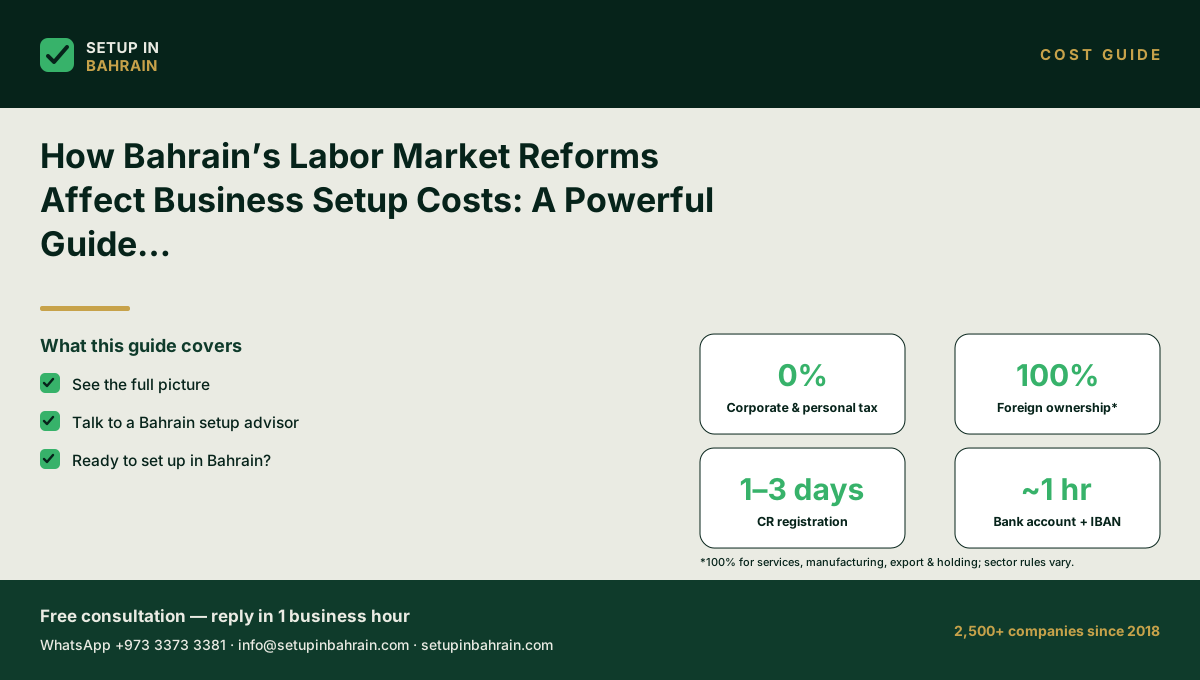
Bahrain has steadily built a reputation as one of the most business-friendly destinations in the Gulf, offering relatively low taxation, open market policies. And simplified company formation procedures. But, in 2026, labor market reforms are greatly reshaping how investors calculate business setup costs, especially for companies that rely on hiring both local and expatriate workers.
These reforms are primarily designed to strengthen workforce nationalization, improve job options for Bahraini citizens. And create a more regulated and transparent labor environment. While these goals support long-term economic stability, they also introduce new financial considerations for entrepreneurs. Costs related to hiring, work permits, compliance systems. And government fees are becoming more structured and, in many cases, gradually increasing.
For investors, startups, and multinational companies, understanding how Bahrain’s labor reforms influence business setup costs is no longer optional it is essential for accurate budgeting and sustainable expansion. This guide provides a finish breakdown of all direct and indirect cost impacts in 2026, along with strategies to manage them effectively.
For foreign businesses looking to register a company in Bahrain , get an investor visa . And open a corporate bank account , this digital logistics boom offers massive potential for growth and regional expansion.
How Bahrain’s Labor Market Reforms Affect Business Setup Costs: A Powerful Guide 2026
Table of Contents
- Overview of Bahrain Labor Market Reforms
- Why Labor Reforms Matter for Investors
- Key Changes Introduced in Recent Years
- Impact on Business Setup Costs
- Work Visa Cost Structure Explained
- LMRA Fees and Their Business Impact
- Wage Protection System (WPS) Effects
- Bahrainization Policies and Costs
- Hiring Local vs Foreign Employees
- Compliance and Administrative Costs
- Flexi Permit System and Business Flexibility
- Cost Comparison: Before vs After Reforms
- Industry-Specific Cost Impact
- Strategies to Optimize Labor Costs
- Common Mistakes Businesses Make
- Long-Term Financial Benefits of Reforms
- Final Cost Breakdown for 2026
1. Overview of Bahrain Labor Market Reforms
Bahrain’s labor market reforms are designed to modernize employment practices and improve economic sustainability. These reforms focus on creating a regulated and transparent labor environment that supports both employers and employees.
Key objectives include:
- Enhancing workforce productivity
- Reducing illegal labor practices
- Encouraging private sector participation
- Protecting employee rights
For businesses, these reforms play a direct role in shaping business setup costs in Bahrain and long-term operational expenses.
2. Why Labor Reforms Matter for Investors
Labor-related expenses represent a significant portion of business setup costs in Bahrain. Changes in employment laws and labor regulations directly influence financial planning for new businesses.
Key areas affected include:
- Initial investment requirements
- Workforce planning strategies
- Monthly salary and compliance costs
- Legal and administrative obligations
Investors who understand these factors can optimize costs and avoid unexpected financial risks.
3. Key Changes Introduced in Recent Years
Recent updates in Bahrain’s labor market regulations have introduced structural improvements that affect company formation in Bahrain.
Major changes include:
- Revised work visa and permit fee structures
- Implementation of the Wage Protection System (WPS)
- Strengthened Bahrainization policies
- Increased compliance and reporting standards
These reforms aim to create a balanced, fair, and efficient labor market.
4. Impact on Business Setup Costs
Labor market reforms have a measurable impact on business setup costs in Bahrain, especially in workforce-related expenses.
Cost areas affected include:
- Employee visa and permit fees
- Monthly labor levies and LMRA charges
- Payroll system implementation
- Compliance and documents costs
Although initial setup costs may be higher, the system now offers greater transparency and predictability for investors.
5. Work Visa Cost Structure Explained
Work visas remain a key component of business setup costs in Bahrain, especially for companies hiring expatriate employees.
| Cost Component | Estimated Cost (BHD) |
|---|---|
| Work Permit (2 years) | 200 – 300 |
| Monthly LMRA Fee | 5 – 10 per employee |
| Medical & Processing | 50 – 100 |
These costs must be factored into the total budget for company formation in Bahrain.
6. LMRA Fees and Their Business Impact
The Labor Market Regulatory Authority (LMRA) imposes recurring fees that directly impact operating expenses.
Key considerations:
- Monthly fees apply per expatriate employee
- Costs vary by sector and job classification
- Penalties apply for non-compliance
These fees increase operational costs but improve regulatory efficiency and labor market stability.
7. Wage Protection System (WPS) Effects
The Wage Protection System ensures that salaries are paid through regulated banking channels, improving transparency across businesses in Bahrain.
Cost implications include:
- Payroll system integration
- Banking and transaction fees
- Administrative overhead
While this adds to initial costs, it reduces disputes and strengthens financial compliance.
8. Bahrainization Policies and Costs
Bahrainization policies require businesses to employ a certain percentage of Bahraini nationals, impacting workforce planning and costs.
Financial impact includes:
- Higher salary expectations for local employees
- Training and development expenses
- Reduced reliance on foreign labor
These policies increase short-term costs but contribute to long-term economic stability.
9. Hiring Local vs Foreign Employees
Choosing the right workforce mix is critical in managing business setup costs in Bahrain.
| Factor | Local Employees | Foreign Employees |
|---|---|---|
| Salary Levels | Higher | Moderate |
| Visa Costs | None | Applicable |
| Compliance Burden | Lower | Higher |
| Talent Availability | Limited | Wider pool |
A balanced hiring approach helps optimize both cost and efficiency.
10. Compliance and Administrative Costs
Compliance requirements have increased as part of Bahrain’s labor reforms, affecting company formation in Bahrain.
Businesses must account for:
- Regulatory documents and reporting
- Legal consultation and advisory fees
- Ongoing audits and inspections
These costs are essential for maintaining a legally compliant business operation.
11. Flexi Permit System and Business Flexibility
The Flexi Permit system allows businesses to access labor without traditional sponsorship structures, improving flexibility.
Benefits include:
- Reduced long-term employment commitments
- Lower administrative workload
- Increased operational adaptability
But, it may not suit all industries or business models.
12. Cost Comparison: Before vs After Reforms
Labor reforms have changed how businesses approach business setup costs in Bahrain.
- Before reforms: Lower upfront costs but higher risk and inefficiency
- After reforms: Higher initial investment but improved stability and transparency
This shift benefits long-term investors focused on sustainable growth.
13. Industry-Specific Cost Impact
The impact of labor reforms varies across industries in Bahrain.
Examples include:
- Construction: Increased compliance and labor regulation costs
- Hospitality: Higher staffing and training expenses
- Technology sector: Minimal impact due to skilled workforce demand
Understanding these differences is critical for accurate financial planning.
14. Strategies to Optimize Labor Costs
Businesses can reduce business setup costs in Bahrain through strategic planning.
Effective strategies include:
- Hiring a balanced mix of local and foreign employees
- Outsourcing non-core business functions
- Leveraging flexible workforce solutions
- Implementing efficient payroll systems
These approaches help maintain cost efficiency without compromising operations.
15. Common Mistakes Businesses Make
Many investors underestimate business setup costs in Bahrain due to avoidable mistakes.
Common issues include:
- Ignoring recurring labor-related fees
- Underestimating compliance requirements
- Over-reliance on expatriate workers
- Lack of professional legal guidance
Avoiding these mistakes improves financial stability.
16. Long-Term Financial Benefits of Reforms
Despite increased initial costs, labor reforms provide long-term advantages for businesses.
Key benefits include:
- Improved workforce productivity
- Reduced legal and operational risks
- Enhanced business credibility
- Predictable cost structures
These factors support sustainable growth in Bahrain’s competitive market.
17. Final Cost Breakdown for 2026
A realistic estimate of business setup costs in Bahrain must include labor-related expenses.
Key components:
- Work permits and visa costs
- Monthly LMRA fees
- Payroll and compliance expenses
- Recruitment and training costs
Estimated impact:
- Labor-related expenses account for about 25%–40% of total business setup costs in Bahrain
Proper budgeting ensures smooth business operations.
Conclusion
Bahrain’s labor market reforms have fundamentally transformed business setup costs in Bahrain in 2026. While these changes may increase initial investment, they create a transparent, efficient, and investor-friendly business environment. For entrepreneurs and companies planning company formation in Bahrain , understanding these labor cost dynamics is essential for long-term success. With proper planning, strategic hiring. And compliance management, businesses can optimize costs and build a strong foundation for growth in Bahrain’s evolving economy
Frequently Asked Questions
How long does it take to set up?
It takes 15 to 20 days. We file all forms for you. You do not need to wait long.
What does it cost?
Company formation: Standard BHD 1,340 with 3 months of office address; Gold BHD 1,700 with 6 months; Premium BHD 2,150 with 12 months and a cabin, officer table and chair, and two guest chairs. No formation package includes visas, including Premium. Investor/work visas are priced separately: BHD 755 for one year or BHD 953 for two years, in addition to the formation package. Ask for a written, itemized quotation confirming government fees and all inclusions before payment.
Do I need to visit Bahrain?
No. You can set up your firm from home. We do all the work online. Some banks may ask for one visit.
What tax will I pay?
You pay zero tax on your profits. Bahrain has no corporate income tax. This is a key benefit of the setup.
Can I own 100% of my firm?
Yes. Foreign owners can hold all shares. No local partner is needed. Full ownership is allowed.
What do I need to start?
You need a valid passport. You also need a trade name and a business address. We help you with all of these.
How do I open a bank account?
We guide you step by step. Most banks take 3 to 6 weeks. You will need your CR and firm papers.
Who issues the Commercial Registration (CR)?
The CR is issued by the MOICT. It is your legal right to trade in Bahrain. We file the CR for you.
Can I renew my CR each year?
Company renewal packages: BHD 530 with 3 months of office address; BHD 980 with 6 months; BHD 1,520 with 12 months. These are separate renewal packages, not visa fees.
How do I get started?
Fill in our form on this page. Our team will call you back. We map your best setup plan at no cost.
Steps to Form Your Company
- Pick your trade name. We check if it is free.
- Choose your business type. WLL is the most common.
- Sign the MOA. We draft and file all legal docs.
- Pay the state fees. About BHD 432 in total.
- Get your CR. Takes 15 to 20 days.
- Open your bank account. We guide each step.
- Start trading. You are ready to do business.
How We Help You
We are a team of experts. We set up firms in Bahrain. We have helped 2,500 clients.
We do all the hard work. You just tell us your plan. We take care of the rest.
Our team files all forms. We deal with the state. We keep you up to date at each step.
We have a 4.8 star rating on Google. Our clients trust us. We are proud of that.
What You Get
- A valid CR in 15 to 20 days
- Zero tax on your profits
- Full foreign ownership — no local partner
- A bank account in 3 to 6 weeks
- An Investor Visa to live and work in Bahrain
- Staff from any country, via LMRA work permits
- A virtual office or a real one — your choice
Our Process
- You fill in our form. It takes 3 minutes.
- We call you back the same day.
- We check your plan and pick the right firm type.
- We draft your MOA and all legal files.
- We file with MOICT via the Sijilat portal.
- You get your CR in 15 to 20 days.
- We help you open your bank account.
- You can trade. You are done.
Key Numbers
- Tax rate: 0%
- Ownership: 100% foreign
- Time to set up: 15 to 20 days
- Company formation: Standard BHD 1,340 with 3 months of office address; Gold BHD 1,700 with 6 months; Premium BHD 2,150 with 12 months and a cabin, officer table and chair, and two guest chairs. No formation package includes visas, including Premium. Investor/work visas are priced separately: BHD 755 for one year or BHD 953 for two years, in addition to the formation package. Ask for a written, itemized quotation confirming government fees and all inclusions before payment.
- Company renewal packages: BHD 530 with 3 months of office address; BHD 980 with 6 months; BHD 1,520 with 12 months. These are separate renewal packages, not visa fees.
- Investor Visa: From BHD 755
- Virtual office: From BHD 600 per year
- Clients served: Over 2,500
- Star rating: 4.8 on Google
Bahrain vs Other GCC Markets
Bahrain is easy. The UAE needs a local sponsor for some firm types. Saudi Arabia has more rules.
Bahrain has zero tax. Qatar has no tax too, but the rules are more strict. Kuwait is more costly.
In Bahrain, you can own all of your firm. You do not need a local partner. This is a big plus.
Bahrain has a free trade deal with the US. This means your goods face low or no tariffs. No other GCC state has this deal.
Common Terms
- CR: Commercial Registration — your right to trade
- MOA: Memorandum of Association — your firm's legal deed
- WLL: With Limited Liability — the most common firm type
- LMRA: Labour Market Regulatory Authority — issues work and investor visas
- MOICT: Ministry of Industry — issues CRs and firm licenses
- Sijilat: The online portal to file your CR
Key Facts
- Tax rate: 0%
- Foreign ownership: 100%
- Setup time: 15 to 20 days
- Company formation: Standard BHD 1,340 with 3 months of office address; Gold BHD 1,700 with 6 months; Premium BHD 2,150 with 12 months and a cabin, officer table and chair, and two guest chairs. No formation package includes visas, including Premium. Investor/work visas are priced separately: BHD 755 for one year or BHD 953 for two years, in addition to the formation package. Ask for a written, itemized quotation confirming government fees and all inclusions before payment.
- Company renewal packages: BHD 530 with 3 months of office address; BHD 980 with 6 months; BHD 1,520 with 12 months. These are separate renewal packages, not visa fees.
- Client rating: 4.8 stars
- Clients served: 2,500 and more
Ready to set up in Bahrain?
Tell us your business idea. We'll map the right entity, ownership and timeline — then handle the filing while you build.
Official Bahrain government references
- Sijilat — MOICT commercial registration portalsijilat.bh
- Ministry of Industry, Commerce & Tourismmoic.gov.bh