Register your Bahrain company from North Macedonia with generally no corporate income tax for most sectors. Fast setup, full foreign ownership, and easy banking for Macedonian entrepreneurs.
Key Takeaways
- Why North Macedonia Entrepreneurs Are Moving Their Business to Bahrain
- Understanding Bahrain's Business Environment for Macedonian Entrepreneurs
- Business Structures Available to North Macedonia Citizens
- Step-by-Step Company Registration Process from North Macedonia
- Cost Analysis: North Macedonia vs. Bahrain Operations
→ Complete guide: Company Formation in Bahrain — the full 2026 guide
View details
Ownership & capital
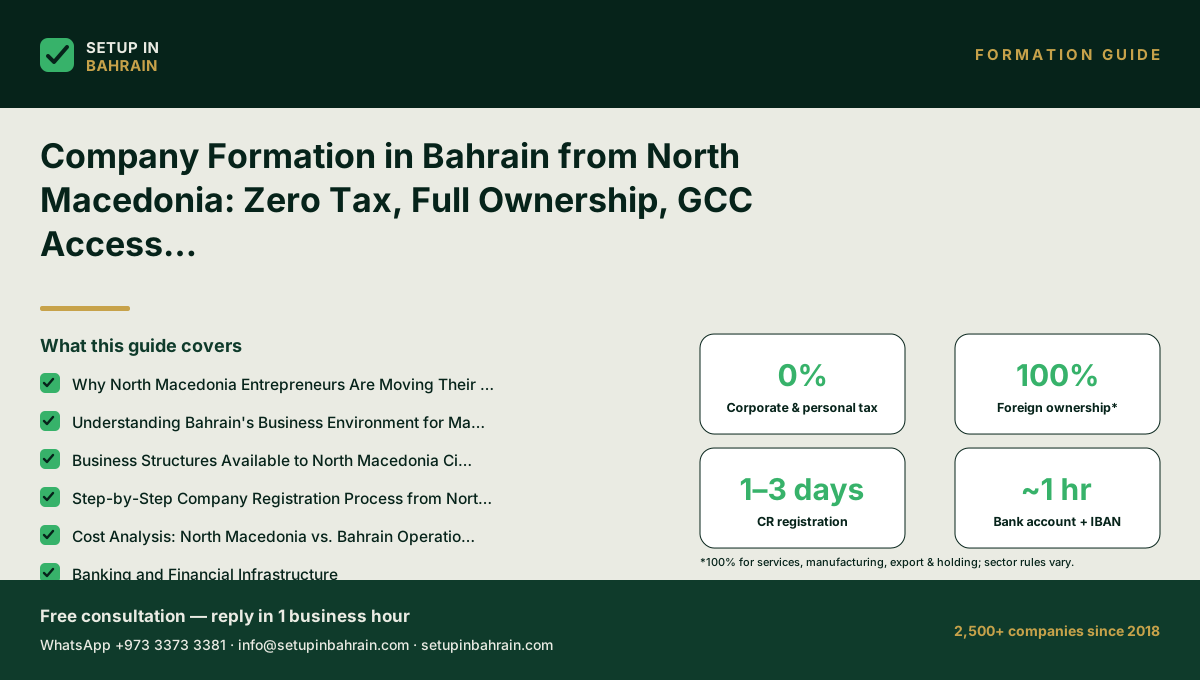
A Bahrain WLL can be owned by a single person — 100% foreign ownership applies to most activities, with no local partner required for services, manufacturing, export trading and holding companies. The minimum share capital is BHD 1 ; we recommend BHD 1,000 . This Makes bank account opening and investor visa approval smoother.
Dragan runs a software development agency in Skopje. For eight years, he's built his client base across Western Europe and the Middle East, billing primarily in euros and occasionally in US dollars. Every month, he watches helplessly as the conversion from EUR to Macedonian denars chips away at his margins—not because of exchange rate movement (the peg to EUR at 61.5 MKD has held rock-solid since 2002), but because of the banking fees, the timing delays, and the bureaucratic friction that North Macedonian banks seem to excel at creating.
Last year, Dragan paid 1.4 million MKD in corporate tax—roughly €22,700 at the flat 10% rate. Add the mandatory employee social contributions running at 27% on the employer side, the annual accounting compliance costs, the PRO registration headaches. The e-filing gymnastics with Uprava za Javni Prihodi (UJP), and his true government burden exceeded €45,000.
"I don't mind paying taxes," Dragan told me over coffee in Skopje's City Park last autumn. "But I do mind paying taxes to a system that offers me nothing for international growth. No treaties with the Gulf. No correspondent banking relationships. No path to the markets I actually serve."
Dragan isn't alone. Across North Macedonia, entrepreneurs who trade internationally—software developers, consultants, export traders, digital service providers—face the same structural problem: a small domestic market of 2 million people, limited correspondent banking relationships with the Gulf, zero bilateral investment protection with GCC states, and a tax regime that punishes success while offering nothing in return for international market access.
This guide exists for North Macedonia business owners who've hit this ceiling. Bahrain offers what North Macedonia structurally cannot: Generally no corporate income tax for most sectors with no cap or sunset clause, 100% foreign ownership without a local sponsor requirement, a currency pegged to the US dollar that eliminates forex volatility, and a physical position as the gateway to a 55 million person GCC market.
Let's walk through exactly how to make this move—step by step, number by number, with every document requirement and timeline specific to North Macedonia passport holders.
Why North Macedonia Entrepreneurs Are Moving Their Business to Bahrain
Take the case of a Skopje-based software exporter who closed 2024 with €1.8 million in revenue, mostly from EU clients invoiced in euros. The company paid the standard 1generally no corporate income tax for most sectors to Uprava Prihodi, yet every euro received had to be converted through a local bank whose MKD-EUR spread and fees quietly removed another 2.8–3.4% of the top line. The owner then faced the same conversion friction again when paying overseas contractors. After two years, the cumulative drag exceeded the headline tax bill.
This scenario plays out across North Macedonia's small but ambitious business community. The pain points are structural, not circumstantial:
The Currency Conversion Trap
North Macedonia's denar has been pegged to the euro at about 61.5 MKD per EUR since 2002. This sounds stabilizing—and for domestic transactions, it is. But for entrepreneurs who invoice in USD, GBP, or need to pay suppliers in multiple currencies, every transaction involves a double conversion that quietly bleeds 2.5–4% per cycle.
When you receive USD from a Saudi client, your Macedonian bank converts it to EUR at their rate (typically 1–1.5% worse than interbank), then converts to MKD for your account. When you pay a contractor in Poland in EUR, the process reverses. A Skopje entrepreneur moving €500,000 annually through this system loses €15,000–€20,000 to conversion friction alone—money that never appears on any tax receipt.
The Uprava Prihodi Compliance Burden
Macedonia's tax authority requires digital certificate authentication for e-filing—a system that theoretically modernizes compliance but practically creates monthly headaches. The ePortal interface remains notoriously unreliable, frequently requiring phone calls to helpdesks that operate only during Macedonian business hours. For entrepreneurs with international clients across multiple time zones, this creates scheduling conflicts that consume administrative hours.
Annual financial statement requirements, mandatory audits above certain thresholds, and the labyrinth of "parafiscal" fees—mandatory Chamber of Commerce contributions, environmental levies, municipal charges—add layers of compliance cost that the headline 10% rate never captures.
The Market Size Ceiling
North Macedonia's population of about 2 million creates an inherent scaling problem. You can dominate your niche domestically and still run a small business by global standards. More critically, the country's pre-EU status means you lack the seamless market access that Croatian or Bulgarian competitors enjoy. You're close to Europe but not in it, which translates to customs friction, VAT complexity. Regulatory uncertainty for clients considering Macedonian vendors.
The GCC Banking Gap
Perhaps most critically for entrepreneurs eyeing Middle Eastern markets: North Macedonia has no bilateral investment treaty with any GCC state. No BIT with Saudi Arabia, UAE, Qatar, Kuwait, Oman, or Bahrain. This means your investments in the Gulf receive no treaty protection, your legal recourse in disputes remains limited. Your correspondent banking relationships are almost nonexistent.
Try opening a corporate account in Dubai as a North Macedonian company. The compliance burden alone takes months. Many banks simply decline Macedonian corporate accounts due to unfamiliarity with the jurisdiction.
Bahrain solves all of these problems at once.
Understanding Bahrain's Business Environment for Macedonian Entrepreneurs
Bahrain operates on fundamentally different economic principles than North Macedonia—and understanding these differences explains why the jurisdiction works so well for international entrepreneurs.
The Generally no corporate income tax for most sectors Reality
Bahrain levies no corporate income tax on business profits. Not a reduced rate. Not a temporary exemption. Zero, codified in law, with no sunset clause. The only exception is oil and gas companies. This Face a 46% rate—but unless you're drilling in the Gulf, this doesn't apply to you.
Compare this to North Macedonia's 10% flat rate. On €200,000 in annual profit, a Macedonian company pays €20,000 in corporate tax. A Bahraini company pays €0. Over five years, that's €100,000 retained in your business rather than transferred to the state.
The Bahrain Economic Development Board (EDB) has explicitly committed to maintaining this zero-rate structure as a core competitive advantage. The government funds itself primarily through oil revenues, VAT (introduced in 2019 at 10%, increasing to 15% by 2025). Various licensing fees—none of which touch corporate profits directly.
100% Foreign Ownership Without Sponsors
Until recently, most GCC countries required foreign businesses to partner with local sponsors who held majority stakes—a system that created dependency, profit-sharing obligations, and occasionally outright exploitation. Bahrain eliminated this requirement entirely.
Through the Ministry of Industry and Commerce (MOIC), you can establish a company with 100% foreign ownership across nearly all sectors. No local partner required. No profit-sharing mandates. No "silent shareholder" who contributes nothing but takes 51%.
For Macedonian entrepreneurs accustomed to full control of their businesses, this means operating in Bahrain feels structurally similar to operating at home—except with Generally no corporate income tax for most sectors and access to 55 million GCC consumers.
The Dollar Peg Advantage
The Bahraini dinar has been pegged to the US dollar at BHD 1 = USD 2.65 since 1980. This is one of the longest-standing currency pegs in the world, maintained through Bahrain's substantial foreign reserves and conservative monetary policy overseen by the Central Bank of Bahrain (CBB).
For Macedonian entrepreneurs, this creates a critical advantage: your Bahrain-based revenues in BHD convert to USD at a fixed, predictable rate. When you invoice Gulf clients in USD or BHD, you face zero currency volatility. When you pay suppliers in dollars, you know exactly what you're paying. The conversion friction that bleeds Macedonian businesses dry simply doesn't exist.
GCC Market Access
Bahrain is a member of the Gulf Cooperation Council, which includes Saudi Arabia (population 35 million), UAE (10 million), Kuwait (4.3 million), Qatar (2.9 million). Oman (5.1 million). GCC membership means Bahraini-registered companies can trade across these markets with reduced barriers, preferential treatment. Established commercial relationships.
A software company registered in Skopje pursuing a Saudi government contract faces jurisdictional skepticism, banking complications. Zero treaty protection. The same company registered in Bahrain approaches that contract as a GCC entity, with established legal frameworks and banking relationships already in place.
World Bank Rankings and Regulatory Quality
The World Bank's Ease of Doing Business rankings consistently placed Bahrain among the top 50 globally before the report's discontinuation—specifically highlighting business registration efficiency, investor protections, and contract enforcement. The regulatory environment operates under English common law principles, with commercial disputes handled through courts that international businesses find familiar and predictable.
For Macedonian entrepreneurs accustomed to civil law systems and occasional judicial unpredictability, Bahrain's commercial courts offer a level of procedural clarity that facilitates international contracting.
Business Structures Available to North Macedonia Citizens
Bahrain offers several corporate structures suited to different business models. Understanding these options helps you select the right vehicle for your specific situation.
single-shareholder WLL
The WLL functions as Bahrain's limited liability company for solo entrepreneurs. You serve as the sole shareholder and director, with liability limited to your capital contribution. Minimum share capital requirements are modest—typically BHD 50 (about €125) for most activities, though certain licensed activities require higher minimums.
For Macedonian freelancers, consultants, and solo service providers, the WLL offers the simplest path to Bahrain incorporation. You maintain complete control, minimize compliance overhead, and establish a credible GCC presence without partner complications.
With Limited Liability (WLL)
The WLL structure accommodates 2–50 shareholders and functions as Bahrain's standard limited liability company for multi-owner businesses. Each shareholder's liability is limited to their capital contribution, and management can be delegated to appointed directors.
If you're incorporating with a business partner—whether Macedonian or international—the WLL provides the flexibility to structure ownership percentages, profit-sharing arrangements, and governance as you see fit. There's no requirement for local Bahraini shareholders.
Closed Joint Stock Company (CJSC)
For larger ventures planning eventual public offerings or requiring substantial capital raises, the CJSC provides a corporate structure familiar to institutional investors. Minimum capital requirements are higher (BHD 250,000, about €625,000), but the structure enables share transfers, equity financing. Governance frameworks that sophisticated investors expect.
Most Macedonian SMEs won't need this structure initially. It's worth knowing it exists as a future option if your Bahrain operations scale greatly.
Branch Office
If you prefer maintaining your North Macedonian parent company while establishing a Bahrain operational presence, a branch office allows exactly that. The branch operates as an extension of your Macedonian entity, conducting business in Bahrain under the parent company's legal identity.
Branch offices work well for companies testing the Bahrain market before full commitment, or for businesses where Macedonian incorporation provides specific advantages (EU proximity, existing contracts, established reputation) worth preserving.
Bahrain Free Zones
Bahrain operates several free zones offering enhanced incentives for specific industries:
Bahrain Logistics Zone (BLZ) : Designed for warehousing, distribution. Supply chain businesses, with streamlined customs procedures and purpose-built infrastructure.
Bahrain International Investment Park (BIIP): Focused on manufacturing and light industrial operations, with pre-built facilities and competitive lease rates.
Bahrain FinTech Bay : One of the region's largest fintech hubs, offering regulatory sandbox access, co-working facilities. Connections to the region's financial ecosystem.
Free zone companies can enjoy additional benefits including customs duty exemptions, streamlined licensing. Dedicated support services—though they may face restrictions on conducting business outside the free zone without additional licensing.
Step-by-Step Company Registration Process from North Macedonia
Establishing a Bahrain company from North Macedonia requires careful document preparation and a clear understanding of the process. Here's the complete roadmap:
Step 1: Initial Decision and Structure Selection (Week 1)
Before engaging any registration services, determine:
Business activity : What specific services or products will your Bahrain entity offer? This determines your Commercial Registration (CR) category and any special licensing requirements. Corporate structure : WLL for solo operators, WLL for partnerships, branch for extensions of existing entities. Capital requirements : Most activities require minimal capital (BHD 50–1,000), but banking, insurance. Certain professional services require greatly more. Physical presence needs : Will you need office space immediately, or can you operate initially through a registered agent address?
This decision phase takes most entrepreneurs 1–2 weeks of research and consultation.
Step 2: Document Preparation in North Macedonia (Weeks 2–3)
You'll need the following documents, all requiring apostille authentication from Macedonian authorities:
Passport copies: Clear copies of all shareholders' and directors' passports. Macedonian passports are accepted without additional certification beyond standard notarization.
Proof of address: Utility bills, bank statements, or government correspondence showing your Macedonian residential address. Documents must be less than 3 months old.
Bank reference letter: A letter from your Macedonian bank confirming your account relationship, standing, and average balances. This supports your credibility with Bahrain banks during later account opening.
Professional CV/Resume: Especially important if your business activity requires demonstrating relevant expertise or qualifications.
Parent company documents (if establishing a branch): Certificate of incorporation, memorandum and articles of association, board resolution authorizing the Bahrain branch. Audited financial statements from your Macedonian entity.
Apostille authentication: North Macedonia is a Hague Convention signatory, meaning Bahrain accepts apostille-authenticated documents. The Macedonian Basic Court handles apostille certification—budget 3–5 business days for processing.
All documents should be translated into English or Arabic by a certified translator. English translations are generally sufficient for MOIC processing.
Step 3: Trade Name Reservation (Week 3)
Your company name must be approved by MOIC before incorporation proceeds. The name:
- Must be unique and not confusingly similar to existing Bahrain registrations
- Cannot include restricted words (bank, insurance, royal, government) without special authorization
- Should reflect your business activity appropriately
Submit 3–5 name options ranked by preference through Bahrain's Sijilat online portal or through your registered agent. Approval typically takes 1–3 business days. Reserved names remain valid for 60 days, giving you time to complete incorporation.
Step 4: MOIC Application Submission (Week 4)
With approved name and prepared documents, submit your incorporation application to the Ministry of Industry and Commerce. The application includes:
- Completed incorporation forms (available through Sijilat)
- Memorandum and Articles of Association drafted according to Bahrain commercial law
- Shareholder and director information
- Registered office address (can be a registered agent's address initially)
- Declaration of capital and payment confirmation
MOIC processing for straightforward incorporations typically takes 3–7 business days. Complex structures or activities requiring additional licensing may take longer.
Step 5: Commercial Registration Issuance (Week 4–5)
Upon approval, MOIC issues your Commercial Registration (CR)—the foundational document establishing your company's legal existence in Bahrain. The CR specifies your permitted business activities, registered capital, shareholders, and directors.
Your CR number becomes your primary business identifier for all subsequent processes: banking, licensing, visa applications. Commercial contracts.
Step 6: LMRA Registration (Week 5)
The Labour Market Regulatory Authority (LMRA) registration enables your company to sponsor visas and employ staff—including yourself, if you plan to relocate. Even if you don't plan immediate physical presence in Bahrain, LMRA registration establishes the framework for future expansion.
Step 7: Bank Account Opening (Weeks 5–8)
This step typically presents the most friction for North Macedonian entrepreneurs, primarily because Bahrain banks have limited familiarity with Macedonian documents. But, the process is absolutely achievable with proper preparation:
Recommended banks for international entrepreneurs:
- National Bank of Bahrain (NBB)
- Bank of Bahrain and Kuwait (BBK)
- Ahli United Bank
- Standard Chartered Bahrain
Required documents:
- Commercial Registration certificate
- Memorandum and Articles of Association
- Passport copies of all signatories
- Proof of address for all signatories
- Business plan or activity description
- Expected transaction volumes and currencies
- Source of funds documents
Pro tip for Macedonian applicants : Include a brief "country overview" document explaining North Macedonia's EU candidate status, NATO membership. Economic profile. Bahrain compliance officers may be unfamiliar with the jurisdiction; providing context smooths the review process.
Bank account opening typically takes 2–4 weeks once complete documents is submitted. Some banks may request a video call or in-person meeting with signatories.
Step 8: Operational Licensing (As Needed)
Depending on your business activity, you may require additional licenses:
- Professional services: May require recognition of qualifications by relevant Bahrain professional bodies
- Fintech activities: Require Central Bank of Bahrain licensing through their regulatory sandbox or full authorization frameworks
- Import/export: Require customs registration and potentially specific product certifications
- Healthcare services: Require National Health Regulatory Authority (NHRA) licensing
Most B2B service businesses—consulting, software development, marketing, professional services—can operate under standard Commercial Registration without additional licensing.
Total Timeline: 5–8 Weeks
For a straightforward WLL formation without complex licensing requirements, expect 5–8 weeks from document preparation to operational bank account. Complex structures or regulated activities may extend this to 10–12 weeks.
Cost Analysis: North Macedonia vs. Bahrain Operations
Let's examine concrete numbers comparing operational costs between jurisdictions.
Scenario: Software Development Agency, €300,000 Annual Revenue
North Macedonia Operations:
| Cost Category | Annual Amount (EUR) |
| Corporate tax (10% on estimated €80,000 profit) | €8,000 |
| Employer social contributions (27% on €50,000 wages) | €13,500 |
| Currency conversion friction (3% on €300,000) | €9,000 |
| Accounting and compliance | €2,400 |
| Chamber of Commerce and parafiscal fees | €600 |
| Total governmental burden | €33,500 |
| Cost Category | Annual Amount (EUR) |
| Corporate tax | €0 |
| LMRA fees and visa costs | €1,200 |
| Annual CR renewal | €250 |
| Registered office / virtual office | €2,400 |
| Accounting and compliance | €1,800 |
| Banking fees | €600 |
| Total governmental burden | €6,250 |
Over five years, this software agency retains about €136,250 more capital in Bahrain than in North Macedonia—funds available for reinvestment, expansion, or profit distribution.
Scenario: E-commerce Trading Company, €800,000 Annual Revenue
North Macedonia Operations:
| Cost Category | Annual Amount (EUR) |
| Corporate tax (10% on estimated €120,000 profit) | €12,000 |
| Employer social contributions (27% on €80,000 wages) | €21,600 |
| Currency conversion friction (3.5% on €800,000) | €28,000 |
| Customs and import duties | €8,000 |
| Accounting and compliance | €4,800 |
| Chamber of Commerce and parafiscal fees | €1,200 |
| Total governmental burden | €75,600 |
| Cost Category | Annual Amount (EUR) |
| Corporate tax | €0 |
| VAT on local sales (if applicable) | Variable |
| LMRA fees and visa costs (larger team) | €4,800 |
| Annual CR renewal | €400 |
| Office space (serviced office) | €12,000 |
| Accounting and compliance | €3,600 |
| Banking fees | €1,800 |
| GCC customs benefits | (Savings) |
| Total governmental burden | €22,600 |
The trading company scenario shows even more dramatic savings due to higher transaction volumes creating larger currency conversion losses under Macedonian operations.
Initial Setup Costs
Establishing a Bahrain company involves upfront costs that North Macedonian entrepreneurs should budget:
| Setup Item | Typical Cost (EUR) |
| Trade name reservation | €50–100 |
| Incorporation fees (MOIC) | €400–600 |
| Memorandum drafting (legal) | €500–1,000 |
| Apostille and document authentication | €200–400 |
| Registered agent (first year) | €1,200–2,400 |
| Bank account opening assistance | €300–500 |
| Initial consulting/guidance | €1,000–2,000 |
| Total setup investment | €3,650–7,000 |
Banking and Financial Infrastructure
Opening Corporate Accounts
Bahrain hosts over 400 financial institutions, including major international banks, regional powerhouses, and specialized Islamic finance providers. The Central Bank of Bahrain (CBB) maintains robust regulatory oversight that satisfies international compliance standards while remaining accessible to legitimate businesses.
For North Macedonian entrepreneurs, bank account opening represents the process stage requiring the most preparation. Here's what works:
Preparation strategies:
- Compile comprehensive documents: Bahrain banks conduct thorough due diligence. Prepare detailed business plans, client contracts, financial projections, and source of funds evidence before your first meeting.
- Establish banking relationships early: Some Bahrain banks allow preliminary discussions before company incorporation. Use this opportunity to understand specific requirements and identify any potential obstacles.
Consider international banks : Standard Chartered, HSBC. Citi operate in Bahrain and may be more familiar with international documents standards.
- Leverage registered agents: Experienced formation agents often have established relationships with bank compliance departments and can help introductions.
Multi-currency capabilities : Bahrain banks routinely offer multi-currency accounts enabling you to hold BHD, USD, EUR, GBP. Other currencies at once. This eliminates the conversion friction that plagues Macedonian operations—receive euros from European clients, pay USD to American suppliers. Convert only when strategically advantageous.
International transfers : Unlike Macedonian banks with limited correspondent relationships, Bahrain banks maintain extensive international networks. SWIFT transfers to and from European, North American. Asian banks process within 1–3 business days without the delays and additional fees North Macedonian entrepreneurs experience.
Payment Processing and Fintech
Bahrain has positioned itself as the GCC's fintech hub, with the CBB operating a regulatory sandbox that enables innovative financial services while maintaining consumer protection. For e-commerce operators and digital service providers, this translates to:
- Access to regional payment gateways (Benefit, CrediMax) serving GCC consumers
- Integration with international processors (Stripe, PayPal) without the restrictions facing Macedonian merchants
- Open banking frameworks enabling sophisticated financial management
Cryptocurrency and Digital Assets
The CBB has established regulatory frameworks for cryptocurrency and digital asset businesses, making Bahrain one of the few jurisdictions where compliant crypto operations can access traditional banking. For Macedonian entrepreneurs in blockchain, Web3, or cryptocurrency-adjacent businesses, Bahrain offers regulatory clarity unavailable in most jurisdictions.
Tax Implications and Compliance
Bahrain Tax Obligations
Corporate income tax: Zero for all businesses except oil and gas. No corporate tax returns required.
Value Added Tax: Bahrain implemented VAT in 2019, currently at 10% and scheduled to increase to 15%. VAT applies to goods and services provided within Bahrain, with exports generally zero-rated. Businesses exceeding BHD 37,500 (about €93,750) in annual taxable supplies must register for VAT.
Withholding taxes: Bahrain imposes no withholding taxes on dividends, interest, or royalties paid to foreign entities. This creates clean profit extraction without tax leakage.
Personal income tax: Zero. Bahrain levies no income tax on individuals regardless of residency status.
Social insurance: Employers contribute 12% of Bahraini employee salaries to social insurance, with employees contributing 7%. Foreign employees are exempt from social insurance contributions.
North Macedonia Tax Considerations
Establishing a Bahrain company doesn't automatically eliminate North Macedonian tax obligations. Understanding the interaction is critical:
Tax residency: A company is tax resident in North Macedonia if incorporated there or if management and control occur from Macedonia. If you physically operate from Skopje while your company is registered in Bahrain, Macedonian tax authorities may argue the company is effectively Macedonian-resident.
Controlled Foreign Company rules: North Macedonia has CFC provisions that can attribute foreign company profits to Macedonian shareholders if the foreign company is in a low-tax jurisdiction and passive income constitutes a significant portion of earnings.
Substance requirements: To confidently claim Bahrain tax residency for your company, you need genuine economic substance in Bahrain: physical presence, local employees, decision-making occurring in Bahrain, and operational activities conducted there.
Practical approaches:
- Relocate personally: If you move to Bahrain and conduct business operations there, both you and your company establish clear Bahrain residency.
- Maintain separate activities: Your Macedonian company handles domestic clients while your Bahrain company handles international business—genuinely distinct operations with appropriate transfer pricing.
- Professional guidance: Engage tax advisors familiar with both Macedonian and Bahraini requirements to structure your affairs properly.
Double Taxation Considerations
North Macedonia and Bahrain have no double taxation treaty. This typically isn't problematic given Bahrain's Generally no corporate income tax for most sectors rate—there's simply no Bahrain tax to credit against Macedonian obligations. But, the absence of a treaty means no reduced withholding rates or information exchange frameworks that treaties typically provide.
Visa and Residency Options for Macedonian Citizens
Visit Visa for Business Purposes
Macedonian passport holders can get Bahrain e-visas online for business visits. The process:
- Apply through the Bahrain eVisa portal (evisa.gov.bh)
- Provide passport details, travel dates, accommodation booking
- Receive e-visa within 1–3 business days
- Validity: 14 days, extendable once
This enables you to visit Bahrain for company registration, bank account opening meetings. Initial operational setup without pre-arranged visas.
Investor Residence Visa
For entrepreneurs establishing substantial businesses, Bahrain offers investor residence permits providing:
- One-year renewable residency
- Ability to sponsor family members
- No minimum physical presence requirements
- Path to long-term residence
Qualification requires business investment typically starting at BHD 1 (we recommend BHD 1,000)in real estate or business capital.
Self-Sponsorship Visa
Bahrain allows business owners to sponsor their own residence visas through their companies, providing flexibility unavailable in most GCC jurisdictions. Once your company is established with LMRA registration, you can:
- Apply for work visa sponsored by your own company
- Get residence permit enabling long-term stay
- Sponsor family members under your company
This self-sponsorship structure enables Macedonian entrepreneurs to relocate to Bahrain without depending on external employers—true independence in a GCC context.
Golden Residency
Bahrain's Golden Residency program offers permanent residency to investors meeting higher thresholds:
- Real estate investment of BHD 200,000+ (about €500,000)
- Business owners with proven economic contribution
- Retired individuals with pension income meeting minimum requirements
Golden Residency provides indefinite stay rights without renewal requirements—the closest structure to citizenship in terms of stability.
Industry-Specific Considerations
Software and Technology Companies
Bahrain has invested heavily in becoming a regional technology hub, with initiatives including:
Bahrain FinTech Bay : The region's largest fintech ecosystem, offering regulatory sandbox access, office space, mentorship. Connections to GCC financial institutions seeking technology partners.
Amazon Web Services (AWS) Bahrain: The first AWS region in the Middle East operates from Bahrain, providing low-latency cloud infrastructure for applications serving GCC users.
Tamkeen Support: Bahrain's labor fund provides subsidies for technology businesses hiring and training staff, reducing effective labor costs for qualifying companies.
For Macedonian software developers serving Middle Eastern clients, Bahrain incorporation provides both tax advantages and credibility enhancement when pursuing contracts with regional enterprises.
Trading and E-commerce
Bahrain's free trade agreements and GCC membership create distribution advantages:
Duty-free access to Saudi Arabia, UAE, Kuwait, Qatar. Oman Khaleeji Railway planned to connect Bahrain to GCC rail network by 2030 Port and logistics infrastructure handling regional transshipment
E-commerce operators can establish Bahrain fulfillment operations serving the entire GCC market without the customs complexity that would face Macedonian-based exports.
Professional Services
Consulting, legal, accounting, and advisory services operate freely in Bahrain with 100% foreign ownership. The business community includes substantial expatriate populations from Europe, North America. Asia—providing natural client bases for Western-trained professionals.
For Macedonian consultants, Bahrain offers a premium market where hourly rates exceed European norms and GCC clients expect (and pay for) international expertise.
Manufacturing and Industrial
While Bahrain's labor costs exceed North Macedonia's, the Bahrain International Investment Park (BIIP) offers purpose-built facilities for manufacturing operations serving GCC markets. Companies producing goods for regional distribution may find Bahrain's location advantages outweigh labor cost differences—especially for products where proximity to customers matters.
Frequently Asked Questions
Can I register a Bahrain company while remaining in North Macedonia?
Yes. The entire registration process can be completed remotely using apostilled documents and power of attorney arrangements. But, bank account opening typically requires either an in-person visit or a video call with bank compliance officers. Many Macedonian entrepreneurs complete registration remotely, then visit Bahrain for 3–5 days to finalize banking and operational details.
How does Bahrain's zero tax compare to other offshore jurisdictions?
Unlike traditional offshore centers (BVI, Seychelles, Panama), Bahrain offers legitimate economic activity, OECD-compliant regulatory frameworks. Genuine operational infrastructure. Your Bahrain company can maintain real offices, employ staff. Conduct tangible business—not simply hold assets or invoice from a brass plate. This substance makes Bahrain tax positions defensible under international standards that more and more penalize artificial arrangements.
Will North Macedonian tax authorities challenge my Bahrain company?
Potentially, if your arrangement lacks genuine substance. The key defensive factors are:
- Physical operations in Bahrain (office, staff, equipment)
- Management decisions made in Bahrain
- Real economic activity occurring in the jurisdiction
- Appropriate documents of substance
If you register in Bahrain but continue operating from your Skopje apartment with no Bahrain presence, Macedonian authorities may reasonably argue the company is tax resident in North Macedonia. Structure your affairs with substance to avoid these challenges.
What happens to my existing Macedonian company?
Several approaches work:
- Wind down and migrate: Close your Macedonian company and transfer clients/contracts to your Bahrain entity. Clean, but may trigger exit taxation and contract novation requirements.
- Parallel operations: Maintain both entities with distinct functions—Macedonian for domestic/EU clients, Bahrain for international/GCC clients. Requires proper transfer pricing if entities transact.
- Holding structure: Establish Bahrain entity as holding company with Macedonian subsidiary. Complex, typically only worthwhile for larger operations.
Your optimal approach depends on existing client contracts, employee arrangements, and long-term strategic goals.
Do I need to physically relocate to Bahrain?
No—but physical presence strengthens your position for both tax purposes and operational effectiveness. Many Macedonian entrepreneurs start with a "one foot in each country" approach: Bahrain company with periodic visits for key meetings, gradual shift of time spent as business develops, eventual full relocation when circumstances permit.
Bahrain's lifestyle advantages—warm climate, international community, English widely spoken, excellent infrastructure—make relocation more appealing than many business destinations.
How do I find clients in the GCC from Bahrain?
Your Bahrain registration immediately opens doors that were closed to your Macedonian company:
- Government tenders: GCC governments prefer local or regional vendors; Bahrain registration qualifies you as a GCC entity
- Enterprise procurement: Large GCC corporations often require regional incorporation from vendors
- Banking relationships: Your Bahrain bank can provide introductions to their corporate clients
- Trade associations: Bahrain Chamber of Commerce events connect you with regional business leaders
The credibility shift from "Eastern European outsourcing" to "GCC-based technology provider" materially changes how regional buyers perceive your offerings.
What's the annual maintenance cost for a Bahrain company?
Budget about €4,000–€8,000 annually for a simple operational company:
- Commercial Registration renewal: €200–400
- LMRA fees: €600–1,200
- Registered office/virtual office: €1,500–3,600
- Accounting and
Bahrain Business Guides for North Macedonia Citizens
Frequently Asked Questions
How long does it take to set up?
It takes 15 to 20 days. We file all forms for you. You do not need to wait long.
What does it cost?
Company formation: Standard BHD 1,340 with 3 months of office address; Gold BHD 1,700 with 6 months; Premium BHD 2,150 with 12 months and a cabin, officer table and chair, and two guest chairs. No formation package includes visas, including Premium. Investor/work visas are priced separately: BHD 755 for one year or BHD 953 for two years, in addition to the formation package. Ask for a written, itemized quotation confirming government fees and all inclusions before payment.
Do I need to visit Bahrain?
No. You can set up your firm from home. We do all the work online. Some banks may ask for one visit.
What tax will I pay?
You pay zero tax on your profits. Bahrain has no corporate income tax. This is a key benefit of the setup.
Can I own 100% of my firm?
Yes. Foreign owners can hold all shares. No local partner is needed. Full ownership is allowed.
What do I need to start?
You need a valid passport. You also need a trade name and a business address. We help you with all of these.
How do I open a bank account?
We guide you step by step. Most banks take 3 to 6 weeks. You will need your CR and firm papers.
Who issues the Commercial Registration (CR)?
The CR is issued by the MOICT. It is your legal right to trade in Bahrain. We file the CR for you.
Can I renew my CR each year?
Company renewal packages: BHD 530 with 3 months of office address; BHD 980 with 6 months; BHD 1,520 with 12 months. These are separate renewal packages, not visa fees.
How do I get started?
Fill in our form on this page. Our team will call you back. We map your best setup plan at no cost.
Steps to Form Your Company
- Pick your trade name. We check if it is free.
- Choose your business type. WLL is the most common.
- Sign the MOA. We draft and file all legal docs.
- Pay the state fees. About BHD 432 in total.
- Get your CR. Takes 15 to 20 days.
- Open your bank account. We guide each step.
- Start trading. You are ready to do business.
Key Facts
- Tax rate: 0%
- Foreign ownership: 100%
- Setup time: 15 to 20 days
- Company formation: Standard BHD 1,340 with 3 months of office address; Gold BHD 1,700 with 6 months; Premium BHD 2,150 with 12 months and a cabin, officer table and chair, and two guest chairs. No formation package includes visas, including Premium. Investor/work visas are priced separately: BHD 755 for one year or BHD 953 for two years, in addition to the formation package. Ask for a written, itemized quotation confirming government fees and all inclusions before payment.
- Company renewal packages: BHD 530 with 3 months of office address; BHD 980 with 6 months; BHD 1,520 with 12 months. These are separate renewal packages, not visa fees.
- Client rating: 4.8 stars
- Clients served: 2,500 and more
Quick Facts
- Tax rate: 0%
- Own all of your firm: Yes, 100%
- Time to set up: 15 to 20 days
- Company formation: Standard BHD 1,340 with 3 months of office address; Gold BHD 1,700 with 6 months; Premium BHD 2,150 with 12 months and a cabin, officer table and chair, and two guest chairs. No formation package includes visas, including Premium. Investor/work visas are priced separately: BHD 755 for one year or BHD 953 for two years, in addition to the formation package. Ask for a written, itemized quotation confirming government fees and all inclusions before payment.
- Company renewal packages: BHD 530 with 3 months of office address; BHD 980 with 6 months; BHD 1,520 with 12 months. These are separate renewal packages, not visa fees.
- Rating: 4.8 stars
- Clients: 2,500 and more
Why Bahrain?
Bahrain has no tax. You keep all your profits. This is rare in the Gulf.
You can own all of your firm. No local partner is needed. The law allows full foreign ownership.
Setup takes 15 to 20 days. We file all forms for you. You can do it all from home.
Bahrain has a free trade deal with the US. Your goods face low or no tariffs. This gives you access to big markets.
We have served 2,800+ clients from 44+ countries and maintain records to substantiate that total where needed. We have 113 Google reviews; reviews represent only some clients and are not the same as the total clients served.
Our Steps
- Tell us your plan. We advise you for free.
- We pick the right firm type for you.
- We file all your forms with MOICT.
- You get your CR in 15 to 20 days.
- We help you open a bank account.
- You are ready to trade. We stay with you.
Why Set Up in Bahrain?
Bahrain is a great place to run a firm. It has no tax. You keep all your profits. This is rare in the Gulf.
You can own your firm 100%. No local partner is needed. The law is clear and fair.
It is fast to set up. You can have a CR in 15 to 20 days. We file all forms for you.
Bahrain has a free trade deal with the US. Your goods face low or no tariffs. This gives you access to big markets.
The banks are good. The roads are good. The schools are good. It is a well-run state.
We have served 2,800+ clients from 44+ countries and maintain records to substantiate that total where needed. We have 113 Google reviews; reviews represent only some clients and are not the same as the total clients served.
Our Services
- Company formation: Standard BHD 1,340 with 3 months of office address; Gold BHD 1,700 with 6 months; Premium BHD 2,150 with 12 months and a cabin, officer table and chair, and two guest chairs. No formation package includes visas, including Premium. Investor/work visas are priced separately: BHD 755 for one year or BHD 953 for two years, in addition to the formation package. Ask for a written, itemized quotation confirming government fees and all inclusions before payment.
- Company renewal packages: BHD 530 with 3 months of office address; BHD 980 with 6 months; BHD 1,520 with 12 months. These are separate renewal packages, not visa fees.
- Investor Visa — from BHD 755
- Work Visa — LMRA managed
- Virtual office — from BHD 600 per year
- Bank account opening — 3 to 6 weeks
- Family visa — for spouse and kids
- UBO filing — as required by law
Bahrain at a Glance
- Tax rate: 0%
- Foreign ownership: 100%
- Setup time: 15 to 20 days
- Free trade deal: Yes, with the US
- Language: Arabic and English
- Currency: Bahraini Dinar (BHD)
- Time zone: UTC+3
- GDP growth: Steady and strong
How to Start
- Fill in the form on this page. It takes 3 minutes.
- We call you back the same day.
- We map the best plan for your firm type and goals.
- We file all forms. We deal with MOICT for you.
- You get your CR in 15 to 20 days.
- We help you open a bank account and get your visa.
- You are ready to trade. We stay with you.
Common Questions
Do I need to visit Bahrain to set up?
No. You can do it all from home. We file online. You may need one visit to open a bank account.
Is Bahrain safe for business?
Yes. Bahrain is a stable state. It has a clear legal system. Your firm and funds are safe here.
Can I hire staff from any country?
Yes. You can hire from any country. Each hire needs a work permit from LMRA. We manage this for you.
What type of firm should I set up?
Most clients choose a WLL. This is a limited liability firm. It is flexible and well-known in Bahrain. We advise you on the best type for your case.
How do I get in touch?
Fill in our form. We call you back the same day. You can also email us or use the chat on this page.
Ready to set up in Bahrain from North Macedonia?
Tell us your business idea. We map the right entity, ownership and timeline — then handle the filing while you focus on what matters.