Complete guide for Cameroon entrepreneurs: form a company in Bahrain with generally no corporate income tax for most sectors, 100% foreign ownership, and GCC market access. Costs, steps, visas, banking.
→ Complete guide: Company Formation in Bahrain — the full 2026 guide
View details
Ownership & capital
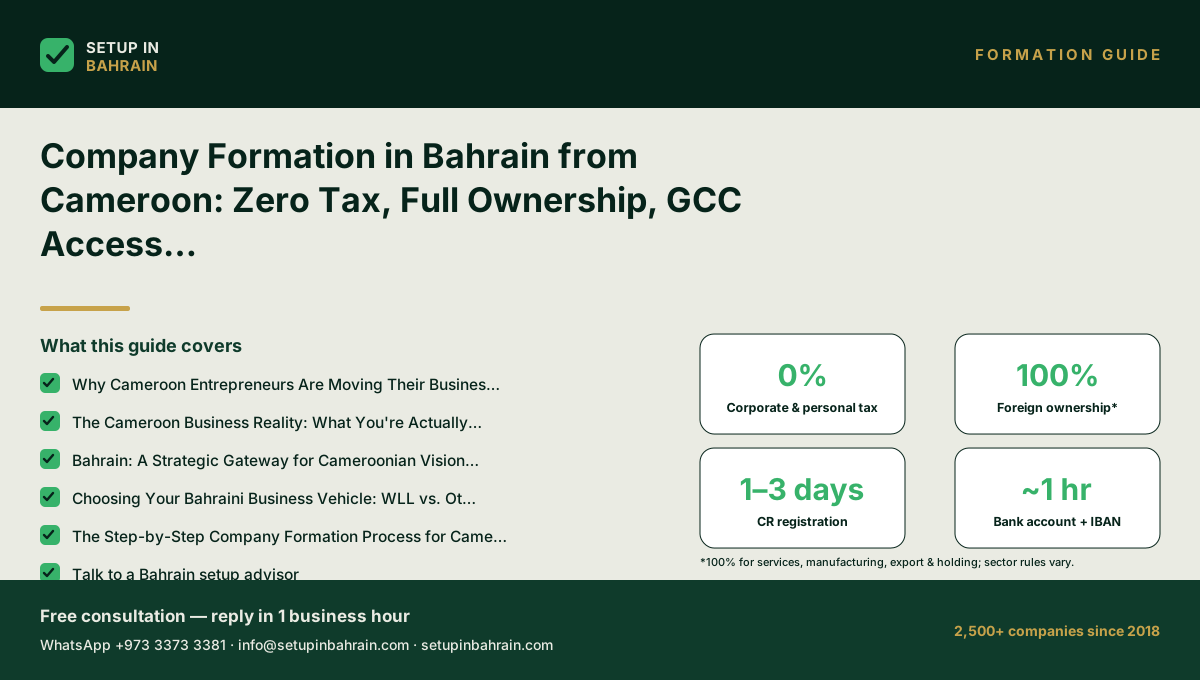
A Bahrain WLL can be owned by a single person — 100% foreign ownership applies to most activities, with no local partner required for services, manufacturing, export trading and holding companies. The minimum share capital is BHD 1; we recommend BHD 1,000, which makes bank account opening and investor visa approval smoother.
Imagine this: You’re a dedicated entrepreneur in Douala, perhaps running a thriving import-export business, or a burgeoning tech startup from Yaoundé. You've poured your heart, soul, and considerable capital into building something meaningful. Every year, as tax season looms, you brace yourself for the inevitable. The DGI Cameroon’s complex filing requirements, often navigating between French and English, coupled with mandatory CNPS social contributions, feel like a constant uphill battle. And then, there’s the elephant in the room: the 33% corporate income tax rate, a significant chunk of your hard-earned profits vanishing before your eyes.
Take the case of Jean-Pierre, who runs a Douala-based trading company supplying construction materials to projects across the CEMAC region. Last year, his company cleared XAF 420 million in revenue. After the 33% corporate income tax, CNPS contributions, and the endless DGI filings in both French and English, he kept roughly XAF 245 million. Then he tried to expand into Saudi Arabia and discovered his local COBAC-regulated bank had no correspondent relationship that could handle the transaction without four layers of fees and a 12-day wait. That single experience pushed him to explore Bahrain.
Like Jean-Pierre, hundreds of enterprising Cameroonians can no longer ignore the math. You’ve watched your business grow, but so has the administrative burden, the struggle with banking regulations that limit your international reach, and the sheer volatility of converting your XAF (CFA franc) for every significant international transaction. You dream of expanding beyond the CEMAC zone, perhaps tapping into the lucrative markets of the Gulf Cooperation Council (GCC), but the path from Cameroon feels fraught with currency risk and prohibitive costs.
What if there was a strategic, legally sound alternative that offered you generally no corporate income tax for most sectors, 100% foreign ownership, unparalleled access to a $2.4 trillion GCC market, and a stable, USD-pegged currency? This isn't a pipe dream; it's the reality Bahrain offers. This comprehensive guide is specifically crafted for you, the ambitious Cameroonian entrepreneur, to demystify company formation in Bahrain, highlighting every advantage and smoothing every step.
Why Cameroon Entrepreneurs Are Moving Their Business to Bahrain
For years, the astute Cameroonian entrepreneur has navigated a challenging landscape. You’ve built resilience and ingenuity, but those qualities often come at a steep price. Let's be frank: the current business environment in Cameroon, while offering opportunities, also presents significant hurdles that can stifle growth and limit international competitiveness. The idea of shifting operations to the Gulf is no longer just theoretical; it’s fast becoming the “Plan A” for growth for those seeking efficiency, lower costs, and broader market access.
Here’s a snapshot of the critical factors driving this strategic shift:
- Unbearable Tax Burden: With a 33% corporate income tax, Cameroon stands at the higher end globally, directly impacting profitability. Compare this to Bahrain’s Generally no corporate income tax for most sectors.
- Currency Volatility and FX Headaches: The CFA franc (XAF) pegged to the Euro means exposure to global currency fluctuations, making international trade and capital repatriation complex and expensive, especially for GCC markets that operate primarily in USD or USD-pegged currencies.
- Administrative Labyrinth: The DGI’s dual-language filing requirements (French and English), coupled with mandatory and complex CNPS social contributions, consume valuable time and resources.
- Limited Banking & Global Reach: COBAC-regulated banks often struggle with efficient international transfers, correspondent banking relationships, and providing sophisticated trade finance options crucial for global expansion.
- Strategic Market Access: Cameroon offers access to the CEMAC zone, but Bahrain opens doors to the entire GCC – a high-net-worth market of over 50 million people with immense purchasing power and free trade agreements.
- Ownership and Control: Restrictions and complexities around foreign ownership in certain sectors in Cameroon can be a deterrent. Bahrain offers 100% foreign ownership in most sectors.
This isn’t about abandoning Cameroon; it’s about establishing a robust international base that can fuel your growth, protect your profits, and provide a launchpad for global expansion while still benefiting from your Cameroonian roots and network.
The Cameroon Business Reality: What You're Actually Paying (and Enduring)
Let’s strip away theory and look at the raw numbers and practical frustrations that shape the daily grind for entrepreneurs in Cameroon. Understanding these pain points is the first step to appreciating the stark contrast and tangible benefits Bahrain offers.
Taxation Burden: A Significant Drain on Profits
The Cameroonian tax system, while aimed at funding national development, can feel like a heavy anchor for businesses trying to compete internationally.
- Corporate Income Tax (CIT): A flat 33% on net profits. This is one of the highest rates in the CEMAC region and directly reduces your retained earnings. If your business makes XAF 100 million in profit, XAF 33 million goes straight to the DGI.
- Personal Tax on Dividends: If you, as a business owner, take out profits as dividends, an additional 16.5% tax is collected at source. This is a significant double taxation scenario – your company pays 33% on profits, and then you pay 16.5% on what's left.
- Capital Gains Tax: A 10% tax applies to the transfer of business assets, adding another layer of cost when restructuring or selling parts of your enterprise.
- Value Added Tax (VAT): The standard VAT rate in Cameroon is 19.25%, which, while usually passed on to consumers, adds to administrative complexity and compliance requirements for businesses.
Payroll and Social Contributions: Complex and Costly
Beyond corporate taxes, the cost of employment in Cameroon carries substantial mandatory contributions.
- CNPS (Caisse Nationale de Prévoyance Sociale) Social Security:
- National Employment Fund (FNE):
- Monthly Reporting: All these contributions require detailed monthly reporting, often in French, with stringent deadlines. Late or incorrect filings attract penalties, further adding to the administrative burden.
Foreign Exchange (FX) and Banking Limitations: A Barrier to Global Trade
The XAF (CFA franc) is pegged to the Euro, providing some stability but also introducing its own set of challenges, especially for trade with non-Eurozone regions like the GCC.
- XAF Volatility (Indirect): While pegged to the Euro, the XAF still faces indirect volatility against other major currencies like the US Dollar, which is the primary currency for international trade and the currency to which the Bahraini Dinar (BHD) is pegged. This means frequent and often unfavourable conversion rates when dealing with suppliers or clients in the GCC or globally.
- Slow USD Transfers: Getting US Dollar transfers processed efficiently through Cameroonian banks to international destinations like Dubai or Riyadh can be a protracted, multi-layered process, often taking days or even weeks and incurring multiple correspondent bank fees. This directly impacts supply chain efficiency and payment reliability.
- Limited Correspondent Banking: Many Cameroonian banks have limited direct correspondent banking relationships with major international banks, leading to transfers being routed through several intermediary banks, each adding fees and delays.
Administrative & Legal Complexities: Navigating Dual Systems
Cameroon operates under a dual legal system influenced by both civil law and the OHADA (Organisation pour l'Harmonisation en Afrique du Droit des Affaires) business law framework. This can create complexities for entrepreneurs used to a more unified or internationally standardized system.
- DGI Dual Filings: The requirement to file documents in both French and English can lead to additional translation costs, potential misunderstandings, and increased administrative load.
- Licensing and Permits: Obtaining the necessary business licenses and permits can be a lengthy, bureaucratic process involving multiple government agencies, often lacking transparency.
- Judicial Efficiency: While reforms are ongoing, the overall perception of judicial efficiency and contract enforcement can be a concern for foreign investors.
These are the realities faced daily by ambitious Cameroonian entrepreneurs. They are not minor inconveniences; they are structural barriers that impede growth, erode profits, and limit global potential. This context makes the proposition of Bahrain not just attractive, but a strategic imperative.
Bahrain: A Strategic Gateway for Cameroonian Visionaries
Having understood the inherent challenges of the Cameroonian business environment, let’s pivot to Bahrain, a nation that has meticulously built its economy on principles of openness, efficiency, and diversification. For Cameroonian entrepreneurs, it represents not just an alternative, but a significant upgrade.
The Unbeatable Tax Advantage: Keeping Your Hard-Earned Profits
This is often the most compelling factor for entrepreneurs, and Bahrain delivers definitively.
- Zero Corporate Income Tax: Unlike Cameroon's 33%, Bahrain levies 0% corporate income tax on most businesses. This means 100% of your net profits stay within your company for reinvestment, expansion, or distribution. This is a monumental difference for your bottom line. (Source: Bahrain Economic Development Board - EDB).
- Zero Personal Income Tax: As an investor or employee in Bahrain, you also benefit from 0% personal income tax on your earnings.
- Zero Capital Gains Tax: There is generally no capital gains tax in Bahrain, further enhancing the attractiveness for investors and business sales.
- VAT (Value Added Tax): While corporate and personal taxes are zero, Bahrain implemented a 5% VAT in 2019, which applies to most goods and services. This is a consumption tax, similar to what you might encounter in other modern economies, and businesses simply act as collection agents for the government. It's a standard operational cost, not a profit reduction like CIT.
100% Foreign Ownership and Control: Full Autonomy for Your Vision
One of Bahrain's most progressive policies is its commitment to open investment.
- Full Ownership: In most sectors, foreign investors can own 100% of their companies without the need for a local partner or sponsor. This gives you complete control over your business strategy, operations, and profits.
- No WLL (Single Person Company): It’s important to note: While a WLL can be 100% owned by a single person, Bahrain does not have a distinct legal structure called a "single-shareholder WLL." Your WLL serves this purpose effectively.
Gateway to a $2.4 Trillion GCC Market: Unlocking Regional Potential
Bahrain's strategic location and strong regional ties make it an ideal launchpad.
- Central GCC Hub: Situated at the heart of the Gulf, Bahrain offers direct access to the entire GCC market, including Saudi Arabia, UAE, Qatar, Kuwait, and Oman. This is a market of over 50 million consumers with a combined GDP exceeding $2.4 trillion, significantly larger and wealthier than the CEMAC region.
- Logistics & Connectivity: Bahrain boasts world-class logistics infrastructure, including the Khalifa Bin Salman Port, which is highly efficient for shipping goods. Bahrain International Airport also provides excellent air cargo links.
- Free Trade Agreements: As a member of the GCC, Bahrain benefits from regional free trade agreements, facilitating the movement of goods and services across borders with minimal customs barriers, a sharp contrast to navigating multiple customs regimes in Central Africa.
A Stable & Predictable Economic Environment: Confidence for Growth
Stability is a cornerstone of business success, and Bahrain provides it in abundance.
- USD-Pegged Currency: The Bahraini Dinar (BHD) has been pegged to the US Dollar at a fixed rate of 1 BHD = 2.659 USD since 1986. This eliminates foreign exchange risk for international trade conducted in USD and provides immense stability for your financial planning, a welcome relief from XAF volatility. (Source: Central Bank of Bahrain - CBB).
- Robust Regulatory Framework: The CBB is a highly respected regulator, ensuring a transparent and stable financial sector.
- Political Stability: Bahrain has a stable political environment, which is crucial for long-term business planning and investor confidence.
- Economic Diversification: Bahrain has actively diversified its economy beyond oil, focusing on financial services, ICT, logistics, and tourism, creating a dynamic and resilient business ecosystem.
Modern Infrastructure & Digital Transformation: Building for the Future
Bahrain is investing heavily in a future-ready economy.
- High-Speed Connectivity: Excellent telecommunications infrastructure and high internet penetration support digital businesses.
- Fintech Ecosystem: Bahrain is emerging as a regional fintech hub, with supportive regulations and initiatives from the CBB, attracting innovation in financial technology.
- Skilled Workforce: A multicultural workforce, with strong English proficiency, supports diverse business needs. The government also invests in training and upskilling local talent.
Ease of Doing Business: Streamlined and Entrepreneur-Friendly
Bahrain consistently ranks highly in global indices for its pro-business environment.
- World Bank Rankings: While rankings fluctuate, Bahrain generally performs very well in the World Bank's Ease of Doing Business reports, especially for starting a business, getting credit, and protecting minority investors. This reflects the government's commitment to reducing bureaucratic hurdles.
- Sijilat Portal: The Ministry of Industry, Commerce, and Tourism (MOIC) offers the Sijilat portal, an integrated online platform that significantly streamlines company registration, licensing, and renewal processes. Many approvals can be obtained digitally and quickly, a stark contrast to the often manual and fragmented processes in Cameroon. (Source: MOIC Bahrain).
These factors collectively create an environment where your business can not only survive but thrive, expand, and access global markets with an efficiency and profitability rarely achievable in your home country.
Choosing Your Bahraini Business Vehicle: WLL vs. Other Structures
For a Cameroonian entrepreneur looking to establish a robust and flexible presence in Bahrain, selecting the right legal structure is paramount. While several options exist, the Limited Liability Company (WLL) stands out as the most practical and advantageous choice for the vast majority.
The Limited Liability Company (WLL): Your Best Bet
The Bahraini WLL is remarkably versatile and perfectly suited for a wide range of business activities, from trading and services to consulting and tech startups.
- Structure and Liability:
- Share Capital:
- Activities: A WLL can engage in almost any commercial, industrial, or service-related activity, provided it obtains the necessary licenses from relevant government ministries (e.g., healthcare activities require Ministry of Health approval).
- Ease of Management: The administrative burden for a WLL is relatively light compared to other corporate structures, making it an efficient choice for entrepreneurs.
Other Options (and Why WLL is Usually Preferred)
While the WLL is generally the go-to, it’s worth being aware of other structures, which might be suitable for specific, more complex scenarios.
- Branches of Foreign Companies:
- Holding Companies:
- Free Zone Entities (e.g., Bahrain International Investment Park - BIIP):
- Shareholding Company (BSC):
Crucial Bahrain Fact Reminder: As mentioned, there is NO WLL (Single Person Company) as a distinct legal form in Bahrain. The WLL structure, allowing 100% single ownership, effectively serves this need. Never mention WLL when discussing Bahraini company types.
For the vast majority of Cameroonian entrepreneurs, the Limited Liability Company (WLL) offers the optimal blend of flexibility, control, limited liability, and ease of setup, making it the recommended choice to launch your Bahraini venture.
The Step-by-Step Company Formation Process for Cameroon Entrepreneurs
Establishing a company in a new country can seem daunting, especially across continents. However, Bahrain has streamlined its process significantly, particularly through its digital platforms. For Cameroonian entrepreneurs, a clear roadmap, combined with professional guidance, can make the journey smooth and efficient.
Phase 1: Planning & Preparation (Typically 1-2 Weeks)
This initial phase is about laying the groundwork and making informed decisions.
- Develop a Detailed Business Plan: While not always a mandatory submission for simple WLL registration, a comprehensive business plan tailored to the Bahraini and GCC markets is crucial for your own strategic clarity, securing financing, and communicating your vision to authorities if required.
- Company Name Reservation: You'll need to choose a unique company name. This is done through the MOIC's Sijilat portal. It's advisable to have a few options in mind, as names must not be identical or confusingly similar to existing registered entities.
- Define Your Business Activities: Clearly identify all activities your company will undertake. Each activity falls under specific classifications, and some may require additional approvals from relevant ministries (e.g., education, healthcare, financial services). Precision here prevents future complications.
- Decide on Share Capital: As discussed, while the legal minimum is BHD 1, practically aim for BHD 1,000 to facilitate bank account opening and investor visa applications. This capital does not need to be deposited immediately at registration but will be required for the bank account.
- Secure a Registered Address: Every company in Bahrain requires a physical registered address. This can be a leased office space, a co-working space, or even a virtual office address for certain activities, though a physical presence is often preferred for credibility and for certain licensing types.
- Engage a Local Legal/Consultancy Firm: This step is crucial for Cameroonian entrepreneurs. Navigating a foreign legal and administrative system, especially with cross-border documentation requirements, can be complex. A reputable Bahraini firm specializing in company formation will provide invaluable guidance, handle submissions, and ensure compliance. This saves time, reduces stress, and mitigates risks.
Phase 2: Registration &
Bahrain Business Guides for Cameroon Citizens
Ready to set up in Bahrain from Cameroon?
Tell us your business idea. We map the right entity, ownership and timeline — then handle the filing while you focus on what matters.