Sustainable Business Ideas in the GCC: Discover profitable eco-friendly business options, green investment trends. Sustainable startup ideas...
Quick Summary
- Bahrain: generally no corporate income tax for most sectors. 100% foreign ownership.
- Company formation in 15–20 business days.
- We have served 2,800+ clients from 44+ countries and maintain records to substantiate that total where needed. We have 113 Google reviews; reviews represent only some clients and are not the same as the total clients served.
- Full support from our team of experts.
- Company renewal packages: BHD 530 with 3 months of office address; BHD 980 with 6 months; BHD 1,520 with 12 months. These are separate renewal packages, not visa fees.
Key Takeaways
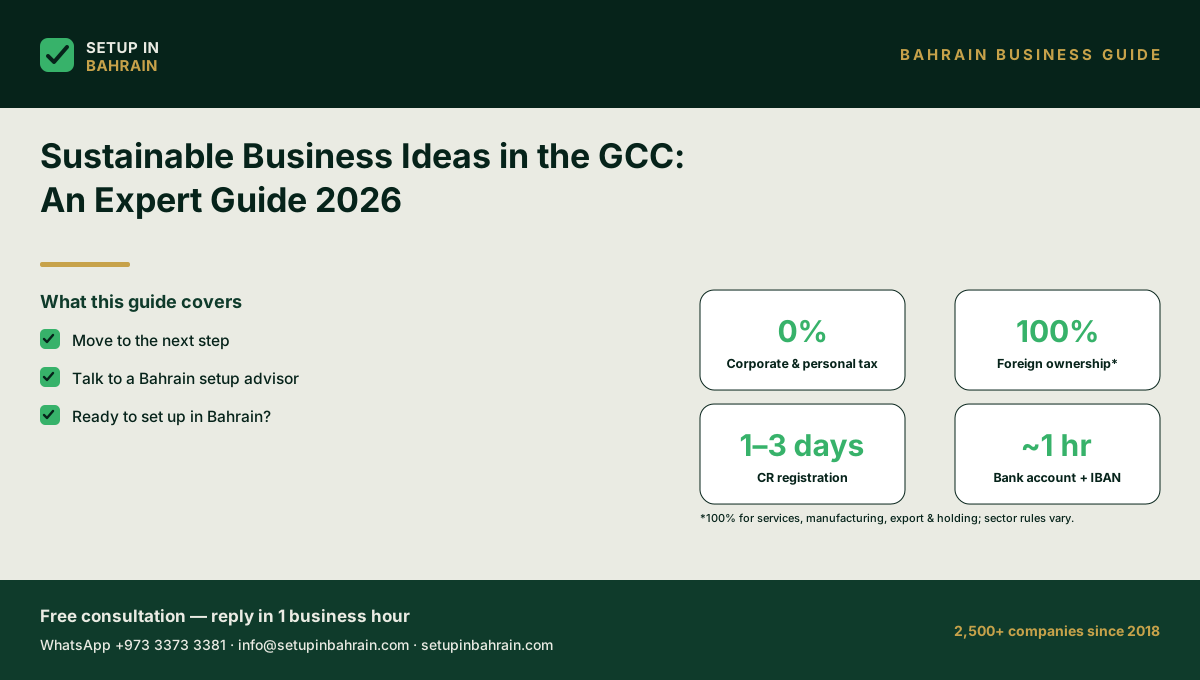
- Sustainable Business Ideas in the GCC: An Expert Guide 2026
View details
Sustainability is no longer just a trend it has become a core business strategy across the Gulf Cooperation Council (GCC) region. As countries like Saudi Arabia, the UAE, Qatar. And Bahrain push forward with ambitious environmental and economic diversification goals, sustainable business ideas in the GCC 2026 are gaining massive traction. Governments are actively supporting eco-friendly initiatives, green startups. And clean energy solutions, making this the perfect time for entrepreneurs to enter the market.
In 2026, sustainable businesses are not only profitable but also aligned with national visions such as Saudi Arabia’s Vision 2030 and the UAE’s Net Zero 2050 strategy. From renewable energy ventures to eco-friendly product lines, there is a growing demand for businesses that prioritize environmental responsibility. For investors and entrepreneurs, this shift creates a unique option to build future-ready enterprises while contributing to long-term sustainability goals.
For foreign businesses looking to register a company in Bahrain , get an investor visa . And open a corporate bank account , this digital logistics boom offers massive potential for growth and regional expansion.
Sustainable Business Ideas in the GCC: An Expert Guide 2026
Table of Contents
- What are Sustainable Business Ideas in the GCC
- Key Benefits
- Eligibility Criteria
- Minimum Investment Requirement
- Sustainable Business vs Traditional Business
- Required Documents
- Application Process
- Processing Time
- Costs & Fees
- Business Setup Requirements
- Job/Operational Requirements
- Property Ownership Rules
- Taxation
- Common Reasons for Failure
- Advantages and Future Outlook
- FAQs
- Final Thoughts
1. What are Sustainable Business Ideas in the GCC
Company formation: Standard BHD 1,340 with 3 months of office address; Gold BHD 1,700 with 6 months; Premium BHD 2,150 with 12 months and a cabin, officer table and chair, and two guest chairs. No formation package includes visas, including Premium. Investor/work visas are priced separately: BHD 755 for one year or BHD 953 for two years, in addition to the formation package. Ask for a written, itemized quotation confirming government fees and all inclusions before payment.
2. Key Benefits
Sustainable business ideas in the GCC 2026 offer several strategic advantages for entrepreneurs and investors.
- High demand due to environmental awareness
- Government incentives and subsidies
- Long-term profitability and scalability
- Positive brand reputation
- Access to global green funding options
- Alignment with national sustainability goals
These benefits make sustainable ventures more resilient and future-proof compared to traditional models.
3. Eligibility Criteria
Starting a sustainable business in the GCC requires meeting general business and regulatory conditions.
- Minimum age of 21 years
- Valid passport and identification
- Clear business plan with sustainability focus
- Proof of investment funds
- Compliance with local environmental regulations
Each GCC country may have slightly different rules, but sustainability-focused proposals often receive priority approvals.
4. Minimum Investment Requirement
The cost of launching sustainable business ideas in the GCC varies depending on the industry and scale.
| Business Type | Minimum Investment (USD) | Notes |
|---|---|---|
| Small Green Startup | 10,000 – 50,000 | Eco-products, consulting |
| Medium Business | 50,000 – 200,000 | Recycling, logistics |
| Large Scale Venture | 500,000+ | Renewable energy projects |
Investments in green sectors often benefit from funding support and reduced operational costs over time.
5. Sustainable Business vs Traditional Business
Understanding the difference helps entrepreneurs make informed decisions.
| Feature | Sustainable Business | Traditional Business |
|---|---|---|
| Environmental Impact | Low | High |
| Initial Cost | Moderate to High | Lower |
| Long-Term Profit | High | Moderate |
| Government Support | Strong | Limited |
Sustainable business ideas in the GCC are more and more outperforming traditional models due to regulatory support and consumer demand.
6. Required Documents
To start a sustainable business, the following documents are typically required.
- Business plan with sustainability strategy
- Passport copies
- Investment proof
- Trade name registration
- Environmental compliance approvals
- Office lease agreement
Ensuring proper documents speeds up approvals and avoids delays.
7. Application Process
The process for launching sustainable business ideas in the GCC is straightforward.
Step 1: Identify business activity
Step 2: Choose jurisdiction (free zone or mainland)
Step 3: Register trade name
Step 4: Submit application and documents
Step 5: Get approvals
Step 6: Acquire business license
Each step must align with environmental guidelines where applicable.
8. Processing Time
Business setup in the GCC typically takes between 1 to 4 weeks. Sustainable businesses may receive faster approvals due to government support.
Timelines vary depending on the country, type of business, and regulatory requirements.
9. Costs & Fees
The cost structure for sustainable business ideas in the GCC includes several components.
| Expense Type | Estimated Cost (USD) |
|---|---|
| Business License | 2,000 – 10,000 |
| Registration Fees | 1,000 – 5,000 |
| Office Setup | 3,000 – 20,000 |
| Environmental Permits | 1,000 – 5,000 |
Costs can vary greatly based on location and business scale.
10. Business Setup Requirements
Entrepreneurs must comply with local business regulations when setting up operations.
- Get trade license
- Register with government authorities
- Open corporate bank account
- Secure office or operational space
- Follow environmental compliance standards
Sustainable businesses may also require additional approvals related to environmental impact.
11. Job/Operational Requirements
Operating a sustainable business involves maintaining compliance and efficiency.
- Hire skilled workforce
- Apply eco-friendly processes
- Maintain sustainability reporting
- Follow labor laws and policies
Operational transparency is key to long-term success.
12. Property Ownership Rules
Foreign investors can own property in designated zones across GCC countries.
- Freehold ownership available in specific areas
- Commercial property ownership permitted
- Restrictions may apply in certain regions
Property ownership supports long-term business stability.
13. Taxation
The GCC offers a favorable tax environment for businesses.
- Low or zero personal income tax
- Corporate tax in some countries
- VAT applicable (usually around 5% to 15%)
- Incentives for green businesses
Tax benefits make sustainable business ideas in the GCC even more attractive.
14. Common Reasons for Failure
Despite strong potential, some businesses fail due to avoidable mistakes.
- Lack of market research
- High initial costs without planning
- عدم compliance with environmental regulations
- Weak business model
- Poor financial management
Avoiding these pitfalls increases the chances of success.
15. Advantages and Future Outlook
The future of sustainable business ideas in the GCC 2026 is extremely promising. Governments are heavily investing in renewable energy, smart cities, and green infrastructure. Initiatives like Saudi Vision 2030 and UAE sustainability strategies are driving demand for eco-friendly businesses. Sectors such as solar energy, electric vehicles, waste management. And green construction are expected to grow rapidly in the coming years. This creates long-term options for entrepreneurs looking to build impactful and profitable businesses.
16. FAQs
- What are sustainable business ideas in the GCC?
They are eco-friendly ventures focused on reducing environmental impact. - Are sustainable businesses profitable in the GCC?
Yes, they offer strong long-term profitability. - What is the minimum investment required?
It can start from as low as USD 10,000. - Do governments support green businesses?
Yes, through incentives and funding programs. - Can foreigners start sustainable businesses in the GCC?
Yes, with full ownership in many areas. - Which sectors are best for sustainable businesses?
Renewable energy, recycling, and eco-products. - Is a business license required?
Yes, it is mandatory. - Are there tax benefits?
Yes, many incentives are available. - How long does setup take?
Usually 1 to 4 weeks. - Do I need environmental approvals?
Yes, depending on the business type. - Can I operate online sustainable businesses?
Yes, digital eco-businesses are growing rapidly. - What are common challenges?
High startup costs and regulatory compliance. - Is demand increasing in 2026?
Yes, demand is rapidly growing. - Can startups succeed in this sector?
Yes, with proper planning and execution. - What is the future outlook?
Highly positive with strong government backing.
17. Final Thoughts
Sustainable business ideas in the GCC 2026 represent a powerful option for entrepreneurs who want to combine profitability with environmental responsibility. With strong government support, increasing consumer awareness. And rapid economic transformation, the region is becoming a global hub for green innovation. By choosing the right business model and following proper setup procedures, investors can build successful and future-ready enterprises in the GCC.
Quick Facts
- Bahrain: generally no corporate income tax for most sectors
- Foreign ownership: 100% allowed
- Setup time: 15 to 20 days
- Company formation: Standard BHD 1,340 with 3 months of office address; Gold BHD 1,700 with 6 months; Premium BHD 2,150 with 12 months and a cabin, officer table and chair, and two guest chairs. No formation package includes visas, including Premium. Investor/work visas are priced separately: BHD 755 for one year or BHD 953 for two years, in addition to the formation package. Ask for a written, itemized quotation confirming government fees and all inclusions before payment.
- Company renewal packages: BHD 530 with 3 months of office address; BHD 980 with 6 months; BHD 1,520 with 12 months. These are separate renewal packages, not visa fees.
- Rating: 4.8 stars on Google
- Clients served: 2,500 and more
Why Choose Bahrain?
Bahrain has no income tax. It is easy to set up a firm here. The rules are clear and fair.
You can own 100% of your firm. No local partner is needed. This is rare in the Gulf region.
You can open a bank account with ease. You can hire staff from any country. You can live and work here too.
Bahrain has free trade deals with the US and the GCC. This gives you access to large markets. It is a smart base for your business.
How We Help You
We are a team of experts. We set up firms in Bahrain. We have helped 2,500 clients.
We do all the hard work. You just tell us your plan. We take care of the rest.
Our team files all forms. We deal with the state. We keep you up to date at each step.
We have a 4.8 star rating on Google. Our clients trust us. We are proud of that.
What You Get
- A valid CR in 15 to 20 days
- Zero tax on your profits
- Full foreign ownership — no local partner
- A bank account in 3 to 6 weeks
- An Investor Visa to live and work in Bahrain
- Staff from any country, via LMRA work permits
- A virtual office or a real one — your choice
Our Process
- You fill in our form. It takes 3 minutes.
- We call you back the same day.
- We check your plan and pick the right firm type.
- We draft your MOA and all legal files.
- We file with MOICT via the Sijilat portal.
- You get your CR in 15 to 20 days.
- We help you open your bank account.
- You can trade. You are done.
Key Numbers
- Tax rate: 0%
- Ownership: 100% foreign
- Time to set up: 15 to 20 days
- Company formation: Standard BHD 1,340 with 3 months of office address; Gold BHD 1,700 with 6 months; Premium BHD 2,150 with 12 months and a cabin, officer table and chair, and two guest chairs. No formation package includes visas, including Premium. Investor/work visas are priced separately: BHD 755 for one year or BHD 953 for two years, in addition to the formation package. Ask for a written, itemized quotation confirming government fees and all inclusions before payment.
- Company renewal packages: BHD 530 with 3 months of office address; BHD 980 with 6 months; BHD 1,520 with 12 months. These are separate renewal packages, not visa fees.
- Investor Visa: From BHD 755
- Virtual office: From BHD 600 per year
- Clients served: Over 2,500
- Star rating: 4.8 on Google
Bahrain vs Other GCC Markets
Bahrain is easy. The UAE needs a local sponsor for some firm types. Saudi Arabia has more rules.
Bahrain has zero tax. Qatar has no tax too, but the rules are more strict. Kuwait is more costly.
In Bahrain, you can own all of your firm. You do not need a local partner. This is a big plus.
Bahrain has a free trade deal with the US. This means your goods face low or no tariffs. No other GCC state has this deal.
Common Terms
- CR: Commercial Registration — your right to trade
- MOA: Memorandum of Association — your firm's legal deed
- WLL: With Limited Liability — the most common firm type
- LMRA: Labour Market Regulatory Authority — issues work and investor visas
- MOICT: Ministry of Industry — issues CRs and firm licenses
- Sijilat: The online portal to file your CR
Common Questions
Is it hard to set up a firm in Bahrain?
No. It is one of the easiest places in the Gulf. We do all the hard work for you. You can be set up in 20 days.
Do I need to live in Bahrain?
No. You can run your firm from home. You may visit once to open a bank account. The rest is done online.
How do I get started?
Fill in our form on this page. We call you back the same day. Our team maps your best plan at no cost to you.
Ready to set up in Bahrain?
Tell us your business idea. We'll map the right entity, ownership and timeline — then handle the filing while you build.
Official Bahrain government references
- Sijilat — MOICT commercial registration portalsijilat.bh
- Bahrain Economic Development Boardbahrainedb.com