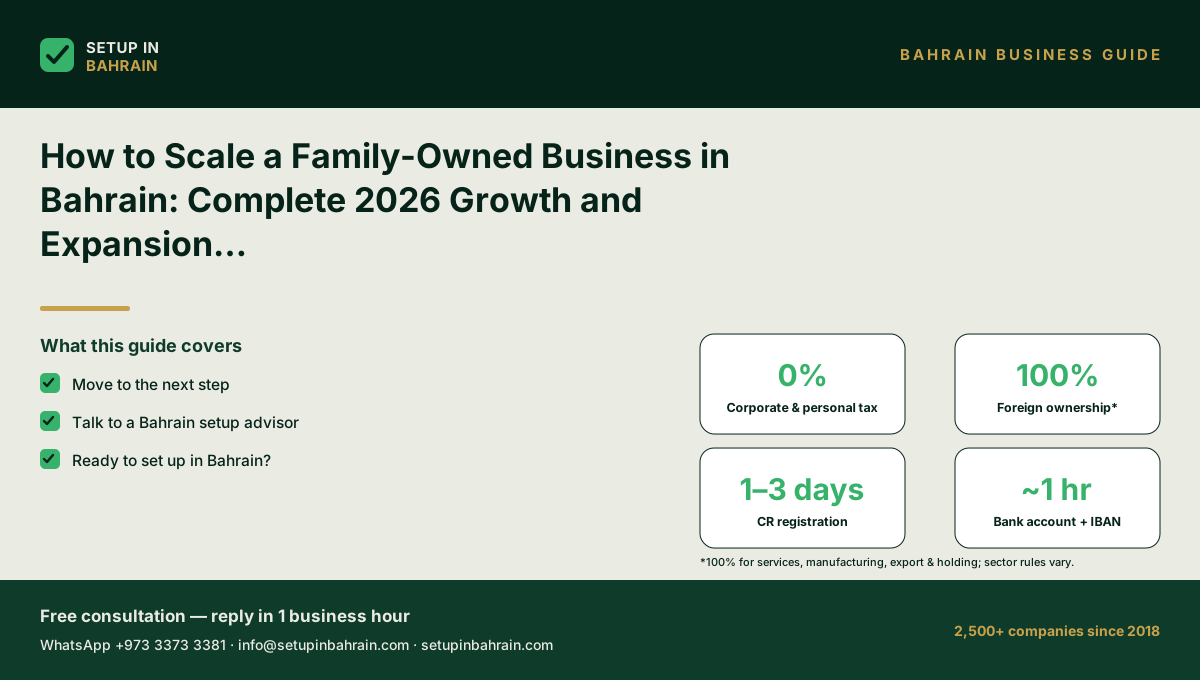
Learn how to scale a family-owned business in Bahrain with smart growth strategies, succession planning, digital transformation. Investment...
Quick Summary
- Bahrain: generally no corporate income tax for most sectors. 100% foreign ownership.
- Company formation in 15–20 business days.
- We have served 2,800+ clients from 44+ countries and maintain records to substantiate that total where needed. We have 113 Google reviews; reviews represent only some clients and are not the same as the total clients served.
- Full support from our team of experts.
- Company renewal packages: BHD 530 with 3 months of office address; BHD 980 with 6 months; BHD 1,520 with 12 months. These are separate renewal packages, not visa fees.
Key Takeaways
- How to Scale a Family-Owned Business in Bahrain: Complete 2026 Growth and Expansion Guide
View details
Family-owned businesses continue playing a major role in Bahrain’s economy, contributing greatly across retail, construction, logistics, hospitality, manufacturing, trading. And professional services sectors. As Bahrain’s business environment becomes more and more competitive and digitally driven, understanding how to scale a family-owned business in Bahrain has become essential for long-term sustainability, profitability, and generational growth in 2026.
Many family businesses in Bahrain begin with strong local relationships and operational stability but eventually face challenges related to expansion, succession planning, digital transformation, operational efficiency, and market competition. Scaling a family-owned business requires structured leadership, financial discipline, technology integration, operational systems. Long-term strategic planning. This guide explores how to scale a family-owned business in Bahrain, including growth strategies, operational improvements, succession planning, technology adoption, investment planning. And future business options.
For foreign businesses looking to register a company in Bahrain , get an investor visa . And open a corporate bank account , this digital logistics boom offers massive potential for growth and regional expansion.
How to Scale a Family-Owned Business in Bahrain: Complete 2026 Growth and Expansion Guide
Table of Contents
- 1. Understanding Bahrain’s Family Business Landscape
- 2. Why Family Businesses Matter in Bahrain
- 3. Common Challenges Facing Family-Owned Businesses
- 4. Building a Scalable Business Structure
- 5. Leadership and Succession Planning
- 6. Financial Planning and Cash Flow Management
- 7. Expanding Beyond Traditional Markets
- 8. Digital Transformation and Technology Adoption
- 9. Hiring Professional Management Teams
- 10. Branding and Marketing Strategies
- 11. Diversification and New Revenue Streams
- 12. Expanding into GCC Markets
- 13. Risk Management and Governance Systems
- 14. Investment and Funding Options
- 15. Future Growth Trends for Family Businesses
- 16. Long-Term Sustainability Strategies
- 17. Final Thoughts
1. Understanding Bahrain’s Family Business Landscape
Family-owned businesses remain one of the strongest pillars of Bahrain’s private sector economy.
Major family business sectors include:
- Retail and wholesale trading
- Construction and contracting
- Hospitality and tourism
- Manufacturing and industrial operations
- Logistics and transportation
- Professional and business services
Many businesses that started as small family operations have evolved into major regional enterprises.
2. Why Family Businesses Matter in Bahrain
Family businesses contribute greatly to employment generation and economic stability across Bahrain.
Key strengths include:
- Strong relationship-based operations
- Long-term business commitment
- Faster decision-making flexibility
- Deep local market understanding
- Strong reputation and customer trust
These strengths create strong foundations for scalable business growth.
3. Common Challenges Facing Family-Owned Businesses
Despite their advantages, family businesses often face operational and structural limitations.
Common challenges include:
- Lack of formal business systems
- Succession and leadership conflicts
- Resistance to digital transformation
- Limited scalability planning
- Overdependence on family decision-making
These challenges often affect long-term growth potential if not addressed properly.
4. Building a Scalable Business Structure
Creating a scalable operational structure is essential for business expansion.
Key scalability priorities include:
- Standardized operational procedures
- Defined management roles
- Performance measurement systems
- Scalable financial processes
- Clear organizational hierarchy
Businesses with structured systems generally scale more efficiently.
| Business Scalability Area | Importance Level |
|---|---|
| Operational Systems | High |
| Financial Management | High |
| Technology Integration | High |
| Leadership Structure | High |
| Customer Experience | High |
Operational consistency is critical for long-term scalability.
5. Leadership and Succession Planning
Succession planning remains one of the most important aspects of scaling family businesses.
Important succession strategies include:
- Identifying future leaders early
- Providing professional management training
- Establishing governance frameworks
- Separating ownership and management responsibilities
- Creating long-term leadership transition plans
Well-planned leadership transitions improve long-term business stability.
6. Financial Planning and Cash Flow Management
Strong financial discipline is essential for business growth and expansion.
Key financial priorities include:
- Cash flow forecasting
- Expense optimization
- Profitability tracking
- Expansion budgeting
- Investment planning
Businesses with organized financial systems generally attract more investment options.
7. Expanding Beyond Traditional Markets
Scaling often requires businesses to move beyond traditional local customer bases.
Expansion strategies include:
- Launching new product or service lines
- Entering new geographic markets
- Developing online sales channels
- Expanding into B2B services
- Building regional distribution networks
Market diversification reduces dependency on limited revenue sources.
8. Digital Transformation and Technology Adoption
Technology adoption has become essential for scalable business operations in 2026.
Important digital transformation areas include:
- E-commerce platforms
- ERP and inventory management systems
- CRM and customer management tools
- Digital payment solutions
- Business automation systems
Digital transformation improves operational efficiency and customer experience.
9. Hiring Professional Management Teams
Professional management support is often necessary for scaling family businesses effectively.
Key hiring areas include:
- Operations management
- Financial and accounting expertise
- Marketing and branding professionals
- HR and talent management
- Technology and digital specialists
Professional management reduces operational dependency on family members alone.
10. Branding and Marketing Strategies
Strong branding helps family businesses compete in more and more competitive markets.
Effective marketing strategies include:
- Digital marketing campaigns
- SEO and content marketing
- Social media brand building
- Customer loyalty programs
- Reputation management systems
Businesses with strong brand identity often scale faster and retain customers more effectively.
11. Diversification and New Revenue Streams
Diversification improves financial stability and long-term growth options.
Popular diversification strategies include:
- Expanding into related industries
- Introducing premium product lines
- Developing subscription-based services
- Launching digital business models
- Creating franchising options
Diversified businesses are generally more resilient during economic fluctuations.
12. Expanding into GCC Markets
Bahrain’s strategic location provides strong regional expansion options.
Key regional expansion advantages include the following:
- GCC market access
- Cross-border trade options
- Shared cultural and business environments
- Growing regional consumer demand
- Logistics and transportation connectivity
Regional expansion can greatly increase revenue and brand visibility.
13. Risk Management and Governance Systems
Strong governance systems improve business sustainability and investor confidence.
Important governance priorities include:
- Financial transparency
- Internal operational controls
- Risk management frameworks
- Legal compliance systems
- Decision-making accountability
Governance structures become more and more important as businesses scale.
14. Investment and Funding Options
Scaling family businesses often requires additional capital and investment planning.
Popular funding options include:
- Bank financing
- Private investors
- Business partnerships
- SME growth support programs
- Internal reinvestment strategies
Businesses with strong financial records generally access funding more easily.
15. Future Growth Trends for Family Businesses
The future of how to scale a family-owned business in Bahrain is closely linked to innovation and digital transformation.
| Business Growth Area | Demand Level | Future Growth Potential |
|---|---|---|
| E-Commerce Expansion | High | Very High |
| Technology Integration | High | High |
| Regional GCC Expansion | High | High |
| Professional Management | Medium-High | High |
| Digital Branding | High | Very High |
Key future trends include:
- Greater adoption of automation systems
- Expansion into digital commerce
- Increased focus on governance and succession planning
- Growth in regional business partnerships
- Higher investment in customer experience and branding
Businesses that modernize operations and embrace technology are expected to achieve stronger long-term growth.
16. Long-Term Sustainability Strategies
Sustainable business growth requires long-term strategic planning and operational adaptability.
Key sustainability strategies include:
- Continuous operational improvement
- Leadership development programs
- Technology modernization
- Market diversification
- Customer retention and loyalty building
Businesses that prioritize adaptability and innovation generally remain competitive for longer periods.
17. Final Thoughts
Understanding how to scale a family-owned business in Bahrain is essential for entrepreneurs and business owners seeking long-term growth, stability. And generational success in 2026. Bahrain’s business-friendly environment, regional market access, digital transformation options. And expanding economy continue creating strong growth potential for family enterprises across multiple industries. But, successful scaling depends on operational structure, leadership planning, financial discipline, technology adoption, and strategic market expansion. Family businesses that embrace modernization, professional management. And scalable operational systems can establish highly profitable and sustainable enterprises capable of competing successfully within Bahrain and across GCC markets.
Quick Facts
- Bahrain: generally no corporate income tax for most sectors
- Foreign ownership: 100% allowed
- Setup time: 15 to 20 days
- Company formation: Standard BHD 1,340 with 3 months of office address; Gold BHD 1,700 with 6 months; Premium BHD 2,150 with 12 months and a cabin, officer table and chair, and two guest chairs. No formation package includes visas, including Premium. Investor/work visas are priced separately: BHD 755 for one year or BHD 953 for two years, in addition to the formation package. Ask for a written, itemized quotation confirming government fees and all inclusions before payment.
- Company renewal packages: BHD 530 with 3 months of office address; BHD 980 with 6 months; BHD 1,520 with 12 months. These are separate renewal packages, not visa fees.
- Rating: 4.8 stars on Google
- Clients served: 2,500 and more
Why Choose Bahrain?
Bahrain has no income tax. It is easy to set up a firm here. The rules are clear and fair.
You can own 100% of your firm. No local partner is needed. This is rare in the Gulf region.
You can open a bank account with ease. You can hire staff from any country. You can live and work here too.
Bahrain has free trade deals with the US and the GCC. This gives you access to large markets. It is a smart base for your business.
Why Set Up in Bahrain?
Bahrain is a great place to run a firm. It has no tax. You keep all your profits. This is rare in the Gulf.
You can own your firm 100%. No local partner is needed. The law is clear and fair.
It is fast to set up. You can have a CR in 15 to 20 days. We file all forms for you.
Bahrain has a free trade deal with the US. Your goods face low or no tariffs. This gives you access to big markets.
The banks are good. The roads are good. The schools are good. It is a well-run state.
We have served 2,800+ clients from 44+ countries and maintain records to substantiate that total where needed. We have 113 Google reviews; reviews represent only some clients and are not the same as the total clients served.
Our Services
- Company formation: Standard BHD 1,340 with 3 months of office address; Gold BHD 1,700 with 6 months; Premium BHD 2,150 with 12 months and a cabin, officer table and chair, and two guest chairs. No formation package includes visas, including Premium. Investor/work visas are priced separately: BHD 755 for one year or BHD 953 for two years, in addition to the formation package. Ask for a written, itemized quotation confirming government fees and all inclusions before payment.
- Company renewal packages: BHD 530 with 3 months of office address; BHD 980 with 6 months; BHD 1,520 with 12 months. These are separate renewal packages, not visa fees.
- Investor Visa — from BHD 755
- Work Visa — LMRA managed
- Virtual office — from BHD 600 per year
- Bank account opening — 3 to 6 weeks
- Family visa — for spouse and kids
- UBO filing — as required by law
Bahrain at a Glance
- Tax rate: 0%
- Foreign ownership: 100%
- Setup time: 15 to 20 days
- Free trade deal: Yes, with the US
- Language: Arabic and English
- Currency: Bahraini Dinar (BHD)
- Time zone: UTC+3
- GDP growth: Steady and strong
How to Start
- Fill in the form on this page. It takes 3 minutes.
- We call you back the same day.
- We map the best plan for your firm type and goals.
- We file all forms. We deal with MOICT for you.
- You get your CR in 15 to 20 days.
- We help you open a bank account and get your visa.
- You are ready to trade. We stay with you.
Common Questions
Do I need to visit Bahrain to set up?
No. You can do it all from home. We file online. You may need one visit to open a bank account.
Is Bahrain safe for business?
Yes. Bahrain is a stable state. It has a clear legal system. Your firm and funds are safe here.
Can I hire staff from any country?
Yes. You can hire from any country. Each hire needs a work permit from LMRA. We manage this for you.
What type of firm should I set up?
Most clients choose a WLL. This is a limited liability firm. It is flexible and well-known in Bahrain. We advise you on the best type for your case.
How do I get in touch?
Fill in our form. We call you back the same day. You can also email us or use the chat on this page.
Common Questions
Is it hard to set up a firm in Bahrain?
No. It is one of the easiest places in the Gulf. We do all the hard work for you. You can be set up in 20 days.
Do I need to live in Bahrain?
No. You can run your firm from home. You may visit once to open a bank account. The rest is done online.
How do I get started?
Fill in our form on this page. We call you back the same day. Our team maps your best plan at no cost to you.
Ready to set up in Bahrain?
Tell us your business idea. We'll map the right entity, ownership and timeline — then handle the filing while you build.
Official Bahrain government references
- Sijilat — MOICT commercial registration portalsijilat.bh
- Bahrain Economic Development Boardbahrainedb.com