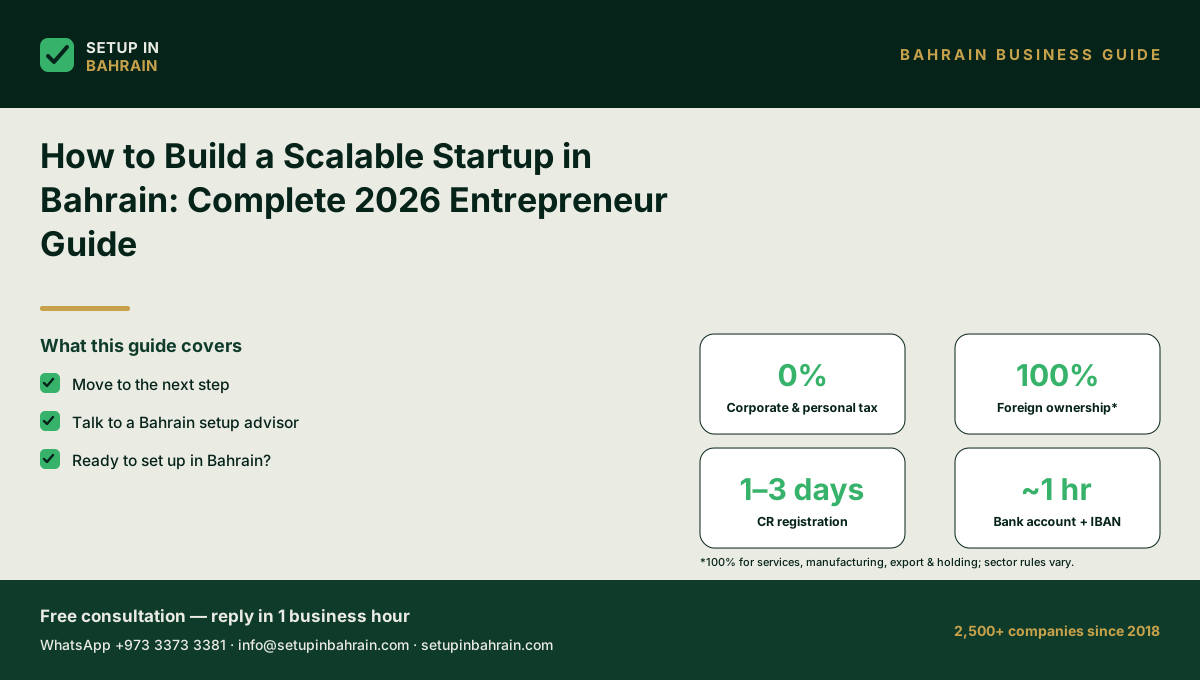
Learn how to build a scalable startup in Bahrain with this 2026 guide. Discover business registration, funding options, startup ecosystems, legal...
Quick Summary
- Bahrain: generally no corporate income tax for most sectors. 100% foreign ownership.
- Company formation in 15–20 business days.
- We have served 2,800+ clients from 44+ countries and maintain records to substantiate that total where needed. We have 113 Google reviews; reviews represent only some clients and are not the same as the total clients served.
- Full support from our team of experts.
- Company renewal packages: BHD 530 with 3 months of office address; BHD 980 with 6 months; BHD 1,520 with 12 months. These are separate renewal packages, not visa fees.
Key Takeaways
- How to Build a Scalable Startup in Bahrain: Complete 2026 Entrepreneur Guide
View details
The rapid growth of Bahrain’s startup ecosystem has created significant options for entrepreneurs looking to launch and expand innovative businesses in the Gulf region. Understanding how to build a scalable startup in Bahrain has become more and more important in 2026 as the Kingdom continues strengthening its position as a regional hub for technology, fintech, digital commerce, logistics, tourism, and innovation-driven businesses.
Supported by startup-friendly regulations, foreign ownership flexibility, government-backed SME initiatives, digital infrastructure. And access to GCC markets, Bahrain offers an attractive environment for entrepreneurs seeking long-term business growth. But, building a scalable startup requires more than just launching a company. Entrepreneurs must focus on market validation, operational efficiency, financial planning, technology integration, customer acquisition, and sustainable expansion strategies. This guide explores how to build a scalable startup in Bahrain, including startup planning, funding strategies, growth frameworks, operational requirements. And future scalability options.
For foreign businesses looking to register a company in Bahrain , get an investor visa . And open a corporate bank account , this digital logistics boom offers massive potential for growth and regional expansion.
How to Build a Scalable Startup in Bahrain: Complete 2026 Entrepreneur Guide
Table of Contents
- 1. Understanding Bahrain’s Startup Ecosystem
- 2. Why Bahrain is Attractive for Startups
- 3. Choosing the Right Startup Industry
- 4. Validating Your Business Idea
- 5. Creating a Scalable Business Model
- 6. Company Formation and Legal Structure
- 7. Funding and Investment Options
- 8. Building a Strong Startup Team
- 9. Technology and Digital Infrastructure
- 10. Marketing and Customer Acquisition Strategies
- 11. Financial Planning and Cash Flow Management
- 12. Scaling Operations Efficiently
- 13. Startup Challenges and Risk Management
- 14. Government Support and SME Programs
- 15. Expansion Options Across GCC Markets
- 16. Future Startup Trends in Bahrain
- 17. Final Thoughts
1. Understanding Bahrain’s Startup Ecosystem
Bahrain’s startup ecosystem continues expanding rapidly due to increasing investment in entrepreneurship and innovation.
Major startup sectors include:
- Fintech and digital banking
- E-commerce platforms
- Logistics and supply chain technology
- Tourism and hospitality startups
- Health and wellness businesses
- SaaS and digital service platforms
The ecosystem continues attracting entrepreneurs, investors, and international businesses.
2. Why Bahrain is Attractive for Startups
Several factors make Bahrain one of the GCC’s most startup-friendly business destinations.
Key advantages include:
- 100% foreign ownership in many sectors
- Competitive operational costs
- Access to GCC markets
- Strong digital infrastructure
- Startup-friendly business regulations
- Government-backed entrepreneurship initiatives
These factors continue to increase interest in how to build a scalable startup in Bahrain.
3. Choosing the Right Startup Industry
Selecting the right industry is essential for long-term startup scalability and profitability.
High-growth startup sectors include:
- Financial technology
- E-commerce and online retail
- Logistics and delivery services
- Artificial intelligence solutions
- Wellness and health services
- Tourism and hospitality technology
Entrepreneurs should prioritize industries with strong market demand and scalability potential.
4. Validating Your Business Idea
Business idea validation helps reduce startup risk and improve market fit.
Important validation steps include:
- Conducting market research
- Identifying target customers
- Analyzing competitor businesses
- Testing product or service demand
- Gathering customer feedback
Startups that validate market demand early often scale more efficiently.
5. Creating a Scalable Business Model
A scalable business model allows startups to grow revenue without proportionally increasing operational costs.
Key scalability factors include:
- Recurring revenue options
- Digital automation systems
- Efficient operational processes
- Strong customer retention strategies
- Expandable product or service offerings
Scalable startups focus heavily on systems, automation, and operational efficiency.
| Scalable Business Feature | Importance Level |
|---|---|
| Automation Systems | High |
| Recurring Revenue Models | High |
| Digital Infrastructure | High |
| Operational Efficiency | High |
| Customer Retention | High |
Businesses designed for scalability often attract stronger investor interest.
6. Company Formation and Legal Structure
Choosing the correct legal structure is essential for startup operations and investment readiness.
Popular business structures include:
- Single Person Company (SPC)
- With Limited Liability (WLL)
- Branch office structures
- Partnership-based companies
Entrepreneurs should select structures aligned with ownership, scalability, and funding goals.
7. Funding and Investment Options
Access to funding is critical for startup growth and expansion.
Popular funding sources include:
- Angel investors
- Venture capital firms
- SME support programs
- Startup accelerators and incubators
- Bank financing and business loans
Startups with strong business models and growth potential generally attract more investment options.
8. Building a Strong Startup Team
A skilled and adaptable team plays a major role in startup scalability.
Key hiring priorities include:
- Technology and operations specialists
- Marketing and growth professionals
- Financial management expertise
- Customer support teams
- Product development talent
Strong leadership and team culture greatly improve operational performance.
9. Technology and Digital Infrastructure
Technology integration is essential for scalable startup operations.
Important technology areas include:
- Cloud-based operational systems
- CRM and customer management platforms
- AI and automation tools
- Digital payment systems
- Data analytics and reporting software
Technology-driven startups often scale faster and operate more efficiently.
10. Marketing and Customer Acquisition Strategies
Customer acquisition is one of the most important components of startup growth.
Effective marketing channels include:
- SEO and content marketing
- Social media advertising
- Influencer partnerships
- Email marketing campaigns
- Paid digital advertising
Customer acquisition strategies should focus on both growth and long-term retention.
11. Financial Planning and Cash Flow Management
Strong financial planning is essential for sustainable startup scaling.
Key financial management priorities include:
- Cash flow forecasting
- Expense control systems
- Revenue growth tracking
- Emergency reserve planning
- Profitability analysis
Poor financial management remains one of the leading causes of startup failure.
12. Scaling Operations Efficiently
Operational scalability is critical for long-term startup growth.
Key operational strategies include:
- Process automation
- Workflow optimization
- Outsourcing non-core activities
- Technology-driven operations
- Performance monitoring systems
Businesses that scale efficiently can expand faster while maintaining profitability.
13. Startup Challenges and Risk Management
Entrepreneurs often face multiple operational and financial challenges during scaling.
Common startup challenges include:
- Limited startup capital
- Intense market competition
- Customer acquisition costs
- Hiring and talent retention issues
- Operational inefficiencies
Strong planning and adaptability help reduce business risks.
14. Government Support and SME Programs
The Bahraini government continues supporting entrepreneurship and SME development.
Key support initiatives include:
- Startup funding programs
- Business incubation support
- SME operational assistance
- Digital economy initiatives
- Foreign investment support policies
Government-backed initiatives continue strengthening Bahrain’s startup ecosystem.
15. Expansion Options Across GCC Markets
Bahrain’s strategic location provides startups with direct access to regional markets.
Expansion options include:
- GCC e-commerce growth
- Regional logistics operations
- Digital service expansion
- Cross-border partnerships
- International trade and distribution
Scalable startups can leverage Bahrain as a regional operational base.
16. Future Startup Trends in Bahrain
The future of how to build a scalable startup in Bahrain is closely linked to technology and digital transformation.
| Startup Sector | Demand Level | Future Growth Potential |
|---|---|---|
| Fintech Startups | High | Very High |
| E-Commerce Businesses | High | High |
| Logistics Technology | High | High |
| AI and SaaS Platforms | High | Very High |
| Wellness and Tourism Startups | Medium-High | High |
Key future trends include the following:
- Expansion of AI-driven startups
- Growth in digital commerce platforms
- Increased automation and cloud infrastructure
- Greater investor interest in scalable tech businesses
- Stronger regional startup collaboration across GCC markets
Technology-focused startups are expected to dominate future growth options.
17. Final Thoughts
Understanding how to build a scalable startup in Bahrain is essential for entrepreneurs seeking long-term business growth within one of the GCC’s most dynamic startup ecosystems. Bahrain’s investor-friendly regulations, strong digital infrastructure, startup support programs. And strategic regional location continue creating major options for scalable businesses across technology, logistics, tourism, wellness, fintech. Digital commerce sectors. But, successful startup scaling depends on strong business planning, operational efficiency, customer acquisition strategies, technology integration. Disciplined financial management. Entrepreneurs who focus on innovation, scalability, automation. And market adaptability can establish highly profitable and sustainable startups within Bahrain’s rapidly evolving economy
Quick Facts
- Bahrain: generally no corporate income tax for most sectors
- Foreign ownership: 100% allowed
- Setup time: 15 to 20 days
- Company formation: Standard BHD 1,340 with 3 months of office address; Gold BHD 1,700 with 6 months; Premium BHD 2,150 with 12 months and a cabin, officer table and chair, and two guest chairs. No formation package includes visas, including Premium. Investor/work visas are priced separately: BHD 755 for one year or BHD 953 for two years, in addition to the formation package. Ask for a written, itemized quotation confirming government fees and all inclusions before payment.
- Company renewal packages: BHD 530 with 3 months of office address; BHD 980 with 6 months; BHD 1,520 with 12 months. These are separate renewal packages, not visa fees.
- Rating: 4.8 stars on Google
- Clients served: 2,500 and more
Why Choose Bahrain?
Bahrain has no income tax. It is easy to set up a firm here. The rules are clear and fair.
You can own 100% of your firm. No local partner is needed. This is rare in the Gulf region.
You can open a bank account with ease. You can hire staff from any country. You can live and work here too.
Bahrain has free trade deals with the US and the GCC. This gives you access to large markets. It is a smart base for your business.
Why Set Up in Bahrain?
Bahrain is a great place to run a firm. It has no tax. You keep all your profits. This is rare in the Gulf.
You can own your firm 100%. No local partner is needed. The law is clear and fair.
It is fast to set up. You can have a CR in 15 to 20 days. We file all forms for you.
Bahrain has a free trade deal with the US. Your goods face low or no tariffs. This gives you access to big markets.
The banks are good. The roads are good. The schools are good. It is a well-run state.
We have served 2,800+ clients from 44+ countries and maintain records to substantiate that total where needed. We have 113 Google reviews; reviews represent only some clients and are not the same as the total clients served.
Our Services
- Company formation: Standard BHD 1,340 with 3 months of office address; Gold BHD 1,700 with 6 months; Premium BHD 2,150 with 12 months and a cabin, officer table and chair, and two guest chairs. No formation package includes visas, including Premium. Investor/work visas are priced separately: BHD 755 for one year or BHD 953 for two years, in addition to the formation package. Ask for a written, itemized quotation confirming government fees and all inclusions before payment.
- Company renewal packages: BHD 530 with 3 months of office address; BHD 980 with 6 months; BHD 1,520 with 12 months. These are separate renewal packages, not visa fees.
- Investor Visa — from BHD 755
- Work Visa — LMRA managed
- Virtual office — from BHD 600 per year
- Bank account opening — 3 to 6 weeks
- Family visa — for spouse and kids
- UBO filing — as required by law
Bahrain at a Glance
- Tax rate: 0%
- Foreign ownership: 100%
- Setup time: 15 to 20 days
- Free trade deal: Yes, with the US
- Language: Arabic and English
- Currency: Bahraini Dinar (BHD)
- Time zone: UTC+3
- GDP growth: Steady and strong
How to Start
- Fill in the form on this page. It takes 3 minutes.
- We call you back the same day.
- We map the best plan for your firm type and goals.
- We file all forms. We deal with MOICT for you.
- You get your CR in 15 to 20 days.
- We help you open a bank account and get your visa.
- You are ready to trade. We stay with you.
Common Questions
Do I need to visit Bahrain to set up?
No. You can do it all from home. We file online. You may need one visit to open a bank account.
Is Bahrain safe for business?
Yes. Bahrain is a stable state. It has a clear legal system. Your firm and funds are safe here.
Can I hire staff from any country?
Yes. You can hire from any country. Each hire needs a work permit from LMRA. We manage this for you.
What type of firm should I set up?
Most clients choose a WLL. This is a limited liability firm. It is flexible and well-known in Bahrain. We advise you on the best type for your case.
How do I get in touch?
Fill in our form. We call you back the same day. You can also email us or use the chat on this page.
Common Questions
Is it hard to set up a firm in Bahrain?
No. It is one of the easiest places in the Gulf. We do all the hard work for you. You can be set up in 20 days.
Do I need to live in Bahrain?
No. You can run your firm from home. You may visit once to open a bank account. The rest is done online.
How do I get started?
Fill in our form on this page. We call you back the same day. Our team maps your best plan at no cost to you.
Ready to set up in Bahrain?
Tell us your business idea. We'll map the right entity, ownership and timeline — then handle the filing while you build.
Official Bahrain government references
- Sijilat — MOICT commercial registration portalsijilat.bh
- Bahrain Economic Development Boardbahrainedb.com