
Launch your electronics manufacturing company in Bahrain with this 2026 guide. Explore setup costs, legal requirements, incentives, and growth options.
Quick Summary
- Bahrain: generally no corporate income tax for most sectors. 100% foreign ownership.
- Company formation in 15–20 business days.
- We have served 2,800+ clients from 44+ countries and maintain records to substantiate that total where needed. We have 113 Google reviews; reviews represent only some clients and are not the same as the total clients served.
- Full support from our team of experts.
- Company renewal packages: BHD 530 with 3 months of office address; BHD 980 with 6 months; BHD 1,520 with 12 months. These are separate renewal packages, not visa fees.
Key Takeaways
- Electronics Manufacturing Company in Bahrain: Setup Process, Legal Requirements, Costs, and Options – 2026 Guide
View details
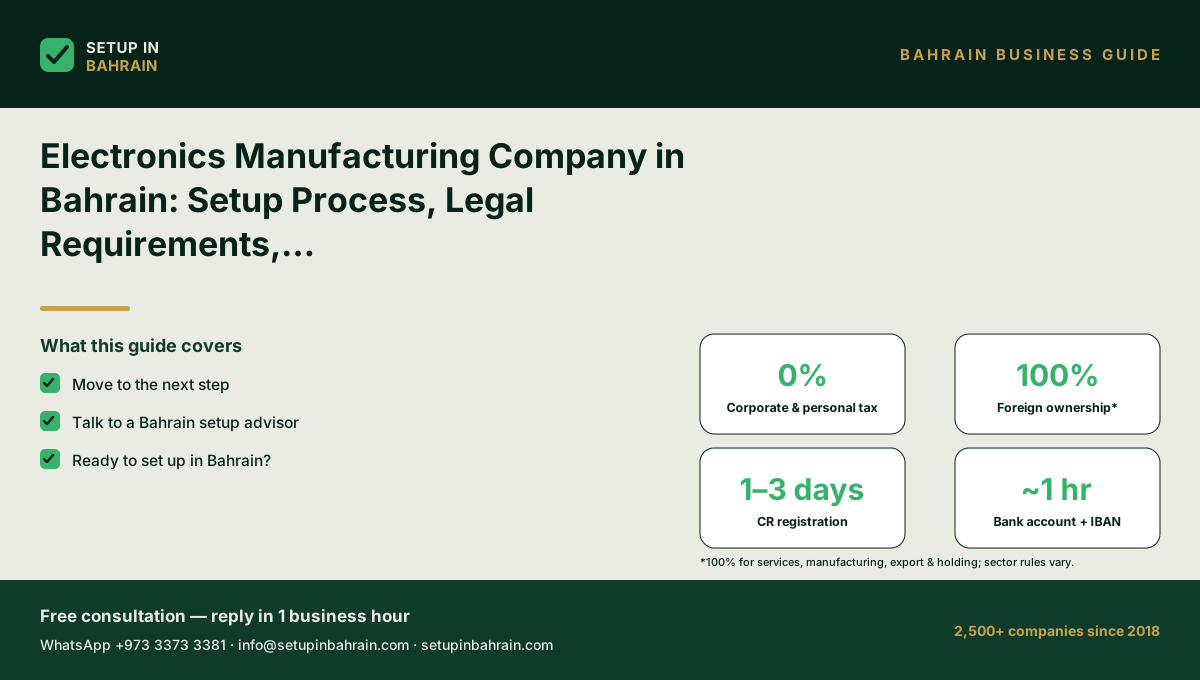
Electronics manufacturing company in Bahrain is emerging as a high-potential business option as the Kingdom strengthens its position in advanced manufacturing and industrial innovation. In 2026, Bahrain offers a supportive ecosystem for manufacturing businesses, including modern infrastructure, strategic geographic access to global markets. And government-backed incentives. For investors and entrepreneurs, establishing an electronics manufacturing company in Bahrain provides a strong foundation for regional and international expansion.
With the increasing global demand for electronics such as consumer devices, industrial components. And smart technologies, Bahrain is actively encouraging foreign investment in this sector. Its proximity to major GCC markets, combined with competitive operational costs, makes it an ideal destination for manufacturing businesses.
This detailed guide covers everything you need to know about starting an electronics manufacturing company in Bahrain, including legal structures, setup process, costs, compliance requirements. And growth options in 2026.
For foreign businesses looking to register a company in Bahrain , get an investor visa . And open a corporate bank account , this digital logistics boom offers massive potential for growth and regional expansion.
Electronics Manufacturing Company in Bahrain: Setup Process, Legal Requirements, Costs, and Options – 2026 Guide
Table of Contents
- Introduction to Real Estate Company Registration in Bahrain
- Why Bahrain is a Strong Real Estate Investment Hub
- Legal Framework Governing Real Estate Companies
- Types of Business Structures Available
- Limited Liability Company (WLL) Explained
- Single Person Company (SPC) Option
- Branch of Foreign Company Setup
- Foreign Ownership Rules in 2026
- Real Estate Business Activities Allowed
- Step-by-Step Registration Process
- Key Legal Documents Required
- Licensing Authorities and Their Roles
- Cost Breakdown of Company Registration
- Office Space Requirements and Regulations
- Corporate Bank Account Setup
- Taxation Benefits and Financial Advantages
- Compliance and Ongoing Obligations
- Common Challenges and Risk Factors
- Risk Management Strategies
- Profit Potential in Bahrain Real Estate Market
- Investment Zones and Freehold Property Areas
- Role of Real Estate Regulatory Authority (RERA)
- Digital Transformation in Bahrain Real Estate Sector
- Workforce and Hiring Considerations
- Marketing and Business Development Strategies
- Future Trends in Bahrain Real Estate Market
- Final Thoughts and Strategic Insights
1. Introduction to Real Estate Company Registration in Bahrain
Real estate company registration in Bahrain refers to the legal process of establishing a business entity authorized to carry out property-related activities such as buying, selling, leasing, brokerage, property management, and development. The process is regulated to ensure transparency, investor protection, and structured market operations.
Bahrain has streamlined business registration procedures, making it easier for investors to enter the real estate sector. The government has introduced reforms that reduce administrative delays and encourage foreign participation in the property market.
2. Why Bahrain is a Strong Real Estate Investment Hub
Bahrain offers a unique combination of affordability, accessibility, and regulatory ease. Its real estate sector is supported by strong demand and continuous infrastructure development.
Key advantages include:
- Strategic GCC location
- Lower property prices compared to neighboring countries
- High rental yield potential
- Strong expatriate housing demand
- Business-friendly legal environment
- Government-backed development projects
These factors make real estate company registration in Bahrain highly attractive for global investors.
3. Legal Framework Governing Real Estate Companies
The real estate sector is governed by the Commercial Companies Law and the Real Estate Regulatory Authority (RERA). These regulations ensure transparency and investor protection.
The legal framework covers:
- Company formation procedures
- Licensing and approvals
- Property transaction regulations
- Operational compliance standards
All real estate businesses must comply with these laws to operate legally.
4. Types of Business Structures Available
Investors can choose from several structures depending on their business size and goals:
- Limited Liability Company (WLL)
- Single Person Company (SPC)
- Branch of foreign company
- Partnership structure
Each structure has different legal and financial implications.
5. Limited Liability Company (WLL) Explained
| Feature | Description |
|---|---|
| Liability | Limited to capital investment |
| Ownership | Foreign investors allowed |
| Shareholders | Minimum 2 required |
| Flexibility | High operational flexibility |
The WLL structure is the most commonly used for real estate company registration in Bahrain due to its flexibility and protection of shareholders.
6. Single Person Company (SPC) Option
The SPC structure allows one individual to fully own and control the company. It is suitable for small investors and consultants entering the real estate market with full decision-making authority.
7. Branch of Foreign Company Setup
Foreign companies can establish a branch in Bahrain without forming a separate legal entity. This allows full operational control while complying with local laws.
8. Foreign Ownership Rules in 2026
Bahrain allows 100% foreign ownership in many real estate activities, especially in designated investment zones. This makes real estate company registration in Bahrain more attractive compared to other GCC countries.
Some restrictions may apply based on property type and location.
9. Real Estate Business Activities Allowed
A licensed real estate company can operate in:
- Property sales and purchases
- Leasing and rentals
- Real estate brokerage
- Property development
- Investment advisory
Defining activities clearly is essential for licensing approval.
10. Step-by-Step Registration Process
The process includes:
- Selecting business activity
- Choosing legal structure
- Reserving company name
- Drafting legal documents
- Submitting application
- Obtaining approvals
- Receiving license
- Opening bank account
Each step must comply with regulations.
11. Key Legal Documents Required
- Passport copies of shareholders
- Memorandum of Association
- Articles of Association
- Business plan
- Proof of address
- Bank reference letter
Proper documents ensures smooth approval.
12. Licensing Authorities and Their Roles
- Ministry of Industry and Commerce
- Real Estate Regulatory Authority (RERA)
- Municipality authorities
Each authority oversees specific regulatory functions.
13. Cost Breakdown of Company Registration
| Cost Type | Estimated Range |
|---|---|
| Government Fees | Moderate |
| License Fees | Activity-based |
| Office Rent | Location dependent |
| Legal Services | Variable |
Costs depend on company size and structure.
14. Office Space Requirements and Regulations
A physical office is mandatory. It must comply with zoning regulations and be approved by authorities. Location impacts credibility and licensing approval.
15. Corporate Bank Account Setup
Opening a corporate account requires:
- Company registration documents
- Shareholder identification
- Business activity details
Banks may conduct due diligence before approval.
16. Taxation Benefits and Financial Advantages
Bahrain offers strong financial advantages:
- No corporate tax for most sectors
- No personal income tax
- No capital gains tax
This greatly improves profitability.
17. Compliance and Ongoing Obligations
Companies must comply with:
- Annual reporting
- License renewals
- RERA regulations
- Labor law requirements
Non-compliance can result in penalties.
18. Common Challenges and Risk Factors
- Market fluctuations
- Regulatory updates
- High competition
- Property valuation risks
Proper planning reduces risks.
19. Risk Management Strategies
- Market research
- Legal compliance
- Diversified investments
- Strong contracts
These improve business stability.
20. Profit Potential in Bahrain Real Estate Market
The market offers strong returns due to:
- High rental demand
- Urban expansion
- Foreign investment inflows
21. Investment Zones and Freehold Property Areas
Bahrain offers designated freehold zones where foreigners can own property fully. These areas are strategically developed to attract international investors and include residential, commercial, and mixed-use projects.
22. Role of Real Estate Regulatory Authority (RERA)
RERA ensures:
- Market transparency
- Licensing control
- Fair transactions
- Investor protection
It plays a key role in market stability.
23. Digital Transformation in Bahrain Real Estate Sector
The industry is adopting:
- Online property platforms
- Digital contracts
- Virtual tours
- Automated valuations
This improves efficiency and transparency.
24. Workforce and Hiring Considerations
Real estate companies must comply with labor laws and hire qualified professionals such as agents, brokers. And property managers to ensure smooth operations.
25. Marketing and Business Development Strategies
- Digital marketing campaigns
- Real estate listing platforms
- Local partnerships
- Branding strategies
Strong marketing increases visibility and sales.
26. Future Trends in Bahrain Real Estate Market
- Smart city projects
- Sustainable buildings
- Increased foreign investment
- Tech-driven property platforms
These trends will shape the future market.
27. Final Thoughts and Strategic Insights
Real estate company registration in Bahrain offers strong long-term options for investors in 2026. With a supportive regulatory environment, tax advantages. And growing market demand, Bahrain remains one of the most attractive real estate destinations in the GCC. Success depends on proper planning, legal compliance, and strategic execution. Investors who understand the market and follow structured processes can build highly profitable real estate businesses in Bahrain.
Quick Facts
- Bahrain: generally no corporate income tax for most sectors
- Foreign ownership: 100% allowed
- Setup time: 15 to 20 days
- Company formation: Standard BHD 1,340 with 3 months of office address; Gold BHD 1,700 with 6 months; Premium BHD 2,150 with 12 months and a cabin, officer table and chair, and two guest chairs. No formation package includes visas, including Premium. Investor/work visas are priced separately: BHD 755 for one year or BHD 953 for two years, in addition to the formation package. Ask for a written, itemized quotation confirming government fees and all inclusions before payment.
- Company renewal packages: BHD 530 with 3 months of office address; BHD 980 with 6 months; BHD 1,520 with 12 months. These are separate renewal packages, not visa fees.
- Rating: 4.8 stars on Google
- Clients served: 2,500 and more
Why Choose Bahrain?
Bahrain has no income tax. It is easy to set up a firm here. The rules are clear and fair.
You can own 100% of your firm. No local partner is needed. This is rare in the Gulf region.
You can open a bank account with ease. You can hire staff from any country. You can live and work here too.
Bahrain has free trade deals with the US and the GCC. This gives you access to large markets. It is a smart base for your business.
Why Set Up in Bahrain?
Bahrain is a great place to run a firm. It has no tax. You keep all your profits. This is rare in the Gulf.
You can own your firm 100%. No local partner is needed. The law is clear and fair.
It is fast to set up. You can have a CR in 15 to 20 days. We file all forms for you.
Bahrain has a free trade deal with the US. Your goods face low or no tariffs. This gives you access to big markets.
The banks are good. The roads are good. The schools are good. It is a well-run state.
We have served 2,800+ clients from 44+ countries and maintain records to substantiate that total where needed. We have 113 Google reviews; reviews represent only some clients and are not the same as the total clients served.
Our Services
- Company formation: Standard BHD 1,340 with 3 months of office address; Gold BHD 1,700 with 6 months; Premium BHD 2,150 with 12 months and a cabin, officer table and chair, and two guest chairs. No formation package includes visas, including Premium. Investor/work visas are priced separately: BHD 755 for one year or BHD 953 for two years, in addition to the formation package. Ask for a written, itemized quotation confirming government fees and all inclusions before payment.
- Company renewal packages: BHD 530 with 3 months of office address; BHD 980 with 6 months; BHD 1,520 with 12 months. These are separate renewal packages, not visa fees.
- Investor Visa — from BHD 755
- Work Visa — LMRA managed
- Virtual office — from BHD 600 per year
- Bank account opening — 3 to 6 weeks
- Family visa — for spouse and kids
- UBO filing — as required by law
Bahrain at a Glance
- Tax rate: 0%
- Foreign ownership: 100%
- Setup time: 15 to 20 days
- Free trade deal: Yes, with the US
- Language: Arabic and English
- Currency: Bahraini Dinar (BHD)
- Time zone: UTC+3
- GDP growth: Steady and strong
How to Start
- Fill in the form on this page. It takes 3 minutes.
- We call you back the same day.
- We map the best plan for your firm type and goals.
- We file all forms. We deal with MOICT for you.
- You get your CR in 15 to 20 days.
- We help you open a bank account and get your visa.
- You are ready to trade. We stay with you.
Common Questions
Do I need to visit Bahrain to set up?
No. You can do it all from home. We file online. You may need one visit to open a bank account.
Is Bahrain safe for business?
Yes. Bahrain is a stable state. It has a clear legal system. Your firm and funds are safe here.
Can I hire staff from any country?
Yes. You can hire from any country. Each hire needs a work permit from LMRA. We manage this for you.
What type of firm should I set up?
Most clients choose a WLL. This is a limited liability firm. It is flexible and well-known in Bahrain. We advise you on the best type for your case.
How do I get in touch?
Fill in our form. We call you back the same day. You can also email us or use the chat on this page.
Common Questions
Is it hard to set up a firm in Bahrain?
No. It is one of the easiest places in the Gulf. We do all the hard work for you. You can be set up in 20 days.
Do I need to live in Bahrain?
No. You can run your firm from home. You may visit once to open a bank account. The rest is done online.
How do I get started?
Fill in our form on this page. We call you back the same day. Our team maps your best plan at no cost to you.
Ready to set up in Bahrain?
Tell us your business idea. We'll map the right entity, ownership and timeline — then handle the filing while you build.
Official Bahrain government references
- Sijilat — MOICT commercial registration portalsijilat.bh
- Bahrain Economic Development Boardbahrainedb.com