
Complete guide for Zambia entrepreneurs: form a company in Bahrain with generally no corporate income tax for most sectors, 100% foreign ownership. GCC market access. Costs, steps, visas, banking.
Key Takeaways
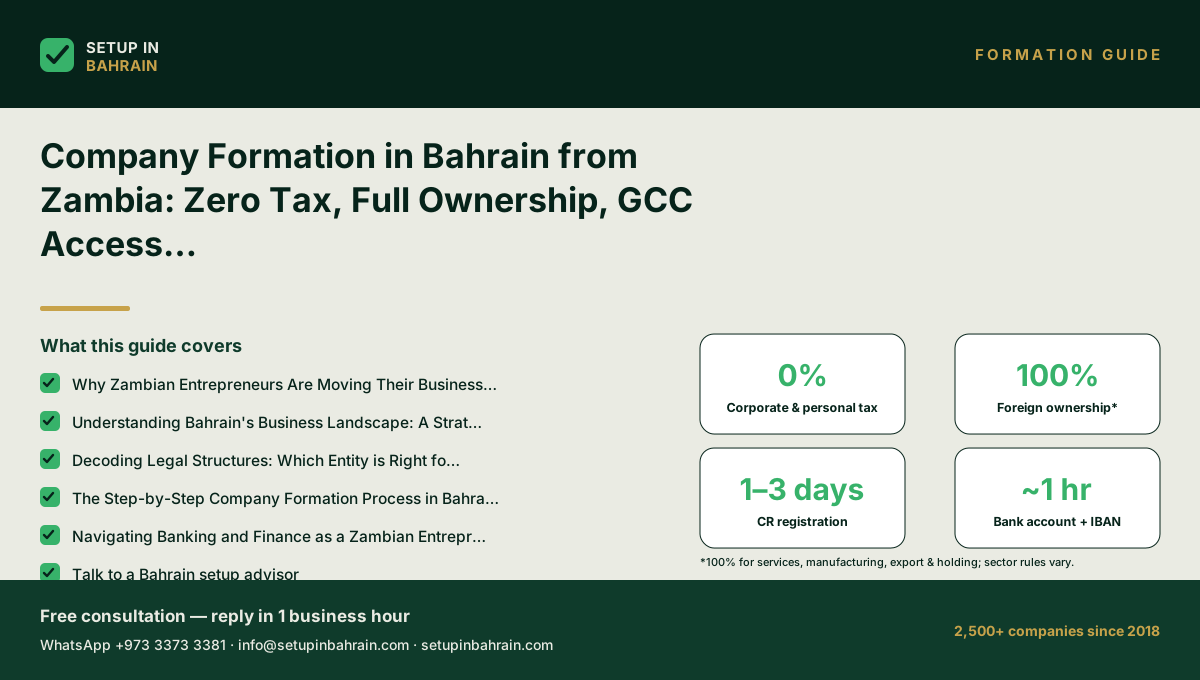
- Why Zambian Entrepreneurs Are Moving Their Business to Bahrain
- Understanding Bahrain's Business Landscape: A Strategic Advantage for Zambians
- Decoding Legal Structures: Which Entity is Right for You?
- The Step-by-Step Company Formation Process in Bahrain
- Navigating Banking and Finance as a Zambian Entrepreneur in Bahrain
→ Complete guide: Company Formation in Bahrain — the full 2026 guide
View details
Ownership & capital
A Bahrain WLL can be owned by a single person — 100% foreign ownership applies to most activities, with no local partner required for services, manufacturing, export trading and holding companies. The minimum share capital is BHD 1 ; we recommend BHD 1,000 . This Makes bank account opening and investor visa approval smoother.
Imagine for a moment, Mulenga, that you’ve just closed a significant deal. The kind that makes all those late nights and relentless negotiations truly worth it. You look at the revenue, a substantial figure, and then your mind immediately jumps to the tax man. Not just the headline 30% corporate income tax rate in Zambia, or even the higher 35% if your venture is in the mining sector, but the creeping reality of the entire compliance burden.
You tally the Zambia Revenue Authority’s (ZRA) complex quarterly system, the mandatory National Pension Scheme Authority (NAPSA) contributions for every employee, and the constant headache of a Zambian Kwacha (ZMW) that depreciates by 15-20% annually, eroding your hard-earned profits even before they hit your bank account.
This isn't an unfamiliar scenario for many Zambian entrepreneurs. The ambition is there, the drive is unwavering. The local economic headwinds can feel like a relentless drag.
From the Bank of Zambia's (BOZ) forex restrictions that limit your ability to move USD out of the country when you need to import critical equipment, to the long shadow of the 2020 sovereign debt default still creating banking credibility issues for Zambian entities abroad, the environment often demands more resilience than innovation. You're building an incredible business. A significant portion of your energy is spent just navigating the local financial landscape rather than focusing on growth and expansion.
Picture this a different way: you run a copper trading firm, perhaps based in Kitwe. This Just last year cleared ZMW 4.8 million in profit after covering all your suppliers and logistics. Back home, Zambia’s 30% corporate income tax (a figure that can climb to 35% if any mining-adjacent activity. Tangential, creeps into your operations) would have taken ZMW 1.44 million straight off the top.
Then, if you experienced the typical ZMW depreciation, losing around 18% against the US Dollar between January and December, the remaining cash you tried to move for new equipment would have bought 15% less foreign machinery than you budgeted for at the start of the year.
Add to this the persistent drain of NAPSA contributions, the ZRA’s intricate quarterly filings, and the often opaque and time-consuming BOZ approval process that can stall crucial USD transfers for weeks, and you are left wondering why you continue to feed a system that seemingly punishes success.
What if there was a way to redirect that energy? A jurisdiction where your profits could genuinely compound, unburdened by corporate tax, where your capital could flow freely, and your business could operate on a stable, USD-pegged currency, accessing a market of over 50 million affluent consumers just a short drive or flight away?
This isn't a pipe dream. This is Bahrain.
This guide is not a generic overview. It’s written specifically for you, the Zambian entrepreneur, who understands the unique challenges of operating in an environment where currency volatility and taxation can overshadow even the most robust business models. It aims to provide a definitive roadmap, cutting through the noise to offer clear, actionable insights into establishing your presence in Bahrain – a strategic move that could redefine your business trajectory.
Why Zambian Entrepreneurs Are Moving Their Business to Bahrain
The decision to expand or relocate operations offshore is rarely taken lightly. For Zambian entrepreneurs, but, the impetus is often more pronounced, driven by a confluence of economic pressures and a keen eye for untapped opportunities. Bahrain presents a compelling proposition, acting as both a refuge from domestic challenges and a launchpad for regional and international growth.
The core pain points faced by businesses in Zambia are significant and tangible:
Exorbitant Corporate Income Tax: Zambia’s standard 30% corporate income tax rate, climbing to 35% for mining sector operations, greatly eats into profitability. This contrasts sharply with Bahrain’s zero corporate income tax regime . For a business generating, say, USD 1 million in profit, operating in Bahrain means retaining that entire USD 1 million, whereas in Zambia, USD 300,000 to USD 350,000 would be immediately siphoned off.
This difference is not merely theoretical; it's the difference between aggressive reinvestment and constrained growth. Persistent ZMW Depreciation: The Zambian Kwacha’s annual depreciation of 15-20% against major foreign currencies is a silent killer of profits and purchasing power. Whether you’re importing raw materials, machinery, or simply looking to preserve your capital, this volatility introduces immense risk and erodes value.
Bahrain, conversely, boasts a currency (the Bahraini Dinar, BHD) that has been pegged to the US Dollar at a fixed rate of BHD 0.376 per USD 1 since 1986 . This unparalleled stability offers predictability and safeguards your capital from currency erosion, allowing for precise financial planning and international transactions without the constant worry of exchange rate fluctuations.
Complex ZRA Quarterly System and Compliance Burden: The administrative overhead of complying with the ZRA’s intricate quarterly tax filing system, coupled with other mandatory contributions like NAPSA, diverts valuable time and resources. This is time that could be spent innovating, expanding, or improving customer relations. Bahrain's tax regime. Requiring annual financial reporting, is fundamentally simpler due to the absence of corporate income tax, greatly reducing the compliance burden.
BOZ Forex Restrictions and Limited USD Outflows: The Bank of Zambia's regulations about foreign exchange can make it challenging and slow to move USD out of the country, whether for international payments, investments, or repatriating profits. This stifles international trade and creates operational bottlenecks. Bahrain, through its robust and internationally integrated financial system regulated by the Central Bank of Bahrain (CBB), offers complete freedom of capital repatriation and no restrictions on foreign exchange transactions .
Your funds can move globally with speed and ease, facilitating international trade and investment. Lingering Effects of the 2020 Sovereign Debt Default: The memory of Zambia's 2020 sovereign debt default continues to cast a long shadow, impacting the perceived credibility of Zambian entities in international banking circles. This can lead to increased scrutiny, delays, or even outright refusal when attempting to open international bank accounts or secure financing abroad.
Bahrain's highly respected and transparent financial sector provides a gateway to international banking. While due diligence is stringent, the perception of the jurisdiction itself is impeccable, facilitating smoother financial operations for your Bahraini-registered entity.
By moving your primary operational base or establishing a strategic subsidiary in Bahrain, you are not merely changing addresses; you are fundamentally altering your business's financial DNA. You shift from an environment designed to extract profit to one designed to foster it, offering stability, freedom. Unparalleled access to a dynamic regional economy.
Understanding Bahrain's Business Landscape: A Strategic Advantage for Zambians
Bahrain, an archipelago nation in the Arabian Gulf, has meticulously cultivated an environment that champions business success and foreign investment. Far from being just another offshore jurisdiction, it offers a sophisticated ecosystem that is especially advantageous for businesses looking to expand beyond their domestic borders.
Key Economic Indicators and Stability
Bahrain's economy is one of the most diversified in the GCC, with oil and gas contributing less than 20% to its GDP. This diversification is a deliberate strategy championed by the Bahrain Economic Development Board (EDB), focusing on sectors like financial services, manufacturing, logistics, information and communications technology (ICT), and tourism.
Stable Growth: Bahrain has consistently demonstrated resilient economic growth, supported by prudent fiscal policies and ongoing reforms. The International Monetary Fund (IMF) and the World Bank regularly acknowledge Bahrain’s efforts in economic diversification and structural reforms. Robust Financial Sector: As one of the oldest financial hubs in the region, Bahrain boasts a highly regulated and mature financial services sector, overseen by the Central Bank of Bahrain (CBB).
This includes over 400 financial institutions, from conventional banks to Islamic banks, investment firms. Insurance companies, providing a wide array of services crucial for international business operations. The CBB's stringent but clear regulatory framework ensures stability and trust, a stark contrast to the challenges posed by BOZ forex restrictions. Low Operating Costs: Compared to other GCC giants like UAE or Qatar, Bahrain offers greatly lower operating costs for businesses, including office rentals, utility costs, and even staff salaries.
This cost-efficiency allows entrepreneurs to allocate more resources to core business activities rather than overheads. For a Zambian entrepreneur used to navigating high operational costs relative to market size, this can be a welcome relief.
Strategic Location and GCC Market Access
Bahrain's geographical position is arguably its most potent asset for businesses eyeing regional expansion.
Gateway to the GCC: Situated at the heart of the Arabian Gulf, Bahrain provides direct and easy access to the entire GCC market, which boasts a combined GDP of over USD 1.6 trillion and a population exceeding 50 million affluent consumers. This market is just a short drive across the King Fahd Causeway to Saudi Arabia, the region's largest economy, or a brief flight to other major hubs like Dubai or Kuwait City.
For a Zambian business, this means moving from a domestic market of around 20 million people to a regional market that is 2.5 times larger and greatly wealthier, without the logistical nightmares of cross-border trade in Africa. Global Connectivity: Bahrain International Airport (BIA) offers excellent connectivity to major cities across the Middle East, Asia, Europe. Africa.
Khalifa Bin Salman Port is a state-of-the-art facility serving as a major trans-shipment hub, making Bahrain an ideal location for import/export businesses, logistics, and supply chain management. Free Trade Agreements: Bahrain is part of the GCC customs union and enjoys various free trade agreements, including with the United States. This further enhances its appeal for international trade and manufacturing, enabling businesses to access global markets more efficiently and with reduced tariffs.
Business-Friendly Regulations and Digital Transformation
The government of Bahrain, through entities like the Ministry of Industry and Commerce (MOIC) and the EDB, is deeply committed to fostering a pro-business environment.
Ease of Doing Business: Bahrain consistently ranks high in the World Bank’s Ease of Doing Business reports, recognized for its streamlined processes, transparent regulations, and investor-friendly policies. While the World Bank has paused publishing the full report, Bahrain's historical performance underscores its commitment. The implementation of the SIJILAT portal is a testament to this, allowing for fully digital company registration and license application processes.
100% Foreign Ownership: Unlike some jurisdictions that require local partners or sponsors, Bahrain generally allows for 100% foreign ownership in most sectors, offering complete control over your business operations. This is a critical factor for entrepreneurs from Zambia who might be wary of complex local partnership requirements. Support for SMEs and Startups: The EDB and various government initiatives actively support Small and Medium-sized Enterprises (SMEs) and startups, providing incubation programs, funding access, and mentorship.
This ecosystem is fertile ground for innovation and growth. Digital Government Initiatives: Bahrain has invested heavily in digital infrastructure and e-government services. The SIJILAT system, for instance, allows for company registration and license applications to be completed online, greatly reducing bureaucratic hurdles and processing times. This modern approach to governance makes setting up and running a business remarkably efficient.
For a Zambian entrepreneur, Bahrain offers a refreshing contrast: a predictable, stable. Supportive environment where the focus is on facilitating growth rather than imposing restrictions.
Decoding Legal Structures: Which Entity is Right for You?
Choosing the right legal structure is a foundational step in company formation. In Bahrain, the Commercial Companies Law outlines various types of entities. For most Zambian entrepreneurs seeking full ownership, flexibility, and limited liability, one particular structure stands out.
The W.L.L. (With Limited Liability) Company: Your Go-To Option
The With Limited Liability (W.L.L.) company is by far the most popular and versatile legal entity for foreign investors in Bahrain. It offers a perfect balance of control, protection, and operational flexibility.
Key Features and Advantages for Zambian Entrepreneurs:
100% Foreign Ownership: This is a crucial benefit. A W.L.L. company in Bahrain can be 100% owned by a single foreign individual or entity , with absolutely zero partners or local sponsors required . This gives you complete control over your business decisions and profit repatriation, eliminating the complexities and potential conflicts associated with mandatory local partnerships that might be common in other regions. Single Shareholder Permitted: You do not need multiple shareholders to form a W.L.L.
This means you, as the Zambian entrepreneur, can be the sole owner and director, simplifying governance and decision-making processes. This is an important distinction to make, as many jurisdictions elsewhere require a single shareholder (one person can own 100%) for a limited liability company. It’s also vital to reiterate: there is NO single-shareholder WLL legal entity in Bahrain . The W.L.L.
structure effectively serves this purpose for a sole proprietor. It is still legally a W.L.L.* Limited Liability Protection: As the name suggests, a W.L.L. separates your personal assets from the company's liabilities. Your exposure is limited to the amount of capital you invest in the company, providing crucial protection against business risks. Minimum Share Capital: Legally, the minimum share capital required for a W.L.L. in Bahrain is just BHD 1 . Yes, one Bahraini Dinar!
But, this is a purely symbolic legal minimum. For practical purposes, especially when it comes to opening a corporate bank account and securing an investor visa, the recommended practical minimum share capital is BHD 1,000 . Most banks will not consider opening an account for a company with a BHD 1 capital, as it signals a lack of serious intent or operational viability. Aim for BHD 1,000 to ensure smoother banking and visa processes.
This is a common pitfall many new investors overlook. Understanding this practical nuance can save you significant time and frustration. Flexibility in Activities: A W.L.L. can engage in a wide range of commercial activities, subject to specific regulatory approvals (e.g., CBB approval for financial services, MOIC for general trading). Corporate Bank Account: A W.L.L. can open a corporate bank account with local and international banks in Bahrain, facilitating international transactions and safeguarding your capital in a stable, USD-pegged currency.
Given these advantages, the W.L.L. is almost always the recommended vehicle for Zambian entrepreneurs looking to establish a new, independent business in Bahrain.
Branches of Foreign Companies
If you already have an established company in Zambia (or elsewhere) and wish to expand its operations into Bahrain while maintaining its original legal identity, you can set up a Branch of a Foreign Company.
- No Separate Legal Entity: A branch is considered an extension of the parent company and does not have a separate legal personality.
- Same Name: It must operate under the same name as the parent company.
- Liability: The parent company remains fully liable for the branch's activities.
- Management: It typically requires a local manager.
This option is suitable for larger Zambian enterprises that want to test the Bahraini market or provide specific services under their existing brand, rather than setting up a new venture from scratch.
Other Company Types (Brief Overview)
While less common for the typical Zambian entrepreneur starting a new venture, it's useful to be aware of other structures:
Bahraini Shareholding Company (B.S.C.): Divided into Public (B.S.C. Public) and Closed (B.S.C. Closed). B.S.C. Public is for larger enterprises seeking public share offerings, while B.S.C. Closed is for private companies with a larger capital requirement and shareholder base than a W.L.L. Partnership Company: General Partnership (unlimited liability) and Limited Partnership (some partners with limited liability). Not recommended for most foreign investors due to unlimited liability or complex structures. Sole Proprietorship: For individuals operating a business under their own name.
While simple, it offers no limited liability protection, making it a high-risk option for most commercial activities.
For the vast majority of Zambian entrepreneurs, the W.L.L. company offers the optimal blend of control, protection, and operational simplicity.
The Step-by-Step Company Formation Process in Bahrain
Establishing a company in Bahrain has been greatly streamlined by the Ministry of Industry and Commerce (MOIC) and the Bahrain Economic Development Board (EDB), especially through the online SIJILAT portal. But, navigating the specific requirements and nuances can still be challenging without expert guidance. This comprehensive breakdown will help you understand each phase.
Phase 1: Planning and Preparation
Before you even touch the SIJILAT portal, thorough planning is essential to avoid delays.
Define Your Business Activity (SIC Codes): * Clearly articulate what your business will do. Bahrain uses a standardized activity classification system (similar to SIC codes). You'll need to select the appropriate codes for your commercial registration (CR). Be precise, as these codes determine the types of licenses you'll need and any specific regulatory approvals. Example:* If you're involved in copper trading, you'd look for codes related to wholesale trade of metals, import/export, etc.
If it's a tech startup, identify codes for software development, IT consulting, etc. * Original Insight: Some activities are restricted or require specific qualifications (e.g., medical, financial services). Always verify your chosen activities early to avoid disappointment.
Choose Your Company Name: * Select at least three potential names in order of preference. The name must be unique, not offensive, and reflective of your business activity (optional, but good practice). * MOIC will review and approve the name.
Determine Your Share Capital: * As discussed, while the legal minimum for a W.L.L. is BHD 1, practically aim for BHD 1,000 . This sum does not need to be deposited at the time of initial registration but will be required later when opening the corporate bank account. * This BHD 1,000 can be used for operational expenses once the account is active. It's not a frozen amount.
Secure a Registered Address: * Every company in Bahrain must have a physical registered office address. This can be: * A leased physical office space. * A virtual office provided by a business center (a popular and cost-effective option for startups). * A flexi-desk package offered by certain business centers. * You will need to provide a copy of the lease agreement (Ejari) or relevant virtual office agreement.
* E-E-A-T Note: Many reputable business centers in Bahrain offer these services, ensuring compliance with MOIC requirements.
Identify Shareholders and Directors: * For a W.L.L., you can be the sole shareholder and director. * Gather copies of passports and residency information for all proposed shareholders and directors. Ensure passports have at least 6 months validity.
Phase 2: MOIC Application and Approvals
This is where the SIJILAT portal becomes your primary tool.
Online Application via SIJILAT: * Register for an account on the SIJILAT portal (sijilat.bh). * Start a new commercial registration application, selecting the W.L.L. company type. * Enter all company details: proposed name, activities (SIC codes), share capital, registered address, shareholder/director details. * Upload required documents.
Required Documents (for Zambian individuals/entities): * Shareholder/Director Passports: Clear scanned copies of all passport pages with personal details and validity. * National IDs (if applicable): If any shareholder/director is a Bahraini resident. * Draft Memorandum and Articles of Association (MOA/AOA): This is the foundational legal document outlining your company's purpose, structure. Rules. MOIC provides standard templates that can be customized. This must be in Arabic, or a bilingual version (English/Arabic).
* Proof of Registered Address: Copy of the lease agreement or virtual office agreement. * Bank Reference Letter: For individual shareholders, a letter from your bank confirming good standing. For corporate shareholders, certificate of incorporation and good standing from your Zambian entity. This is especially crucial for Zambian nationals due to the earlier mentioned 2020 debt default issues. A robust bank reference can help.
* Power of Attorney (POA): If you're using a company formation agent, a POA authorizing them to act on your behalf. * No Objection Certificate (NOC): If a shareholder or director is currently employed in Bahrain, an NOC from their current employer might be required.
* Attestation: Any documents issued outside Bahrain (like your Zambian company's certificate of incorporation, if a corporate shareholder) may need to be attested by the Bahraini embassy in Zambia and the Ministry of Foreign Affairs in Bahrain. This is a critical step often overlooked.
Initial Approval and Fees: * Once you submit the application and documents, MOIC will review them. If everything is in order, you'll receive initial approval. * You'll then be prompted to pay the MOIC registration fees. These typically include the commercial registration fee, name reservation fee, and Chamber of Commerce fee. (As of 2024, these might be in the range of BHD 200-400. Always check current MOIC rates).
Get Necessary Pre-Approvals (If Applicable): Depending on your chosen business activities, you might need pre-approvals from other government ministries or regulatory bodies before* final MOIC approval. Examples:* * CBB (Central Bank of Bahrain): For financial services, insurance, money exchange. * Ministry of Health: For medical, pharmaceutical activities. * Ministry of Education: For educational institutions. * Ministry of Information Affairs: For media and publishing.
* The SIJILAT system is designed to automatically flag these requirements. It's good to be aware in advance.
Final MOIC Approval and CR Issuance: * After all pre-approvals (if any) are secured and fees are paid, MOIC issues your Commercial Registration (CR) certificate. This is your company's birth certificate in Bahrain. It includes your CR number, legal name, activities, and registered address. * CR Number: This unique 6-digit number is crucial for all official dealings, banking, and licensing.
Phase 3: Post-Registration Formalities
Obtaining your CR is a major milestone, but several crucial steps follow to make your company fully operational.
Corporate Bank Account Opening: * This is often the most critical and potentially challenging step for Zambian entrepreneurs. * Required Documents: Your CR, MOA/AOA, passport copies of shareholders/directors, proof of registered address, business plan. The bank’s own due diligence forms. * The Practicality for Zambians: Due to the 2020 Zambian sovereign debt default, some international banks maintain a heightened level of scrutiny for Zambian nationals.
While Bahraini banks are generally welcoming, expect rigorous Know Your Customer (KYC) and Anti-Money Laundering (AML) checks. * Original Insight: To expedite this, come prepared. Have a detailed, professional business plan ready, clearly outlining your source of funds, business activities. Expected transaction volumes. Be transparent and proactive. Having the BHD 1,000 practical minimum share capital ready for deposit is non-negotiable for most banks.
It's often advisable to use a local consultant who has relationships with various banks and understands their specific requirements. Don't be discouraged if one bank is hesitant; explore other options within Bahrain's diverse banking sector. * CBB Regulation: The CBB ensures a robust and compliant banking sector. Individual banks have their own risk appetite.
CPR/Investor Visa Application: * Once your CR is issued. Ideally once your bank account is progressing, you can apply for your Central Population Registry (CPR) number and an Investor Visa . * The CPR is Bahrain's national ID number, essential for virtually all government services, opening personal bank accounts. Utilities. * The Investor Visa allows you to reside in Bahrain and manage your business. It is usually issued for two years initially and is renewable.
* Required Documents: Passport, CR copy, MOA/AOA, medical fitness check, fingerprinting, and application forms. * Process: Handled by the Labour Market Regulatory Authority (LMRA) and Nationality, Passports & Residence Affairs (NPRA). This can be done online or through a registered agent.
Get Activity-Specific Licenses and Permits: * While your CR allows your company to exist, specific business activities require additional licenses (e.g., trade license, industrial license, professional license). * The SIJILAT portal simplifies this by integrating various government agencies. Once your CR is active, you can apply for these secondary licenses through the same platform. Example:* If you registered for a general trading activity, you'll need a general trade license. If you’re opening a restaurant, you'll need health and municipal licenses.
Ensure all necessary licenses are in place before* commencing operations to avoid penalties.
Register with Utilities and Other Agencies: * Register with the Electricity and Water Authority (EWA) for utilities at your office. * If you plan to hire employees, register with the Social Insurance Organization (SIO). * Consider registering for VAT if your annual turnover exceeds BHD 37,500.
The entire process, from initial planning to fully operational status, can take anywhere from 2 to 8 weeks, depending on the complexity of your activities, the responsiveness of the regulatory bodies, and how well-prepared your documents is. Working with a knowledgeable local agent can greatly expedite this.
Navigating Banking and Finance as a Zambian Entrepreneur in Bahrain
For Zambian entrepreneurs, the freedom and stability of Bahrain's financial sector are a breath of fresh air compared to the restrictive environment back home. But, understanding the nuances of corporate banking and finance in Bahrain is crucial for smooth operations.
Opening a Corporate Bank Account: The Realities
This is often where many entrepreneurs, especially from jurisdictions with heightened risk profiles, face their biggest hurdles. Bahrain’s banking sector is sophisticated and highly regulated by the CBB, adhering strictly to international AML/KYC standards.
Due Diligence is Paramount: Expect thorough scrutiny. Banks will want to understand your business model, source of funds, expected transaction patterns. The ultimate beneficial owners (UBOs). This is global best practice. For Zambian nationals, it might feel more intense due to lingering international perceptions from the 2020 sovereign debt default. Essential Documents: Beyond your company's
Bahrain Business Guides for Zambia Citizens
Frequently Asked Questions
How long does it take to set up?
It takes 15 to 20 days. We file all forms for you. You do not need to wait long.
What does it cost?
Company formation: Standard BHD 1,340 with 3 months of office address; Gold BHD 1,700 with 6 months; Premium BHD 2,150 with 12 months and a cabin, officer table and chair, and two guest chairs. No formation package includes visas, including Premium. Investor/work visas are priced separately: BHD 755 for one year or BHD 953 for two years, in addition to the formation package. Ask for a written, itemized quotation confirming government fees and all inclusions before payment.
Do I need to visit Bahrain?
No. You can set up your firm from home. We do all the work online. Some banks may ask for one visit.
What tax will I pay?
You pay zero tax on your profits. Bahrain has no corporate income tax. This is a key benefit of the setup.
Can I own 100% of my firm?
Yes. Foreign owners can hold all shares. No local partner is needed. Full ownership is allowed.
What do I need to start?
You need a valid passport. You also need a trade name and a business address. We help you with all of these.
How do I open a bank account?
We guide you step by step. Most banks take 3 to 6 weeks. You will need your CR and firm papers.
Who issues the Commercial Registration (CR)?
The CR is issued by the MOICT. It is your legal right to trade in Bahrain. We file the CR for you.
Can I renew my CR each year?
Company renewal packages: BHD 530 with 3 months of office address; BHD 980 with 6 months; BHD 1,520 with 12 months. These are separate renewal packages, not visa fees.
How do I get started?
Fill in our form on this page. Our team will call you back. We map your best setup plan at no cost.
Steps to Form Your Company
- Pick your trade name. We check if it is free.
- Choose your business type. WLL is the most common.
- Sign the MOA. We draft and file all legal docs.
- Pay the state fees. About BHD 432 in total.
- Get your CR. Takes 15 to 20 days.
- Open your bank account. We guide each step.
- Start trading. You are ready to do business.
Key Facts
- Tax rate: 0%
- Foreign ownership: 100%
- Setup time: 15 to 20 days
- Company formation: Standard BHD 1,340 with 3 months of office address; Gold BHD 1,700 with 6 months; Premium BHD 2,150 with 12 months and a cabin, officer table and chair, and two guest chairs. No formation package includes visas, including Premium. Investor/work visas are priced separately: BHD 755 for one year or BHD 953 for two years, in addition to the formation package. Ask for a written, itemized quotation confirming government fees and all inclusions before payment.
- Company renewal packages: BHD 530 with 3 months of office address; BHD 980 with 6 months; BHD 1,520 with 12 months. These are separate renewal packages, not visa fees.
- Client rating: 4.8 stars
- Clients served: 2,500 and more
Quick Facts
- Tax rate: 0%
- Own all of your firm: Yes, 100%
- Time to set up: 15 to 20 days
- Company formation: Standard BHD 1,340 with 3 months of office address; Gold BHD 1,700 with 6 months; Premium BHD 2,150 with 12 months and a cabin, officer table and chair, and two guest chairs. No formation package includes visas, including Premium. Investor/work visas are priced separately: BHD 755 for one year or BHD 953 for two years, in addition to the formation package. Ask for a written, itemized quotation confirming government fees and all inclusions before payment.
- Company renewal packages: BHD 530 with 3 months of office address; BHD 980 with 6 months; BHD 1,520 with 12 months. These are separate renewal packages, not visa fees.
- Rating: 4.8 stars
- Clients: 2,500 and more
Why Bahrain?
Bahrain has no tax. You keep all your profits. This is rare in the Gulf.
You can own all of your firm. No local partner is needed. The law allows full foreign ownership.
Setup takes 15 to 20 days. We file all forms for you. You can do it all from home.
Bahrain has a free trade deal with the US. Your goods face low or no tariffs. This gives you access to big markets.
We have served 2,800+ clients from 44+ countries and maintain records to substantiate that total where needed. We have 113 Google reviews; reviews represent only some clients and are not the same as the total clients served.
Our Steps
- Tell us your plan. We advise you for free.
- We pick the right firm type for you.
- We file all your forms with MOICT.
- You get your CR in 15 to 20 days.
- We help you open a bank account.
- You are ready to trade. We stay with you.
Next Steps for Zambia Citizens
You can set up a firm in Bahrain from Zambia. You do not need to fly there first. We do all the work online.
Tell us your plan. We call you back the same day. We map the best route for you at no cost.
We file all your forms. We deal with MOICT and the state. You get your CR in 15 to 20 days.
After your CR, we help you get a bank account. We also help with your Investor Visa. One firm guides you at each step.
Why Our Clients from Zambia Choose Us
- We speak your language. We know your needs.
- We have helped clients from Zambia before.
- Our fee is clear. No surprise costs.
- We have a 4.8 star rating on Google.
- We have helped more than 2,500 clients set up in Bahrain.
Fill in the form on this page. We will be in touch soon. Let us help you start your Bahrain firm today.
Ready to set up in Bahrain from Zambia?
Tell us your business idea. We map the right entity, ownership and timeline — then handle the filing while you focus on what matters.