Complete guide for Guatemala entrepreneurs: form a company in Bahrain with generally no corporate income tax for most sectors, 100% foreign ownership. GCC market access. Costs, steps, visas, banking.
Key Takeaways
- Why Guatemala Entrepreneurs Are Moving Their Business to Bahrain
- The Strategic Advantages of Bahrain for Guatemalan Businesses
- Understanding Company Structures in Bahrain for Foreign Investors
- Step-by-Step Guide to Company Formation in Bahrain
→ Complete guide: Company Formation in Bahrain — the full 2026 guide
View details
Ownership & capital
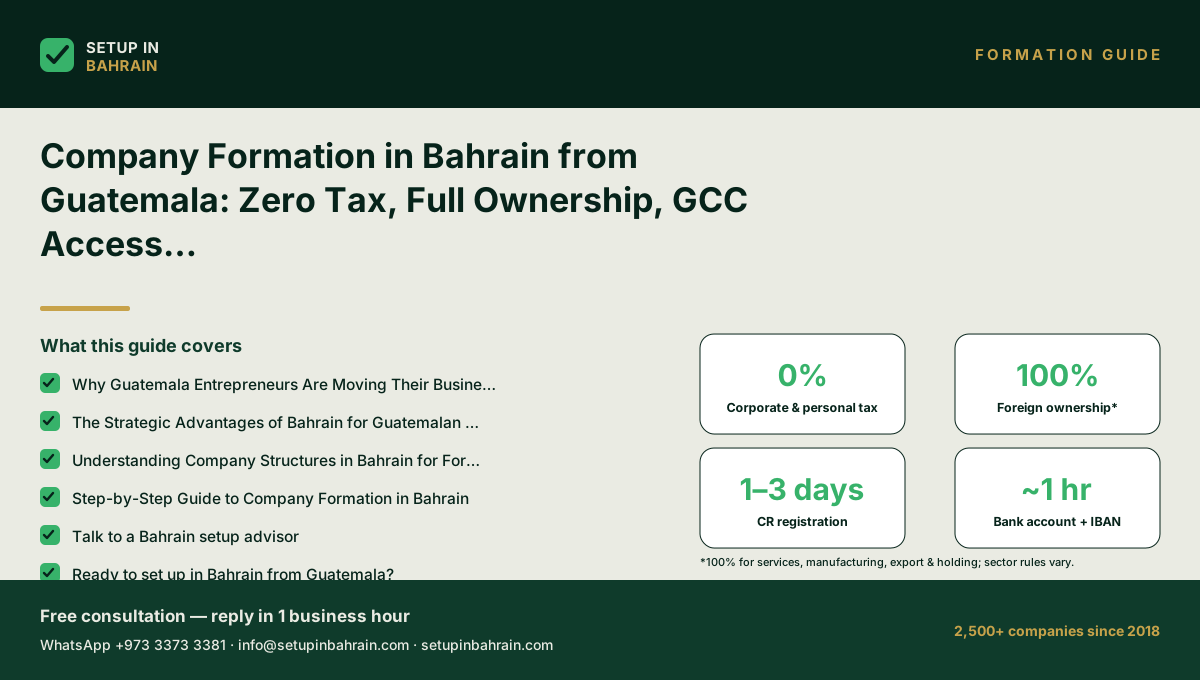
A Bahrain WLL can be owned by a single person — 100% foreign ownership applies to most activities, with no local partner required for services, manufacturing, export trading and holding companies. The minimum share capital is BHD 1 ; we recommend BHD 1,000 . This Makes bank account opening and investor visa approval smoother.
Imagine, por un momento, que es el final del trimestre en su empresa en Guatemala. Usted, como tantos emprendedores guatemaltecos, está frente a sus estados financieros, viendo cómo una porción considerable de sus ganancias simplemente... desaparece. No en inversiones, no en salarios, sino en impuestos corporativos. El 25% de Impuesto Sobre la Renta (ISR) para empresas se siente como un peso constante, una carga que limita su crecimiento, reduce su capacidad de reinversión y ahoga su ambición. Añada a esto la complejidad del sistema trimestral del SAT, las contribuciones obligatorias al IGSS que suman un 12.67% adicional sobre la planilla, la constante depreciación del quetzal (más del 15% desde 2019, y una pérdida de valor adicional del 4% solo en el último año, erosionando el poder adquisitivo de sus exportaciones o aumentando el costo de sus importaciones), y la frustración se vuelve tangible.
Picture this: Ana Lucía runs a successful agribusiness export company in Guatemala City. She’s worked hard to break into Mexico and the US, battling with Guatemala’s 25% corporate income tax, a relentless SAT tax reporting schedule, employer contributions to IGSS social security, and a currency that's quietly lost value against the dollar year after year. Then, when she dares to grow, BANGUAT delays her international transfers and a simple contract dispute ties up in the courts for three years. Tired of pouring her profit into bureaucracy instead of business growth, she looks to Bahrain — a place with Generally no corporate income tax for most sectors, 100% foreign ownership, and direct access to $2 trillion in GCC markets.
Ana Lucía’s story is anything but rare among Guatemala entrepreneurs in 2026. This guide is for business owners like her who want to leave behind Guatemala’s stifling environment to leverage Bahrain’s open-door policies, global market connectivity, and bankable stability. This isn’t about just any offshore location; it’s about a strategically chosen jurisdiction that directly addresses the unique pain points faced by Guatemalan businesses.
Why Guatemala Entrepreneurs Are Moving Their Business to Bahrain
For decades, Guatemalan founders have faced a simple yet frustrating equation: the harder you work, the more you pay. The more obstacles you encounter. Let’s break down the specific challenges that make Bahrain an more and more attractive alternative for forward-thinking Guatemalan entrepreneurs.
The Heavy Burden of Corporate Taxation: 25% ISR vs. 0%
Consider this real scenario: José David spent 15 years building a mid-sized software development consultancy in Zone 10. These last three years, he’s consistently lost 25% of any credible profit to ISR quarterly payments. A Guatemala City apparel exporter I spoke with last quarter shared a similar sentiment: “It’s like running uphill with a heavy backpack. Every step forward, 25% of my energy goes just to standing still.”
Guatemala’s corporate income tax rate of 25% on taxable profits is a significant drag on business growth and reinvestment. For a company generating GTQ 5 million in annual net profit, that’s GTQ 1.25 million directly diverted to taxes, funds that could otherwise be used for expansion, hiring more staff, or investing in new technology. This is not just a numerical hit; it’s a psychological one, knowing a quarter of your hard-earned success is gone before you can even touch it.
The Bahraini Difference: In stark contrast, Bahrain offers a 0% corporate income tax for most business activities. This isn't a temporary incentive or a loophole; it’s a fundamental pillar of its economic policy, enshrined in law. For José David and the apparel exporter, this translates directly into keeping 100% of their business profits. Imagine reinvesting that entire GTQ 1.25 million back into your company. That’s a game-changer for scaling operations, improving competitiveness, and fueling innovation. The financial freedom offered by Bahrain is perhaps its single most compelling advantage, allowing entrepreneurs to maximize profitability and accelerate growth without the constant fiscal drain.
The Complexity and Compliance Burden of SAT’s Quarterly System
Beyond the sheer percentage, the administration of taxes in Guatemala presents its own set of challenges. The SAT (Superintendencia de Administración Tributaria) requires a complex system of quarterly ISR filings, along with other monthly declarations like VAT (IVA). This isn't a simple task; it often demands dedicated internal resources or expensive external accounting services. My apparel exporter client mentioned his quarterly SAT filings had grown into a 40-hour headache each time, diverting critical management time away from core business development.
The frequent reporting deadlines, the need for meticulous record-keeping. The potential for audits create a continuous administrative burden that consumes valuable time and resources. This regulatory friction is a hidden cost of doing business, pulling entrepreneurs away from strategic thinking and into compliance minutiae.
The Bahraini Difference: While Bahrain has a 5% VAT and social insurance contributions, the overall tax compliance landscape is greatly simpler for most companies, especially those not engaged in highly regulated sectors like banking or oil & gas. With no corporate income tax filings to worry about for most businesses, the administrative load is drastically reduced, allowing entrepreneurs to focus on what they do best: building and growing their companies. The government agencies, especially the Ministry of Industry and Commerce (MOIC) and the Economic Development Board (EDB), are committed to streamlining processes, reflecting a truly pro-business ethos.
The Rising Cost of Labor: IGSS and Other Social Security Contributions
Guatemala's labor costs extend beyond salaries. Employers are mandated to contribute to the IGSS (Instituto Guatemalteco de Seguridad Social) at a rate of 12.67% of the employee’s salary . This doesn’t even account for other mandatory contributions like INTECAP, IRTRA. Risk insurance, which further inflate the true cost of employment. These social security burdens can greatly impact a company's profitability, especially for businesses with larger workforces or those in labor-intensive sectors.
The challenge here isn't just the percentage; it's the lack of flexibility and the non-negotiable nature of these costs, regardless of the company's financial performance or stage of growth. For a startup, these fixed overheads can be especially stifling, making it harder to scale responsibly.
The Bahraini Difference: Bahrain has its own social insurance system, but for expatriate employees (which many Guatemalan entrepreneurs would hire for their international operations), the employer's contribution is typically lower and often optional, depending on the contract and private insurance provisions. For Bahraini nationals, social insurance contributions are mandated for both employer and employee, ensuring a robust safety net. But, the overall tax-free environment for corporate profits means companies have more capital to allocate towards competitive salaries, benefits. Training, attracting top talent without the crushing additional percentage burden seen in Guatemala. This allows businesses greater control over their operational costs and more flexibility in structuring compensation packages.
Currency Volatility and BANGUAT's Forex Restrictions
The Guatemalan Quetzal (GTQ) has experienced a gradual depreciation against the US Dollar. Since 2019, the quetzal has depreciated by over 15%, and a further 4% in just the last year. For businesses dealing with international trade, importing raw materials, or exporting goods priced in foreign currencies, this volatility is a constant source of uncertainty and eroded margins. Your GTQ 100,000 profit today might be worth greatly less in real dollar terms next quarter.
Adding to this, BANGUAT (Banco de Guatemala) often imposes stringent foreign exchange controls and reporting requirements. José David tried to move funds to his US supplier. BANGUAT put up a wall — paperwork, delays, then just flat refusals when the outbound transfers hit six figures. This makes international payments, capital repatriation. Simply managing multi-currency cash flows an unnecessarily bureaucratic and time-consuming ordeal. The unpredictability of these restrictions can severely impact business operations, hindering growth and fostering distrust in the financial system.
The Bahraini Difference: Bahrain’s national currency, the Bahraini Dinar (BHD), is pegged directly to the US Dollar at a fixed rate of 1 BHD = 2.659 USD. This peg provides unparalleled currency stability, eliminating exchange rate risk for businesses trading in or dealing with USD-denominated transactions. For Guatemalan entrepreneurs, this means predictable costs for imports and reliable returns on exports, safeguarding profit margins from currency fluctuations.
Also, Bahrain operates a liberal foreign exchange regime. There are no restrictions on the repatriation of capital, profits, or dividends. Companies can freely move funds in and out of the country without the bureaucratic hurdles or delays often encountered with BANGUAT. This financial fluidity, overseen by the robust regulatory framework of the Central Bank of Bahrain (CBB), offers Guatemalan entrepreneurs the peace of mind and operational efficiency needed for international business.
Legal System Inefficiency and Contract Disputes
Finally, the efficiency and predictability of a country’s legal system are paramount for business confidence. Unfortunately, in Guatemala, legal disputes, especially commercial ones, can be protracted and costly. My apparel exporter client lamented that a contract dispute with a local distributor had already spent 18 months in the commercial courts with no resolution in sight. José David, in another instance, mentioned a contract breach by a local partner that cost him three years in litigation. These delays tie up capital, divert management attention, and can severely damage business relationships and reputation.
The Bahraini Difference: Bahrain boasts a modern, independent. Efficient judicial system, which draws heavily from English common law principles, especially in commercial matters. The Kingdom is committed to upholding the rule of law and ensuring prompt and fair resolution of disputes. The Bahrain Chamber for Dispute Resolution (BCDR-AAA), a joint venture with the American Arbitration Association, provides an internationally recognized alternative for commercial arbitration, offering a faster and more specialized route for resolving complex business conflicts. This robust legal framework and commitment to justice provide a predictable and secure environment for international business, a stark contrast to the often sluggish Guatemalan courts.
In summary, for entrepreneurs seeking to escape the fiscal burdens, bureaucratic red tape, currency risks. Legal uncertainties of Guatemala, Bahrain presents a compelling and strategically sound alternative. It’s not merely a different option; it’s a pathway to genuine financial liberation and accelerated international growth.
The Strategic Advantages of Bahrain for Guatemalan Businesses
Moving beyond the direct contrasts with Guatemala, it's essential to understand the inherent, proactive benefits Bahrain offers as a global business hub. The Kingdom has strategically positioned itself as a modern, diversified economy, leveraging its geographic location, liberal policies. Advanced infrastructure.
Unmatched Tax Efficiency: Keep What You Earn
As highlighted, Bahrain’s 0% corporate income tax for most industries is a cornerstone of its appeal. This benefit extends far beyond just profits.
No Personal Income Tax: Not only do businesses keep their profits. Individuals working and living in Bahrain also benefit from no personal income tax . This makes Bahrain an attractive place for entrepreneurs to reside, ensuring their personal earnings are also maximized. No Capital Gains Tax: When you sell an asset, shares, or a business, you don't pay capital gains tax in Bahrain. This is a significant advantage for investors and entrepreneurs looking for an exit strategy or reinvestment opportunities, further enhancing capital retention. Low VAT Rate: While Bahrain does have a Value Added Tax (VAT), it’s currently a standard rate of 5% – one of the lowest in the GCC region, and far below the VAT rates found in many other global jurisdictions. This ensures consumer spending remains robust and operational costs for businesses are manageable. No Withholding Tax: There are generally no withholding taxes on dividends, interest, or royalties paid to foreign entities. This facilitates seamless cross-border financial transactions and profit repatriation, directly countering BANGUAT's restrictions.
These fiscal incentives, championed by entities like the Ministry of Finance and National Economy and the Economic Development Board (EDB), create an environment where businesses can truly thrive, optimize their financial structures, and maximize their return on investment. It's a key reason why global companies and savvy entrepreneurs choose Bahrain for tax optimization and financial freedom.
100% Foreign Ownership: Complete Control of Your Venture
A pervasive challenge in many emerging markets. Even some established ones, is the requirement for local partners or minimum local shareholding. This often leads to diluted control, profit-sharing complexities, and potential disputes. In Guatemala, while 100% foreign ownership is generally allowed, certain sectors may still present nuanced challenges or cultural expectations for local partnership.
In Bahrain, the principle of 100% foreign ownership is a clearly established and legally guaranteed reality across a vast majority of business sectors. This means that as a Guatemalan entrepreneur, you can own your company outright, without the need for a local partner or sponsor. This gives you complete control over your business strategy, operations, and profits. This level of autonomy, championed by the Ministry of Industry and Commerce (MOIC), simplifies governance, streamlines decision-making. Eliminates potential conflicts of interest. It's a direct endorsement of Bahrain's commitment to attracting and empowering international investors.
Gateway to the $2 Trillion GCC Market
Bahrain's strategic geographic location is not just a point on a map; it's a direct economic advantage. Positioned at the heart of the Arabian Gulf, Bahrain serves as an ideal gateway to the lucrative GCC (Gulf Cooperation Council) market.
- Proximity to Saudi Arabia: The King Fahd Causeway physically connects Bahrain to Saudi Arabia, the largest economy in the Middle East. This means you can drive from Manama to Riyadh in under four hours. This unparalleled access allows businesses in Bahrain to efficiently serve the 36 million consumers in Saudi Arabia, often considered the primary target market for regional expansion.
- Access to 36 Million Consumers: The broader GCC market boasts a combined GDP exceeding $2 trillion and a population of over 50 million affluent consumers. Bahrain provides a cost-effective and logistical advantage for market entry and distribution throughout this high-growth region.
- Free Trade Agreements & Customs Union: As a member of the GCC, Bahrain benefits from a customs union and free trade agreements (FTAs) with several global economic blocs, including the US (Bahrain was the first GCC country to sign a Free Trade Agreement with the US). This facilitates seamless trade, reduces tariffs, and enhances market reach beyond the immediate GCC.
- Logistics & Infrastructure: Bahrain has invested heavily in world-class logistics infrastructure, including modern ports (Khalifa Bin Salman Port), an efficient international airport (Bahrain International Airport), and a robust road network. This facilitates the movement of goods, making Bahrain an ideal regional distribution center.
For a Guatemalan business looking to expand beyond its traditional markets in the Americas, Bahrain offers an incredibly potent launchpad into a new, wealthy, and rapidly developing economic zone. This market access is often cited by the EDB as a primary driver for foreign direct investment.
Robust Financial Ecosystem & Digital Transformation
Bahrain has a long-standing reputation as a financial services hub in the Middle East, dating back decades. The Central Bank of Bahrain (CBB) maintains a progressive and robust regulatory framework, fostering innovation while ensuring stability.
Established Banking Sector: The country hosts over 400 financial institutions, including major international banks, Islamic banks. Investment firms. This provides a diverse range of banking services, financing options, and sophisticated financial instruments for businesses. Opening a corporate bank account, while requiring due diligence, is generally more straightforward and reliable than in many other jurisdictions, especially when compared to the challenges sometimes faced in Guatemala. Fintech Hub: Bahrain has aggressively embraced financial technology (FinTech), creating a supportive ecosystem for startups and established players. With initiatives like the FinTech Bay and regulatory sandboxes, the CBB actively encourages innovation in areas like blockchain, open banking. Digital payments. This makes Bahrain an ideal location for tech-focused Guatemalan entrepreneurs. Digital Government Services: The Kingdom has made significant strides in digitalizing government services. The Sijilat portal, managed by the MOIC, allows for online company registration, license applications. Renewals, greatly streamlining administrative processes. This commitment to digital transformation, supported by the Bahrain Information & eGovernment Authority (iGA), reduces bureaucracy and enhances efficiency for businesses.
This sophisticated financial landscape, coupled with a forward-thinking approach to technology, provides a secure, efficient. Innovative environment for businesses to manage their finances, secure funding, and scale their operations.
Stable, Pro-Business Environment & Quality of Life
Beyond the economic incentives, Bahrain offers a holistic environment conducive to long-term business success and personal well-being.
- Political Stability & Security: Bahrain is a politically stable nation, committed to economic growth and open trade. This stability provides a predictable environment for long-term business planning and investment, minimizing political risks that can deter foreign investment.
- Modern Legal Framework: The legal system, as mentioned, is well-established and incorporates elements of English common law, especially in commercial and financial matters. This offers clarity, fairness, and predictability for international businesses, a welcome change from protracted legal battles.
- Skilled Workforce & Competitive Operating Costs: Bahrain has a well-educated, bilingual (Arabic and English) workforce, supported by strong educational and vocational training institutions. While salaries for skilled professionals are competitive, the overall cost of living and doing business (rent, utilities, operational overheads) can be greatly lower than in major global cities, contributing to higher profitability.
- Excellent Quality of Life: For entrepreneurs considering relocation, Bahrain offers a high quality of life with modern amenities, world-class healthcare, diverse dining and entertainment options, and a multicultural, tolerant society. It consistently ranks high in expatriate surveys for ease of settling in and personal happiness.
These strategic advantages collectively make Bahrain an exceptionally attractive destination for Guatemalan entrepreneurs seeking not just a new market. A better, more efficient, and more profitable way to conduct global business.
Understanding Company Structures in Bahrain for Foreign Investors
Choosing the right legal structure is a foundational step in company formation. Bahrain offers several options. For most Guatemalan entrepreneurs, one structure stands out for its flexibility and benefits: the With Limited Liability Company (WLL).
The With Limited Liability Company (WLL) – Your Primary Choice
The WLL is by far the most popular and versatile company type for foreign investors in Bahrain, including those from Guatemala. Its popularity stems from its balance of flexibility, protection, and straightforward setup process.
100% Foreign Ownership: This is critical. A WLL company can be 100% owned by a single foreign person or entity , with zero partners required . This is a significant advantage, allowing Guatemalan entrepreneurs complete autonomy and avoiding the complexities associated with local partnership requirements found in other jurisdictions. This also means there is NO WLL (Single Person Company) as a separate legal entity in Bahrain; the WLL perfectly serves the purpose of a single-owner operation. Limited Liability Protection: As the name suggests, the liability of the shareholders is limited to the amount of their capital contribution. This protects your personal assets from business debts and obligations, a crucial safeguard for any entrepreneur. Minimum Share Capital: Legally, the minimum share capital for a WLL is only BHD 1 . But, this is a theoretical minimum. For practical purposes, especially when opening a corporate bank account and applying for an investor visa, we strongly recommend a starting capital of at least BHD 1,000 . Most banks will require a higher minimum balance. The MOIC and LMRA prefer to see a more substantial commitment for investor visa approvals. This capital does not need to be held in a frozen account; it can be used for operational expenses once the company is established and the bank account is active. Broad Range of Activities: WLLs are suitable for a wide variety of commercial activities, including trading, services, consulting, IT, e-commerce, manufacturing. More. Specific regulated activities (e.g., financial services, education, healthcare) might require additional licenses and approvals from sector-specific ministries or the CBB. Management Flexibility: A WLL can be managed by one or more directors, who do not necessarily need to be residents of Bahrain at the time of incorporation. But, for obtaining an investor visa and operational ease, having a resident director or manager is highly practical.
Given its direct alignment with the needs of foreign entrepreneurs, the WLL will be the primary focus of our detailed setup guide.
Bahrain Shareholding Company (BSC)
While less common for initial foreign ventures unless scaling greatly, it’s worth noting:
- BSC Closed: Suitable for businesses with a higher capital requirement and a limited number of shareholders (e.g., family businesses, venture-backed startups). They can issue shares but cannot offer them to the public. a single shareholder (one person can own 100%) and higher minimum capital (BHD 250,000 for specific activities, BHD 20,000 for general trading).
- BSC Public: Designed for large enterprises that intend to raise capital from the public by listing shares on the Bahrain Bourse. This involves much higher capital requirements (minimum BHD 1,000,000) and stringent regulatory compliance.
Foreign Branch Office
This structure is ideal if you already have an established company in Guatemala (or elsewhere) and wish to expand its operations into Bahrain without creating a completely new, independent legal entity.
Extension of Parent Company: A branch office is not a separate legal entity; it's an extension of the foreign parent company. The parent company remains fully liable for the branch's activities. Taxation: The 0% corporate income tax still generally applies to the branch's profits generated in Bahrain. Activities: Limited to the scope of activities of the parent company. Capital: There is typically no minimum capital requirement for a branch office. Adequate funding from the parent company is expected.
Sole Proprietorship
While possible for Bahraini nationals, a sole proprietorship is generally not recommended for foreign investors due to the unlimited liability. This means your personal assets are not protected from business debts, a significant risk no savvy entrepreneur should take. So, for Guatemalan entrepreneurs, a WLL is almost always the superior choice.
Choosing the right structure is crucial. Most Guatemalan entrepreneurs will find the WLL company offers the perfect balance of control, protection. Operational efficiency for their ventures in Bahrain.
Step-by-Step Guide to Company Formation in Bahrain
Establishing your company in Bahrain is a streamlined process, especially when compared to the bureaucratic hurdles often faced in Guatemala. The Bahraini government, through the MOIC and EDB, has made significant efforts to digitalize and simplify the Commercial Registration (CR) process via the "Sijilat" portal. Here’s a comprehensive guide:
Phase 1: Pre-Registration & Planning – Laying the Groundwork
Before you even touch an application form, a thoughtful planning phase is crucial. This is where you define your vision and ensure compliance.
Define Your Business Activities: * Specificity is Key: You need to clearly articulate the exact nature of your business operations. Are you importing and exporting goods? Providing software development services? Consulting? Operating an e-commerce platform? * MOIC Classification: The Ministry of Industry and Commerce (MOIC) has a standardized classification system for commercial activities. You’ll need to select the most appropriate Commercial Activities Codes for your business. This will dictate what licenses you need and which regulatory bodies might be involved. For instance, if you're setting up a FinTech company, the Central Bank of Bahrain (CBB) will be a key regulator. Original Insight:* Guatemalan entrepreneurs often have diverse business models. It’s important to list all planned activities upfront, as adding or changing them later involves an amendment process. Think fully about your current and future service offerings.
- Name Reservation:
Bahrain Business Guides for Guatemala Citizens
Frequently Asked Questions
How long does it take to set up?
It takes 15 to 20 days. We file all forms for you. You do not need to wait long.
What does it cost?
Company formation: Standard BHD 1,340 with 3 months of office address; Gold BHD 1,700 with 6 months; Premium BHD 2,150 with 12 months and a cabin, officer table and chair, and two guest chairs. No formation package includes visas, including Premium. Investor/work visas are priced separately: BHD 755 for one year or BHD 953 for two years, in addition to the formation package. Ask for a written, itemized quotation confirming government fees and all inclusions before payment.
Do I need to visit Bahrain?
No. You can set up your firm from home. We do all the work online. Some banks may ask for one visit.
What tax will I pay?
You pay zero tax on your profits. Bahrain has no corporate income tax. This is a key benefit of the setup.
Can I own 100% of my firm?
Yes. Foreign owners can hold all shares. No local partner is needed. Full ownership is allowed.
What do I need to start?
You need a valid passport. You also need a trade name and a business address. We help you with all of these.
How do I open a bank account?
We guide you step by step. Most banks take 3 to 6 weeks. You will need your CR and firm papers.
Who issues the Commercial Registration (CR)?
The CR is issued by the MOICT. It is your legal right to trade in Bahrain. We file the CR for you.
Can I renew my CR each year?
Company renewal packages: BHD 530 with 3 months of office address; BHD 980 with 6 months; BHD 1,520 with 12 months. These are separate renewal packages, not visa fees.
How do I get started?
Fill in our form on this page. Our team will call you back. We map your best setup plan at no cost.
Steps to Form Your Company
- Pick your trade name. We check if it is free.
- Choose your business type. WLL is the most common.
- Sign the MOA. We draft and file all legal docs.
- Pay the state fees. About BHD 432 in total.
- Get your CR. Takes 15 to 20 days.
- Open your bank account. We guide each step.
- Start trading. You are ready to do business.
Key Facts
- Tax rate: 0%
- Foreign ownership: 100%
- Setup time: 15 to 20 days
- Company formation: Standard BHD 1,340 with 3 months of office address; Gold BHD 1,700 with 6 months; Premium BHD 2,150 with 12 months and a cabin, officer table and chair, and two guest chairs. No formation package includes visas, including Premium. Investor/work visas are priced separately: BHD 755 for one year or BHD 953 for two years, in addition to the formation package. Ask for a written, itemized quotation confirming government fees and all inclusions before payment.
- Company renewal packages: BHD 530 with 3 months of office address; BHD 980 with 6 months; BHD 1,520 with 12 months. These are separate renewal packages, not visa fees.
- Client rating: 4.8 stars
- Clients served: 2,500 and more
Quick Facts
- Tax rate: 0%
- Own all of your firm: Yes, 100%
- Time to set up: 15 to 20 days
- Company formation: Standard BHD 1,340 with 3 months of office address; Gold BHD 1,700 with 6 months; Premium BHD 2,150 with 12 months and a cabin, officer table and chair, and two guest chairs. No formation package includes visas, including Premium. Investor/work visas are priced separately: BHD 755 for one year or BHD 953 for two years, in addition to the formation package. Ask for a written, itemized quotation confirming government fees and all inclusions before payment.
- Company renewal packages: BHD 530 with 3 months of office address; BHD 980 with 6 months; BHD 1,520 with 12 months. These are separate renewal packages, not visa fees.
- Rating: 4.8 stars
- Clients: 2,500 and more
Why Bahrain?
Bahrain has no tax. You keep all your profits. This is rare in the Gulf.
You can own all of your firm. No local partner is needed. The law allows full foreign ownership.
Setup takes 15 to 20 days. We file all forms for you. You can do it all from home.
Bahrain has a free trade deal with the US. Your goods face low or no tariffs. This gives you access to big markets.
We have served 2,800+ clients from 44+ countries and maintain records to substantiate that total where needed. We have 113 Google reviews; reviews represent only some clients and are not the same as the total clients served.
Our Steps
- Tell us your plan. We advise you for free.
- We pick the right firm type for you.
- We file all your forms with MOICT.
- You get your CR in 15 to 20 days.
- We help you open a bank account.
- You are ready to trade. We stay with you.
Next Steps for Guatemala Citizens
You can set up a firm in Bahrain from Guatemala. You do not need to fly there first. We do all the work online.
Tell us your plan. We call you back the same day. We map the best route for you at no cost.
We file all your forms. We deal with MOICT and the state. You get your CR in 15 to 20 days.
After your CR, we help you get a bank account. We also help with your Investor Visa. One firm guides you at each step.
Why Our Clients from Guatemala Choose Us
- We speak your language. We know your needs.
- We have helped clients from Guatemala before.
- Our fee is clear. No surprise costs.
- We have a 4.8 star rating on Google.
- We have helped more than 2,500 clients set up in Bahrain.
Fill in the form on this page. We will be in touch soon. Let us help you start your Bahrain firm today.
Ready to set up in Bahrain from Guatemala?
Tell us your business idea. We map the right entity, ownership and timeline — then handle the filing while you focus on what matters.