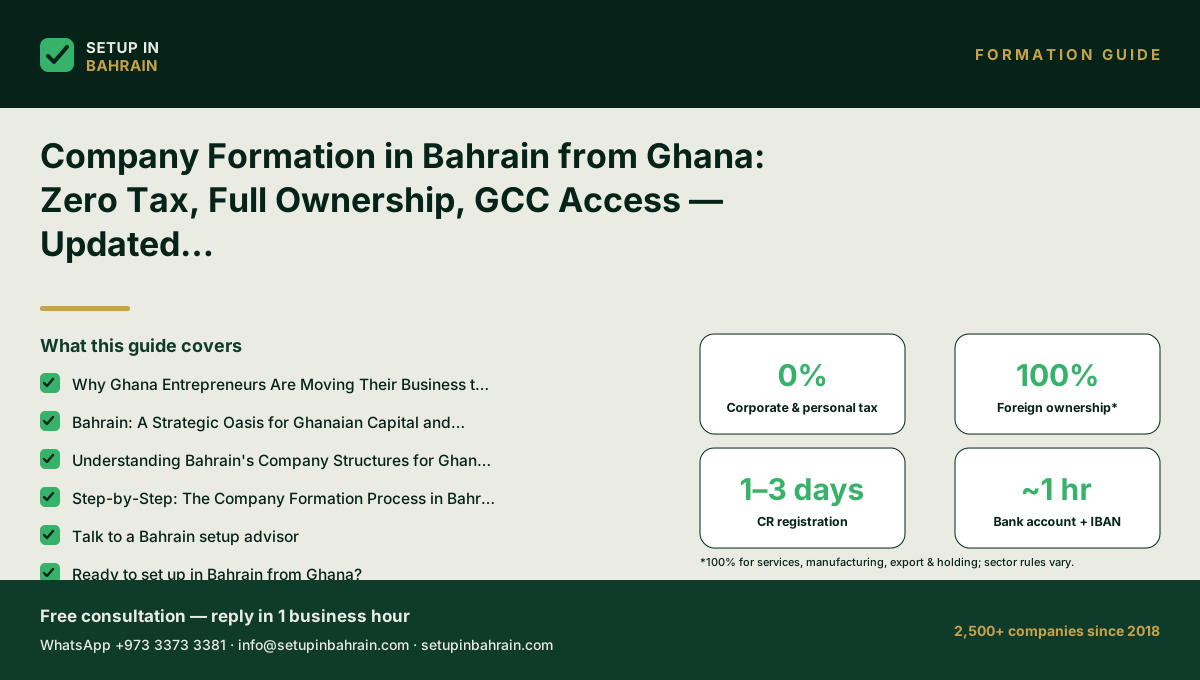
Complete guide for Ghana entrepreneurs: form a company in Bahrain with generally no corporate income tax for most sectors, 100% foreign ownership, and GCC market access. Costs, steps, visas, banking.
→ Complete guide: Company Formation in Bahrain — the full 2026 guide
View details
Ownership & capital
A Bahrain WLL can be owned by a single person — 100% foreign ownership applies to most activities, with no local partner required for services, manufacturing, export trading and holding companies. The minimum share capital is BHD 1; we recommend BHD 1,000, which makes bank account opening and investor visa approval smoother.
Entrepreneurship in Ghana is a profound testament to unwavering resilience, a spirit born from navigating complex landscapes and constantly innovating against the odds. Yet, for many Ghanaian business owners, the daily reality often feels like running a marathon with ankle weights. You’re ambitious, you’re driven, and you’re looking for a horizon where your hard work isn't just rewarded, but truly thrives without unnecessary burdens.
Imagine, for a moment, a business environment where your corporate profits aren't immediately carved out by a multitude of levies, where your operating capital isn't eroding daily due to currency instability, and where the promise of a 0% tax rate isn't a temporary incentive but a fundamental pillar of the economic system. For Ghanaian entrepreneurs feeling the relentless squeeze of a 25% corporate income tax, coupled with an additional 2.5% COVID-19 levy and a 1% GETFUND levy, pushing the effective rate beyond a staggering 28.5%, this vision might seem like a distant dream. But it’s not. It’s the very tangible reality of doing business in Bahrain.
This guide isn't about escaping your roots; it's about strategically expanding your reach and securing your financial future in a way that Ghana's current economic climate simply cannot offer. It’s a complete roadmap designed exclusively for you, the Ghanaian entrepreneur, to understand how company formation in Bahrain can unlock unparalleled growth, protect your capital, and open doors to a market of over 50 million consumers across the GCC, all from a stable, business-friendly hub just a few hours flight away. We're here to cut through the noise, provide concrete facts, and show you exactly how this strategic move can transform your business trajectory in 2026 and beyond.
Why Ghana Entrepreneurs Are Moving Their Business to Bahrain
Let's start with a scenario that might sound painfully familiar. Kofi Owusu runs a logistics and procurement firm in Accra that supplies equipment to mining companies in the Western Region. In 2024, his company posted GHS 4.8 million in profit. After the 25% corporate income tax, the 2.5% COVID levy, and the 1% GETFUND levy, plus Ghana Revenue Authority (GRA) withholding taxes on every major contract, his take-home dropped significantly. The Cedi had already lost more than half its value against the dollar in 2022, and the Bank of Ghana’s forex allocation rules meant he waited weeks for dollars to pay overseas suppliers. When his bank quoted 32% interest on an expansion loan, he started looking offshore.
Kofi isn't alone. Thousands of Ghanaian entrepreneurs, like Kwame, the founder of a Kumasi-based agro-processing startup, face similar dilemmas. In 2024, data suggests that over 700 Ghanaian entrepreneurs actively explored moving their companies abroad, frustrated by escalating tax burdens, relentless currency depreciation, and inflation that pushes real costs ever higher. This isn't a brain drain; it's a strategic pivot for survival and growth.
Let's dissect the core pain points driving this exodus:
The True Cost of Ghanaian Business Taxation: More Than Just the Headline Number
If you operate a business in Ghana, you know the headline corporate tax rate is 25%. But far too often, that’s just the starting point. The cumulative effect of various levies pushes the actual tax burden significantly higher, eroding profitability and stifling reinvestment.
After closing your year-end books, the Ghana Revenue Authority (GRA) typically expects:
- Corporate Income Tax: 25% of taxable profits. This is the base, but it rarely stands alone.
- COVID-19 Health Recovery Levy: An additional 2.5% on profits, introduced as a temporary measure but showing no signs of disappearing soon.
- GETFUND Levy: Another 1% dedicated to education, further reducing your net profit. * Total in 2026: This means an effective minimum of 28.5% of your pre-tax profit, before factoring in any local government taxes, sector-specific levies, or indirect taxes like VAT.
Withholding Tax Withtraps
Even if you’re a compliant taxpayer, every major contract you execute is likely to see a portion of its payment withheld at source. Ghana's complex withholding tax (WHT) system can apply rates ranging from 7.5% to 15% on various services, rentals, and professional fees. This isn't just a final tax; it ties up your cash flow, requiring you to navigate complex refund processes or credit mechanisms that are often cumbersome and slow. Imagine completing a large project, only to receive 85% or 92.5% of the payment, with the remainder held indefinitely.
Mandatory SSNIT Social Security Contributions
Beyond corporate taxes, employers in Ghana are mandated to contribute to the Social Security and National Insurance Trust (SSNIT). This means a portion of your payroll goes towards employee social security, adding to your operational overheads and administrative burden. While essential for employee welfare, it’s another significant cost that cuts into your overall business profitability.
Currency Volatility and Capital Erosion: The Cedi's Relentless Slide
The Ghanaian Cedi's instability has been a consistent headache for businesses, especially those dealing with international trade or needing to repatriate profits.
- Depreciation: In 2022 alone, the GHS depreciated by more than 50% against the US Dollar. This means that if you held GHS 1 million at the start of the year, by the end, its dollar equivalent was worth less than half. This isn't just an abstract number; it directly impacts your ability to pay international suppliers, maintain equipment, or even value your company for potential investors.
- Inflation: High inflation rates further erode purchasing power and increase operating costs. From fuel to raw materials, everything becomes more expensive, forcing businesses to constantly adjust prices and margins, often losing out in the process.
- Forex Access Challenges: The Bank of Ghana’s policies, designed to stabilize the currency, have often led to difficulties in accessing foreign exchange. Entrepreneurs frequently report lengthy waits and bureaucratic hurdles to obtain the dollars needed for critical imports or international payments. This disrupts supply chains, delays projects, and adds immense stress to business operations.
Regulatory Hurdles, Bureaucracy, and the "Informal Cost" of Doing Business
Navigating the Ghanaian regulatory landscape can be a labyrinthine experience. The GRA’s processes, while improving, still involve significant paperwork, frequent visits, and a level of complexity that can overwhelm even seasoned entrepreneurs. Furthermore, the often-cited "informal cost of doing business" – the unseen expenses, delays, and frustrations associated with navigating various government departments – can add substantial unforeseen burdens to your balance sheet and schedule. This friction slows down growth, diverts management attention, and can deter foreign investment.
Limited Market Access and Intense Local Competition
While Ghana offers a vibrant domestic market, scaling beyond its borders within the ECOWAS region still presents significant logistical and regulatory challenges. For ambitious entrepreneurs with global aspirations, the local market can feel constrained, leading to intense competition for a finite pool of consumers. This limits the potential for exponential growth that many entrepreneurs dream of achieving.
Lack of Access to Affordable Capital
The high cost of borrowing in Ghana is a major impediment to growth. Interest rates, often soaring above 30% (as high as 32% quoted to Kofi), make expansion loans prohibitively expensive. This forces businesses to rely heavily on self-funding or expensive equity financing, hindering their ability to innovate, invest in new technology, or expand their operations efficiently.
These factors paint a clear picture: for Ghanaian entrepreneurs, the current economic and regulatory environment presents formidable obstacles to sustained growth and profit retention. This is precisely why more and more are looking towards strategic alternatives like Bahrain.
Bahrain: A Strategic Oasis for Ghanaian Capital and Growth
Bahrain stands in stark contrast to the challenges faced by Ghanaian entrepreneurs, offering a stable, pro-business environment specifically designed to attract and nurture international investment. It’s not just an alternative; it's a deliberate strategic choice for those looking to protect their assets, minimize their tax burden, and access a wider, more affluent market.
Here’s why Bahrain is the strategic oasis you’ve been searching for:
generally no corporate income tax for most sectors: Keep What You Earn
This is, for many, the single most compelling reason. Bahrain operates on a 0% corporate income tax rate for most business activities. This means that after all your legitimate business expenses are deducted, your company’s profits remain entirely within your business for reinvestment, expansion, or distribution to shareholders.
- Direct Impact: Compare this to Ghana's 28.5% (or more) effective corporate tax rate. For every BHD 100,000 in profit generated by your Bahraini company, you retain the full BHD 100,000. In Ghana, nearly BHD 28,500 of that would go to the government. This allows for significantly faster capital accumulation and greater financial flexibility.
- Strategic Advantage: This tax efficiency translates into a powerful competitive advantage, enabling you to offer more competitive pricing, invest more in R&D, or build larger cash reserves for future growth.
(Note: While corporate tax is 0%, specific sectors like oil & gas, and some property rentals, may have different tax structures. Additionally, Bahrain introduced a 10% Value Added Tax (VAT) in 2019, which is a consumption tax passed on to the end consumer, not a corporate profit tax. Businesses with annual supplies exceeding BHD 37,500 must register for VAT.)
100% Foreign Ownership (No Local Sponsor Required)
One of the biggest hurdles for foreign investors in many Middle Eastern countries used to be the requirement for a local partner or sponsor. Bahrain has largely eliminated this barrier.
- Full Control: As a Ghanaian entrepreneur, you can establish a company (such as a With Limited Liability - WLL company) and retain 100% ownership without needing any local Bahraini partner or shareholder. This provides complete control over your business operations, strategic direction, and profit distribution.
- No Saudiazation Quotas: Unlike some neighboring countries that impose stringent nationalization quotas on the workforce, Bahrain offers flexibility in hiring, allowing you to build your team based on merit and skill, without mandatory minimums for local employees, though encouraging local employment is always a positive.
USD-Pegged Currency (BHD): Stability and Predictability
The Bahraini Dinar (BHD) has been pegged to the US Dollar at a fixed rate of 0.376 BHD to 1 USD since 2001. This long-standing peg offers unparalleled currency stability and predictability.
- Protection Against Depreciation: For Ghanaian entrepreneurs accustomed to the Cedi's volatile swings, the BHD peg is a sanctuary. Your capital, revenues, and assets in Bahrain are protected from local currency depreciation, providing immense financial security.
- Ease of International Transactions: Conducting international business becomes significantly simpler and less risky. You can accurately forecast costs for imports, confidently quote prices for exports, and manage your cash flow without the constant worry of currency fluctuations eating into your margins. Repatriating profits or paying international suppliers in USD equivalent becomes seamless.
Gateway to the GCC and MENA Markets: Access to 50 Million+ Consumers
Bahrain's strategic geographical location in the heart of the Arabian Gulf makes it an ideal launchpad for accessing the broader Gulf Cooperation Council (GCC) and Middle East and North Africa (MENA) markets.
- GCC Market: With a combined GDP exceeding USD 1.6 trillion and a population of over 50 million affluent consumers, the GCC market (comprising Bahrain, Saudi Arabia, UAE, Qatar, Kuwait, and Oman) offers immense growth potential.
- King Fahd Causeway: Bahrain is physically connected to Saudi Arabia, the largest economy in the GCC, by the 25-kilometer King Fahd Causeway. This provides unparalleled logistical advantages for businesses looking to serve the Saudi market, allowing for efficient movement of goods and people.
- Logistics Hub: Bahrain boasts excellent infrastructure, including Khalifa Bin Salman Port and Bahrain International Airport, facilitating efficient global trade and distribution. Its reputation as a logistics and trans-shipment hub for the region is growing.
Modern, Pro-Business Regulatory Environment: Efficiency and Transparency
Bahrain has consistently ranked high in global ease of doing business indices, thanks to its forward-thinking regulatory framework and commitment to digital transformation.
- Key Institutions: Institutions like the Economic Development Board (EDB), the Ministry of Industry and Commerce (MOIC), and the Central Bank of Bahrain (CBB) work collaboratively to create an investor-friendly ecosystem.
- Sijilat Portal: The online Sijilat portal (www.sijilat.bh) has revolutionized company registration, making the process largely digital, streamlined, and transparent. What used to take weeks or months can now be completed in a matter of days for many activities.
- Financial Hub: The CBB is a highly respected regulator, ensuring stability and robust oversight of the financial sector, which benefits all businesses operating in Bahrain by fostering a secure banking environment. The Bahrain Investors Protection Agency (BIPA) further reinforces confidence for foreign investors.
Cost-Effective Operations: Value Without Compromise
While the region is known for its luxury, Bahrain offers a surprisingly cost-effective environment for businesses compared to its more bustling neighbours like Dubai or Riyadh.
- Lower Operating Costs: Office rentals, licensing fees, and general operational expenses are often significantly lower than in other major GCC cities, allowing businesses to maximize their budgets.
- Skilled Workforce: Access to a diverse, skilled, and multilingual workforce at competitive rates further reduces operational overheads.
High Quality of Life & Diverse Talent Pool
For entrepreneurs considering relocating, Bahrain offers a cosmopolitan lifestyle, excellent healthcare, world-class education options, and a safe, welcoming environment. This makes it attractive not just for the principal entrepreneur but also for their families, aiding in talent attraction and retention. Its openness to diverse cultures fosters a truly international business environment.
Understanding Bahrain's Company Structures for Ghanaian Founders
Choosing the right legal structure is a foundational decision for your Bahraini venture. It impacts everything from liability and ownership to capital requirements and operational flexibility. For Ghanaian entrepreneurs, the most suitable and commonly used structures are detailed below.
1. The Limited Liability Company (WLL - With Limited Liability)
This is by far the most popular and recommended option for most foreign entrepreneurs, including those from Ghana. It offers an excellent balance of flexibility, protection, and straightforward setup.
- Key Features for Ghanaian Founders:
2. Bahraini Shareholding Company (BSC)
The BSC is typically chosen for larger ventures, public offerings, or companies requiring more complex corporate governance structures. There are two main types:
- Bahraini Shareholding Company (Closed) - BSC(C):
- Bahraini Shareholding Company (Public) - BSC(P):
For most Ghanaian entrepreneurs establishing a new presence in Bahrain, the BSC structures are generally overkill due to their higher capital requirements and greater complexity. The WLL remains the pragmatic choice.
3. Branch of a Foreign Company
If you already have an established and operational company in Ghana and wish to expand its operations into Bahrain, setting up a branch office can be an option.
- No Separate Legal Entity: A branch is not a separate legal entity from its parent company; it is considered an extension of the Ghanaian parent.
- Liability: The parent company in Ghana remains fully liable for the branch's obligations in Bahrain.
- Activities: Can conduct commercial activities, subject to specific licensing for certain sectors.
- Documents: Requires submission of parent company's registration documents, audited financial statements, and a resolution from the parent company's board approving the branch setup.
- Suitability: Best for Ghanaian companies that want to maintain their existing corporate identity and structure while expanding geographically.
4. Representative Office
A representative office is suitable for Ghanaian businesses looking to explore the Bahraini market or promote their parent company's products/services without engaging in direct commercial activities.
- No Commercial Activities: Cannot conduct sales, trading, or revenue-generating activities.
- Market Research & Promotion: Limited to market research, liaison activities, and promoting the parent company.
- Suitability: A good first step for companies wanting to test the waters before committing to full commercial registration.
5. Holding Company
While not a standalone legal entity type, any of the above (most commonly a WLL or BSC(C)) can be structured as a holding company.
- Purpose: A holding company typically holds assets (e.g., shares in other companies, intellectual property, real estate) rather than engaging in active trade.
- Benefits: Can be used for international asset protection, wealth management, and consolidating profits from various global ventures. The generally no corporate income tax for most sectors in Bahrain makes it an attractive jurisdiction for holding intellectual property or controlling other operational subsidiaries.
- Suitability: For Ghanaian entrepreneurs with diversified investments or those looking to establish a robust international corporate structure for long-term wealth preservation and management.
For the vast majority of Ghanaian entrepreneurs seeking to enter the Bahraini market, the With Limited Liability (WLL) company stands out as the most flexible, cost-effective, and efficient option, offering 100% foreign ownership and limited liability protection. Remember the practical advice: target BHD 1,000 for share capital to ensure smooth banking and visa processes.
Step-by-Step: The Company Formation Process in Bahrain for Ghanaians
Establishing your company in Bahrain is a structured process designed for efficiency, particularly through the digital Sijilat portal. While a professional service provider is highly recommended to navigate the nuances, here’s a comprehensive step-by-step guide tailored for Ghanaian entrepreneurs.
Phase 1: Pre-Registration & Planning
This initial phase is critical for laying a solid foundation for your Bahraini company.
- Define Your Business Activities & Classification:
- Trade Name Reservation:
- Select Your Legal Structure (Reiterate WLL Focus):
- Determine Share Capital & Shareholder Structure:
- Identify Registered Office Address:
Phase 2: Documentation & Submission
This phase involves gathering and submitting all necessary paperwork. Pay close attention to attestation requirements.
- Gather Required Documents (Ghanaian Specifics):
- Draft Memorandum of Association (MoA) and Articles of Association (AoA):
- Submit Application via Sijilat Portal:
Phase 3: Approval & Post-Registration
Once submitted, the application undergoes review and approval.
- MOIC Approval:
Bahrain Business Guides for Ghana Citizens
Ready to set up in Bahrain from Ghana?
Tell us your business idea. We map the right entity, ownership and timeline — then handle the filing while you focus on what matters.