
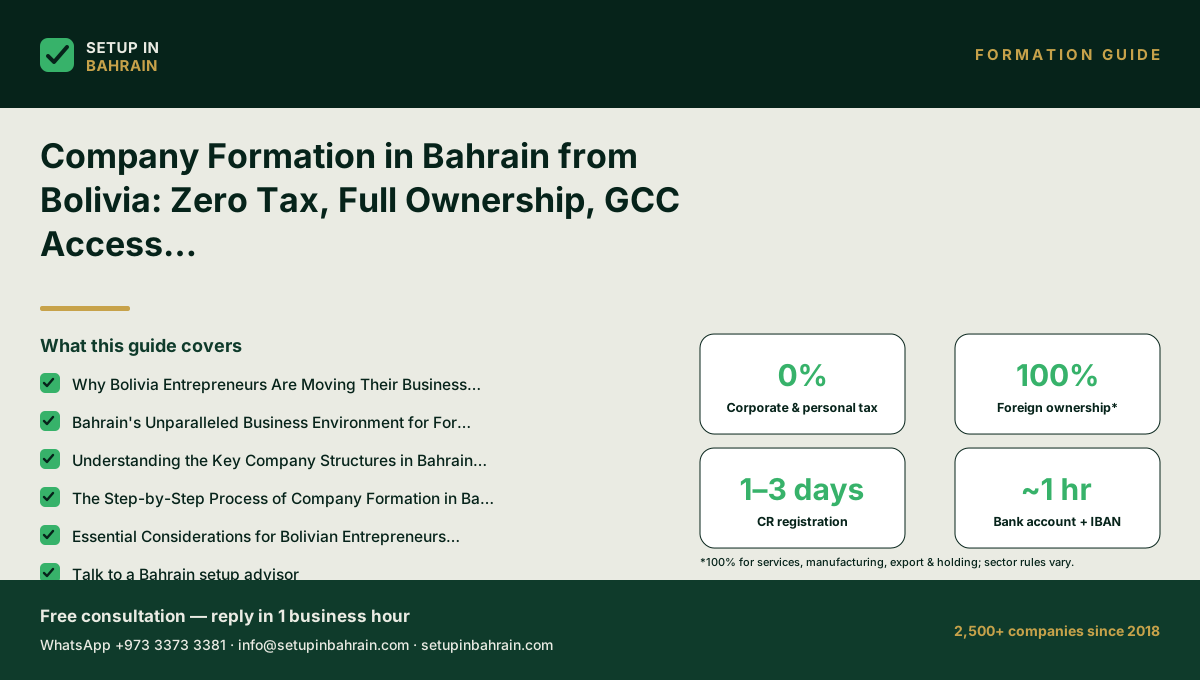
Complete guide for Bolivia entrepreneurs: form a company in Bahrain with generally no corporate income tax for most sectors, 100% foreign ownership, and GCC market access. Costs, steps, visas, banking.
→ Complete guide: Company Formation in Bahrain — the full 2026 guide
View details
Ownership & capital
A Bahrain WLL can be owned by a single person — 100% foreign ownership applies to most activities, with no local partner required for services, manufacturing, export trading and holding companies. The minimum share capital is BHD 1; we recommend BHD 1,000, which makes bank account opening and investor visa approval smoother.
For many entrepreneurs in Bolivia, the daily grind isn't just about building a business; it's about navigating a labyrinth of complex regulations, wrestling with a demanding tax regime, and constantly battling currency volatility. Imagine a reality where the 25% corporate income tax, the additional 25% dividend tax, and the opaque quarterly liquidation system of Bolivia's SIN (Servicio de Impuestos Nacionales) are distant memories. A reality where your hard-earned profits aren't eroded by an effective 47% tax burden before they even reach your hands, or held captive by strict outward transfer controls from the BCB (Banco Central de Bolivia).
This isn't a pipe dream. This is the strategic shift that savvy Bolivian entrepreneurs are making by looking eastward, towards the burgeoning economy of Bahrain. A pivot that promises not just survival, but unprecedented growth, stability, and access to one of the world's most dynamic markets: the Gulf Cooperation Council (GCC). This guide will meticulously lay out why Bahrain isn't just an alternative, but a superior launchpad for your business, addressing your specific pain points as a Bolivian entrepreneur and detailing every step of your journey.
Why Bolivia Entrepreneurs Are Moving Their Business to Bahrain
Let's start with a scenario familiar to many Bolivian founders. Picture María, a successful software developer in La Paz, running a small but growing SaaS company. Her team works tirelessly, innovation is constant, and revenue is steadily climbing. Yet, as the end of each quarter approaches, a knot tightens in her stomach. She knows the struggle with SIN's complex quarterly liquidation system is imminent, demanding hours of her time and her accountant’s, diverting focus from growth. And then there's the inevitable hit: 25% of her corporate profits vanish, followed by another 25% on any dividends she wants to take out, meaning nearly half of her distributed earnings are lost to taxes.
Now, consider the case of a La Paz-based software exporter who cleared BOB 420,000 in annual profit last year. After Bolivia’s 25% corporate income tax, the remaining BOB 315,000 faced another 25% dividend tax upon distribution, leaving roughly BOB 236,000—effectively surrendering 47% of distributed earnings to the state before any personal expenses. Add mandatory quarterly SIN liquidations, AFP employer contributions at 13% of payroll, and BCB approval delays for any outward transfer above BOB 50,000, and the founder spent more time on compliance than on product development.
This isn't just a hypothetical. These are the very real pain points that stifle innovation, limit growth, and deter international expansion for Bolivian entrepreneurs:
- Punitive Tax Burden: The combination of a 25% corporate income tax and an additional 25% dividend tax on distributed profits creates an effective tax rate of 47%. This is a significant drain on your hard-earned revenue, severely impacting reinvestment potential and personal wealth accumulation.
- Complex Quarterly Liquidation System: Bolivia's SIN mandates a demanding quarterly liquidation system that is notoriously opaque and time-consuming. This forces entrepreneurs to divert precious resources and focus away from core business activities towards administrative compliance.
- Strict Outward Transfer Controls: The Banco Central de Bolivia (BCB) imposes stringent controls on outward transfers of funds. Any transfer above BOB 50,000 often requires lengthy approval processes, causing significant delays and uncertainty, making international payments or repatriation of profits a bureaucratic nightmare.
- Currency Volatility and Management: The Boliviano (BOB) is managed by the BCB, and its stability can be a constant concern for businesses dealing in international markets. This uncertainty adds another layer of risk to cross-border transactions and long-term financial planning.
- High Social Contributions: Beyond income taxes, employers in Bolivia face substantial social contributions, such as AFP (Administradora de Fondos de Pensiones) payments, which can be around 13% of payroll. These add a considerable overhead to hiring and scaling teams.
- Limited Access to International Markets: While Bolivia has growing regional ties, its regulatory environment and perceived economic risks can make it challenging to attract international investment or expand into global markets effectively. The lack of a strong, globally recognized financial hub limits opportunities.
Bahrain removes every one of those layers. A WLL registered in Bahrain can be 100% owned by a single foreign entrepreneur. There is generally zero corporate income tax for most business activities, zero dividend tax, and zero capital gains tax. The currency, the Bahraini Dinar (BHD), is pegged to the US Dollar, offering rock-solid stability. There are no restrictions on the outward transfer of capital or profits, and the compliance burden is remarkably light. Bahrain is a member of the Gulf Cooperation Council (GCC), granting direct, tariff-free access to a USD 1.6 trillion market with over 58 million high-net-worth consumers. This isn't just a geographical shift; it's a strategic move to an entirely different league of business opportunities.
Bahrain's Unparalleled Business Environment for Foreign Investors
Bahrain has meticulously crafted an environment designed to attract, nurture, and accelerate foreign direct investment. For a Bolivian entrepreneur weary of administrative burdens and tax complexities, Bahrain represents a breath of fresh air, a place where business logic triumphs over bureaucratic inertia.
A Truly Zero-Tax Jurisdiction (No Corporate Income Tax)
One of Bahrain's most compelling advantages, and a stark contrast to Bolivia, is its incredibly attractive tax regime. For the vast majority of businesses operating in the Kingdom, there is no corporate income tax. This means your company’s profits, the very lifeblood of your enterprise, are not subject to the 25% levy you currently face in Bolivia.
Furthermore, Bahrain imposes no dividend tax. Imagine the relief of distributing profits to yourself or your shareholders without another 25% disappearing. This effectively removes the 47% tax burden you'd experience on distributed profits in Bolivia. There's also no capital gains tax and no personal income tax. This allows for significantly higher retention of earnings, enabling faster reinvestment, greater wealth accumulation, and better cash flow for your business.
The only exceptions to this zero-tax rule apply to very specific sectors: companies operating in the oil and gas industry and certain real estate activities (though generally, no corporate income tax on rental income from properties). For almost every other business – from software development to consulting, e-commerce, logistics, and manufacturing – the tax rate on corporate profits is 0%. This isn't a temporary incentive; it's a foundational pillar of Bahrain's economic strategy, meticulously regulated and upheld by the Central Bank of Bahrain (CBB) and the Ministry of Industry and Commerce (MOIC).
100% Foreign Ownership and Repatriation of Capital
Another major differentiator for Bolivian entrepreneurs is the freedom of ownership. Unlike jurisdictions that might require local partners or complex shareholding structures, Bahrain generally allows 100% foreign ownership of companies in most sectors. This is particularly true for the most popular entity, the With Limited Liability (WLL) company.
What does this mean for you?
- Full Control: You retain complete decision-making authority over your business, without the need to cede equity or control to a local partner. This simplifies governance and aligns perfectly with the entrepreneurial spirit.
- Streamlined Operations: No complex partnership agreements to negotiate or maintain, no disagreements over strategy or profit sharing with local entities.
- Unrestricted Repatriation: Bahrain champions a free market economy with no foreign exchange controls. This means you can freely repatriate 100% of your company's profits and capital back to Bolivia (or any other country) without bureaucratic hurdles or restrictions from the CBB. This is a crucial distinction from the BCB's stringent outward transfer controls and a significant relief for international business operations.
Strategic Gateway to the GCC and MENA Markets
Bahrain isn't just a sovereign nation; it's a pivotal member of the Gulf Cooperation Council (GCC), a powerful economic bloc comprising Saudi Arabia, UAE, Qatar, Kuwait, and Oman. This membership provides an invaluable strategic advantage:
- Direct Market Access: Your Bahraini company gains tariff-free access to the entire GCC market, which boasts a combined GDP of approximately USD 1.6 trillion and a population of over 58 million, characterized by high disposable incomes and a strong appetite for innovation. Imagine selling your products or services across this vast region without encountering the trade barriers often faced by businesses operating from outside the bloc.
- Geographic Advantage: Bahrain's strategic location in the heart of the Arabian Gulf makes it an ideal hub for regional operations. It’s physically connected to Saudi Arabia, the largest GCC economy, by the 25-kilometer King Fahd Causeway, allowing for efficient logistics and direct market reach.
- Free Trade Agreements: Beyond the GCC, Bahrain has signed free trade agreements with key global economies, including the United States, Singapore, and various European nations, further expanding your potential market reach and competitive advantage.
Stable Economy and Strong Regulatory Framework
Economic stability is a cornerstone of business success, and Bahrain delivers this with remarkable consistency:
- Currency Peg to USD: The Bahraini Dinar (BHD) has been officially pegged to the US Dollar at a rate of BHD 0.376 per USD 1 since 2001. This long-standing peg provides unparalleled currency stability, eliminating the foreign exchange risks and volatility that often plague the Boliviano (BOB). For any entrepreneur dealing with international trade, this stability is a massive de-risker.
- Credible Central Bank of Bahrain (CBB): The CBB is a highly respected and proactive regulator, ensuring financial stability and transparency. Its robust framework protects investors and consumers alike, fostering confidence in the financial sector.
- High Rankings in Ease of Doing Business: Bahrain consistently ranks high in the World Bank's Ease of Doing Business reports. For instance, in recent years, it has often been recognized as one of the easiest places globally to start a business, process permits, and enforce contracts. This stands in stark contrast to the complexities often encountered in Bolivia. The Economic Development Board (EDB) and the Ministry of Industry and Commerce (MOIC) actively work to streamline processes, making company formation efficient and straightforward.
- Transparent Legal System: The Kingdom operates under a transparent, Western-style legal system based on codified law, providing a predictable and secure environment for commercial activities and dispute resolution.
Cost-Effective Operations and Quality Infrastructure
While offering world-class infrastructure, Bahrain remains remarkably cost-effective compared to its GCC neighbors like the UAE or Qatar:
- Lower Operating Costs: Office rentals, utility costs, and even living expenses are generally more affordable in Bahrain, reducing your operational overheads and improving your bottom line.
- Advanced Infrastructure: Bahrain boasts state-of-the-art telecommunications, modern ports (Khalifa Bin Salman Port), and a highly efficient international airport (Bahrain International Airport), ensuring seamless connectivity for your business globally.
- Educated and Diverse Talent Pool: With a strong focus on education and a significant expatriate community, Bahrain offers access to a skilled, multilingual workforce at competitive wages, reducing the burden of the 13% AFP employer contributions seen in Bolivia.
- Government Support: Initiatives by the EDB, such as start-up incubators and accelerators, provide a supportive ecosystem for new businesses, offering mentorship, funding opportunities, and networking avenues.
Understanding the Key Company Structures in Bahrain for Bolivians
Choosing the right legal entity is a foundational decision for your business in Bahrain. For most Bolivian entrepreneurs looking for full ownership, limited liability, and operational flexibility, the With Limited Liability (WLL) company is the overwhelmingly preferred choice. It strikes an optimal balance between protection, control, and ease of setup.
The Workhorse: With Limited Liability (WLL)
The WLL is by far the most popular and versatile legal structure for foreign investors in Bahrain. It's the equivalent of an LLC in many Western countries and offers numerous advantages that directly address the needs of Bolivian entrepreneurs:
- 100% Single-Person Ownership: This is a critical point and a significant advantage for Bolivian entrepreneurs. Contrary to some misconceptions or structures in other countries, a Bahraini WLL can be owned 100% by a single individual, with absolutely zero partners required. This means you maintain complete control and do not need to seek out a local sponsor or shareholder. There is NO WLL (Single Person Company) as a separate legal entity in Bahrain; the WLL structure already accommodates sole ownership.
- Limited Liability: As the name suggests, your personal assets are protected from the company's debts and liabilities. Your liability is limited to the amount of capital you have invested in the company, providing crucial personal financial security.
- Minimum Share Capital: Legally, the minimum share capital for a WLL in Bahrain is a symbolic BHD 1. However, it is CRITICAL to understand and budget for a practical starting capital of at least BHD 1,000. While BHD 1 meets the legal minimum, nearly all Bahraini banks will require a minimum balance of BHD 1,000 to BHD 5,000 for opening a corporate bank account. Furthermore, when applying for an investor visa or dependent visas, the MOIC and immigration authorities look for evidence of sufficient funds to support your stay, making BHD 1,000 (or more) a practical necessity.
- Broad Range of Activities: A WLL can engage in a wide array of commercial, industrial, and service activities. When you register, you select specific commercial activities (known as CR Activities) that define your business scope.
- Operational Flexibility: WLLs are ideal for startups, SMEs, and even larger enterprises looking to establish a robust presence in the GCC. They offer the flexibility to adapt and scale.
For Bolivian entrepreneurs burdened by the 47% effective tax rate, the complex SIN system, and BCB restrictions, establishing a WLL in Bahrain is a powerful move. It provides a clean slate: no corporate tax, no dividend tax, full ownership, and unrestricted repatriation of profits.
Other Options (Briefly Mentioned for Context)
While the WLL is the go-to, it’s useful to be aware of other structures for different scenarios:
- Closed Shareholding Company (BSC Closed): Suitable for larger ventures that intend to raise capital from a limited number of shareholders. It has higher capital requirements (minimum BHD 25,000) and more stringent regulatory oversight.
- Sole Proprietorship (Establishment): While an individual can register as a sole proprietorship, it does not offer limited liability, meaning your personal assets are not protected. For this reason, the WLL, with its limited liability and ability for single ownership, is almost always preferred by savvy entrepreneurs.
- Branch Office: If you already have an established company in Bolivia or another country, you can register a branch office in Bahrain. This entity is legally an extension of the parent company, not a separate legal entity, and its activities are restricted to those of the parent. It is often used by larger corporations expanding their international footprint.
For almost all purposes relevant to a Bolivian entrepreneur setting up a new venture, the WLL will be the most suitable and beneficial choice.
The Step-by-Step Process of Company Formation in Bahrain (MOIC & EDB)
The process of company formation in Bahrain has been significantly streamlined by the Ministry of Industry and Commerce (MOIC), largely through its online Sijilat portal, and supported by the Economic Development Board (EDB) which champions foreign investment. While straightforward, understanding each phase is key to a smooth journey.
Phase 1: Planning and Pre-Registration
This initial phase sets the foundation for your company and ensures all prerequisites are met before formal application.
- Define Your Business Activities (CR Activities): This is crucial. You need to precisely identify the commercial activities your company will undertake. The MOIC has a comprehensive list of classifications. These activities will be linked to your Commercial Registration (CR). For example, "Software Development," "IT Consulting," "E-commerce," "General Trading." Some activities may require specific approvals from relevant ministries (e.g., financial services from CBB, healthcare from Ministry of Health).
- Company Name Reservation: You will need to propose several potential company names in order of preference. The name must be unique, not offensive, and not infringe on existing trademarks. This can often be done online through the Sijilat portal.
- Choosing a Registered Address: Every company in Bahrain requires a registered physical address.
- Drafting Memorandum & Articles of Association (MOA/AOA): These are the foundational legal documents for your WLL.
Phase 2: Application Submission to MOIC
Once your pre-registration steps are complete, you're ready for the formal application.
- Gather Required Documents: Prepare a comprehensive set of documents for each shareholder and director (even if it's just you). This typically includes:
- Online Application via Sijilat Portal: The Sijilat portal (sijilat.bh) is Bahrain's integrated online business registration platform. You (or your appointed agent) will upload all required documents and complete the application forms online. This system significantly speeds up the process compared to traditional paper-based submissions.
- MOIC Approval Process: The MOIC will review your application. This involves:
This phase can take anywhere from a few days to a couple of weeks, depending on the complexity of your activities and the completeness of your submission.
Phase 3: Post-Registration Formalities
Once MOIC approval is granted, there are a few final, but crucial, steps.
- Commercial Registration (CR) Issuance: Upon final approval and payment of fees, your company's Commercial Registration (CR) will be issued. This is your company's official license to operate in Bahrain. It will list your company name, CR number, registered address, and approved business activities.
- Opening a Corporate Bank Account: This is a vital step and where the practical share capital becomes relevant. You will need to approach a local or international bank in Bahrain (e.g., NBB, BBK, HSBC, Standard Chartered) to open a corporate bank account.
- Obtaining Necessary Licenses: Depending on your specific business activities, you may need additional licenses from other government bodies. For example:
- Visa and Residency Applications: With your company registered and bank account open, you can now apply for your investor visa and, if applicable, dependent visas for your family. This process is handled by the Labour Market Regulatory Authority (LMRA) and the Nationality, Passports, and Residence Affairs (NPRA). Your investor visa will typically be linked to your company’s CR and will allow you to reside and work in Bahrain.
This structured approach, with careful attention to detail at each stage, will ensure a smooth and efficient company formation process, allowing you to quickly transition from navigating Bolivian bureaucracy to thriving in Bahrain's business-friendly environment.
Essential Considerations for Bolivian Entrepreneurs After Company Registration
Successfully registering your company is a monumental first step, but the journey continues. As a Bolivian entrepreneur, understanding the post-registration landscape – from banking to visas and ongoing compliance – is crucial for seamless operations and sustained growth in Bahrain.
Navigating Bahraini Banking: Practical Capital and Approval
The corporate bank account is the operational heart of your business, and while Bahrain boasts a sophisticated financial sector, there are practical realities, especially for foreign entrepreneurs.
- Why BHD 1,000 is Crucial for Bank Accounts: As reiterated, the legal minimum share capital for a WLL is BHD 1. However, this is purely symbolic. No reputable bank in Bahrain will open a corporate account with such a low balance. Most banks require a minimum opening deposit and often a minimum average balance of at least BHD 1,000 (approximately USD 2,650), with some institutions requiring BHD 5,000, particularly for companies with non-resident directors. This practical capital ensures the bank sees your company as a viable entity, not just a shell. Factor this into your initial budget.
- KYC/AML for Foreigners: Bahraini banks, regulated by the robust CBB, adhere to stringent Know Your Customer (KYC) and Anti-Money Laundering (AML) protocols. As a foreign entrepreneur from Bolivia, expect a thorough due diligence process. This will involve providing:
- Required Documents for Bank Account: Beyond the company documents, personal documents typically include:
- Comparing Local and International Banks: Bahrain offers a mix of strong local banks (e.g., National Bank of Bahrain - NBB, Bahrain Kuwaiti Bank - BBK) and international branches (e.g., HSBC, Standard Chartered).
Bahrain Business Guides for Bolivia Citizens
Ready to set up in Bahrain from Bolivia?
Tell us your business idea. We map the right entity, ownership and timeline — then handle the filing while you focus on what matters.