
Complete guide for Bangladesh entrepreneurs: form a company in Bahrain with generally no corporate income tax for most sectors, 100% foreign ownership. GCC market access. Costs, steps, visas, banking.
Key Takeaways
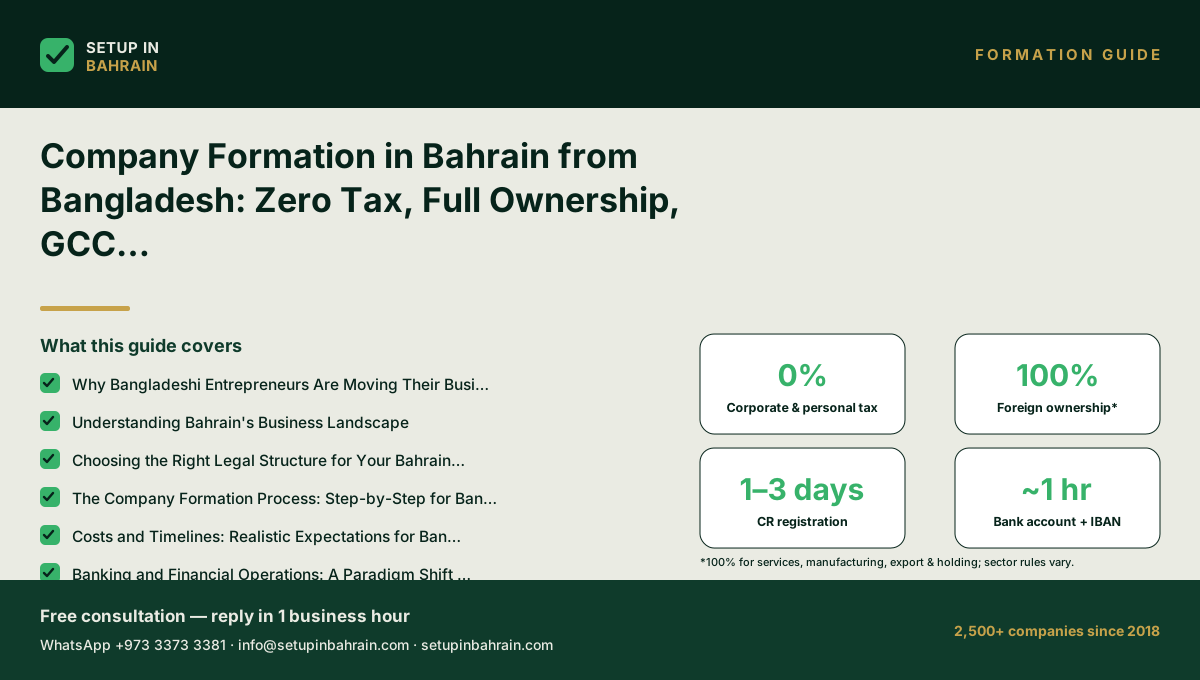
- Why Bangladeshi Entrepreneurs Are Moving Their Business to Bahrain
- Understanding Bahrain's Business Landscape
- Choosing the Right Legal Structure for Your Bahraini Company
- The Company Formation Process: Step-by-Step for Bangladeshi Entrepreneurs
- Costs and Timelines: Realistic Expectations for Bangladeshi Entrepreneurs
→ Complete guide: Company Formation in Bahrain — the full 2026 guide
View details
Ownership & capital
A Bahrain WLL can be owned by a single person — 100% foreign ownership applies to most activities, with no local partner required for services, manufacturing, export trading and holding companies. The minimum share capital is BHD 1 ; we recommend BHD 1,000 . This Makes bank account opening and investor visa approval smoother.
Every morning, as the sun rises over Dhaka, hundreds of thousands of Bangladeshi entrepreneurs face a stark reality: the persistent drag of a 27.5% corporate tax rate, complex advance income tax deductions by the NBR, and a labyrinth of regulations that often feel more like obstacles than guidelines. Take Mr. Rahman, a brilliant software entrepreneur from Mirpur, for instance. His innovative SaaS platform, built by his talented team, is gaining traction across Southeast Asia. Yet, nearly a third of his hard-earned profits vanish into corporate taxes before he can even think about reinvesting, expanding, or bringing in international capital. He grapples with Bangladesh Bank's stringent prior approvals for every international outward remittance, making crucial vendor payments or global marketing efforts a bureaucratic nightmare. The dream of seamless international operations often feels just that – a dream, constantly weighed down by local complexities.
Rahim, who runs a garments accessories trading business in Dhaka’s Uttara, spent three weeks last year chasing Bangladesh Bank approval for a single USD 18,000 supplier payment. The NBR had already deducted 27.5% corporate tax on his profit, plus another layer of advance income tax on every import LC. When he finally received the remittance approval, the exchange rate had moved against him by 4.8%. He closed the financial year with BDT 41 lakh in tax and compliance costs on BDT 1.9 crore turnover.
Stories like Rahim’s are now driving a quiet but steady shift. Bangladeshi entrepreneurs are discovering that Bahrain offers a world of difference: a generally no corporate income tax for most sectors regime, 100% foreign ownership of companies. Direct, unrestricted access to the multi-trillion-dollar GCC (Gulf Cooperation Council) market. This isn't just another generic guide. This is your definitive roadmap, built specifically for the Bangladeshi entrepreneur. We understand your frustrations with the 27.5% corporate tax (22.5% for listed companies), the mandatory ICAB audits. The BDT currency restrictions. We recognize the limitations posed by Bangladesh Bank’s prior approval mandates for foreign remittances and the often-frustrating digital banking infrastructure. This guide speaks directly to those pain points, offering Bahrain as a strategic solution for international growth and financial freedom.
Why Bangladeshi Entrepreneurs Are Moving Their Business to Bahrain
The motivations for Bangladeshi entrepreneurs to explore company formation in Bahrain are deeply rooted in the economic realities back home and the compelling advantages offered by the Kingdom. It's not merely about seeking greener pastures; it's about finding a fertile ground where ambition can truly flourish without undue friction.
Escaping High Corporate Tax Burdens: A 0% Advantage
Perhaps the most significant draw for any entrepreneur is the promise of retaining more of their hard-earned profits. In Bangladesh, the standard corporate tax rate of 27.5% on taxable income (22.5% for listed companies) can be a heavy burden, siphoning off a substantial portion of profits that could otherwise be reinvested into growth, innovation, or employee development. For service-based businesses, manufacturing, or trading entities, this tax liability directly impacts scalability and competitiveness.
Bahrain, in stark contrast, operates on a principle of Generally no corporate income tax for most sectors for most sectors. This isn't a temporary incentive; it's a foundational pillar of its economic policy. This means that if you establish your company in Bahrain, your profits, in most cases, remain entirely yours. Imagine the impact this has on your bottom line. A business generating BDT 5 crore in net profit in Bangladesh would see nearly BDT 1.37 crore vanish in corporate tax alone. In Bahrain, that entire BDT 5 crore (or its equivalent in BHD) stays within your business, ready for expansion, market entry, product development, or shareholder dividends. This single factor alone can accelerate growth trajectories by years.
Full Ownership and Control: No Local Partner Required
For many Bangladeshi business owners, the requirement of local partners in certain foreign jurisdictions can be a significant deterrent. It often involves navigating complex partnership agreements, sharing control, and potential disagreements over strategic direction. Bahrain eliminates this concern entirely.
One of the most popular company structures for foreign investors, the With Limited Liability (WLL) company, can be 100% owned by a single foreign individual or entity. This means you, as a Bangladeshi entrepreneur, can maintain complete ownership and control over your Bahraini operation. There’s no need to search for a local sponsor, no mandatory equity dilution. No sharing of profits with inactive partners. This level of autonomy is invaluable for maintaining strategic coherence and operational efficiency, especially when expanding internationally.
Unrestricted Access to the Multi-Trillion Dollar GCC Market
Bangladesh’s geographical location places it strategically for South and Southeast Asian markets. But, accessing the affluent Gulf Cooperation Council (GCC) market (comprising Bahrain, Kuwait, Oman, Qatar, Saudi Arabia. UAE) often involves setting up entities in multiple countries, navigating diverse regulations, and incurring significant costs.
Bahrain serves as an ideal gateway to this powerful economic bloc. With a combined GDP exceeding USD 1.6 trillion and a population of over 50 million affluent consumers, the GCC presents immense opportunities across various sectors, from technology and logistics to manufacturing and services. By establishing your headquarters in Bahrain, you gain preferential access to this market through various trade agreements and a business-friendly environment designed to help regional operations. Think of it as a central launchpad from which your products and services can reach millions of customers without facing the same customs barriers or regulatory hurdles as direct exports from Bangladesh.
Financial Freedom and Seamless International Remittances
The frustrations faced by Rahim with Bangladesh Bank's prior approval for international remittances are a common pain point for many Bangladeshi businesses. The often-protracted process, stringent documents requirements. Potential for exchange rate fluctuations during approval delays can severely hinder international trade and investment.
Bahrain, regulated by the Central Bank of Bahrain (CBB), boasts a highly liberalized and sophisticated financial sector. The CBB is known for its progressive regulatory framework and its commitment to facilitating seamless international transactions. Outward remittances from Bahrain for legitimate business purposes are generally straightforward, requiring standard banking procedures rather than extensive prior governmental approvals that can take weeks or even months. This ease of capital repatriation and international payment processing provides unprecedented financial freedom, allowing your Bahraini entity to operate globally with agility and efficiency. This is a game-changer for businesses requiring frequent international payments for suppliers, cloud services, marketing, or investor returns.
A Mature, Digital-First Business Environment
The challenges of digital infrastructure and bureaucratic processes can slow down business operations in many developing economies. Bangladesh has made strides, but issues persist. Bahrain, on the other hand, has invested heavily in creating a modern, digitally-driven business environment.
From online company registration portals to advanced digital banking services and government e-services, Bahrain prioritizes efficiency and accessibility. The Ministry of Industry and Commerce (MOIC) offers comprehensive online services, simplifying the registration process greatly. This digital-first approach minimizes red tape, reduces the need for physical visits. Drastically cuts down the time required for administrative tasks, allowing entrepreneurs to focus more on their core business activities. For entrepreneurs accustomed to manual processes and extensive paperwork, Bahrain's digital ecosystem offers a refreshing and productive alternative.
Understanding Bahrain's Business Landscape
To successfully navigate company formation in Bahrain, it's crucial to grasp the fundamental aspects of its economic and regulatory environment. This understanding will empower you to make informed decisions and leverage the Kingdom's unique strengths.
Bahrain's Vision 2030 and Economic Diversification
Bahrain's economic strategy is encapsulated in its "Vision 2030," a comprehensive plan to transition from an oil-dependent economy to a diversified, sustainable, and knowledge-based powerhouse. This vision has led to significant investments in non-oil sectors such as financial services, technology, logistics, tourism. Manufacturing. For entrepreneurs, this means a dynamic economy with robust government support for new businesses, especially those in innovative or high-growth sectors. The Bahrain Economic Development Board (EDB) plays a pivotal role in attracting and supporting foreign direct investment aligning with this vision.
Key Regulatory Bodies and Their Roles
Understanding the regulatory ecosystem is vital for compliance and smooth operations. Ministry of Industry and Commerce (MOIC): This is your primary point of contact for company registration, commercial registration (CR). Licensing. The MOIC oversees all aspects of business setup and ensures compliance with the Commercial Companies Law. Its online portal, "Sijilat," streamlines many of these processes. Bahrain Economic Development Board (EDB): The EDB is a pro-business government agency mandated to attract foreign investment and support economic growth. It acts as a concierge service for investors, providing guidance, facilitating connections, and helping navigate the local landscape. For Bangladeshi entrepreneurs, the EDB can be an invaluable resource, offering insights into market opportunities, regulatory assistance. Support with licensing requirements. Central Bank of Bahrain (CBB): The CBB is the single regulator for Bahrain's entire financial sector. It licenses and supervises banks, insurance firms, investment firms, and other financial institutions. Its robust yet progressive regulatory framework ensures stability and confidence in the financial system. For businesses, this means a secure banking environment and clear guidelines for financial transactions, a welcome contrast to the complexities of Bangladesh Bank’s prio. Bahrain Investors and Entrepreneurs Society (BIPA): While not a regulatory body, BIPA is an important local association that supports investors and entrepreneurs. They often provide networking opportunities, advocacy. Practical advice, acting as a bridge between the business community and government entities.
Ease of Doing Business: A Global Leader
Bahrain consistently ranks high in global indices for ease of doing business. While the World Bank's 'Doing Business' report has been discontinued, Bahrain previously held a strong position, reflecting its commitment to streamlining processes, protecting investors, and enforcing contracts. The focus remains on making business setup and operation as efficient as possible. This commitment translates into tangible benefits: faster registration times, clearer regulations. A more predictable operating environment compared to many other emerging markets. For a Bangladeshi entrepreneur accustomed to bureaucratic delays, this efficiency is a significant advantage.
Choosing the Right Legal Structure for Your Bahraini Company
Selecting the appropriate legal entity is a foundational decision that impacts liability, governance, and operational flexibility. While Bahrain offers several company types, for Bangladeshi entrepreneurs, the With Limited Liability (WLL) company often stands out as the most suitable and flexible option.
The With Limited Liability (WLL) Company: Your Best Bet
The WLL company is by far the most popular choice for foreign investors due to its versatility and advantages.
- 100% Foreign Ownership: This is a crucial point. Unlike some jurisdictions that mandate local partners, a WLL in Bahrain can be 100% owned by a single foreign individual or a foreign corporate entity. This means you, as a Bangladeshi entrepreneur, can fully own and control your business without any local partnership requirements. No searching for sponsors, no sharing of profits, just complete autonomy.
- Limited Liability: As the name suggests, the liability of shareholders is limited to their capital contribution. This protects your personal assets from business debts or obligations.
- Minimum Shareholders: A WLL can be established with a single shareholder, further reinforcing the 100% single-owner possibility. This provides immense flexibility for sole entrepreneurs or small business owners.
Understanding Why There is NO single-shareholder WLL in Bahrain
It's important to clarify a common misconception: there is no specific legal structure designated as a "Single Person Company" (WLL) in Bahrain. While some countries offer this distinct legal form, Bahrain achieves the same objective – allowing a single individual to own a company – through its WLL structure. As mentioned, a WLL can be 100% owned by a single person (or entity) with limited liability. So, if you are a sole entrepreneur looking to establish your business, the WLL company is the ideal vehicle. Do not look for a single-shareholder WLL option, as it does not exist under Bahraini law.
Other Company Types (Briefly)
While WLL is typically recommended, it's good to be aware of other common company types:
- Bahraini Shareholding Company (BSC - Public or Closed): Suitable for larger enterprises requiring significant capital, often through public offering (BSC Public) or private placement (BSC Closed). More complex regulatory requirements.
- Branch of a Foreign Company: Allows a foreign company to establish a presence in Bahrain without forming a separate legal entity. Operations are tied to the parent company. Often used for specific projects or market entry testing.
- Representative Office: Primarily for marketing, promotion, and gathering information, not for conducting commercial transactions. Limited scope.
- Partnership Company: Less common for foreign investors, involves unlimited liability for partners.
For most Bangladeshi entrepreneurs starting a new venture or expanding into Bahrain, the WLL offers the optimal balance of limited liability, full ownership, and operational flexibility.
The Company Formation Process: Step-by-Step for Bangladeshi Entrepreneurs
Establishing a company in Bahrain is a streamlined process, largely facilitated by the MOIC's digital platforms. Here's a comprehensive breakdown of the typical steps:
Phase 1: Planning and Initial Approvals
- Define Your Business Activity: Clearly articulate your business activities. Bahrain has a positive list of activities permitted for foreign investment. Ensure your chosen activities are aligned. The EDB can assist in this classification.
- Choose Your Company Name: Select a unique name for your WLL. It must be approved by the MOIC and should not infringe on existing trademarks. You can check name availability via the "Sijilat" portal.
- Appoint a Local Auditor: All companies in Bahrain are required to appoint a local, CBB-licensed auditor. This is a mandatory step. Unlike Bangladesh, where ICAB standards are mandatory, Bahraini audit firms comply with international standards, ensuring transparency and ease of international reporting.
- Secure a Registered Office Address: You'll need a physical address in Bahrain. This can be a leased office space, a co-working space, or a virtual office provider, depending on your business needs.
Phase 2: Commercial Registration (CR) through MOIC's Sijilat Portal
The "Sijilat" portal is the central hub for company registration in Bahrain. It's designed for efficiency and transparency.
Online Application Submission: * Log in to Sijilat (or create an account). * Fill out the application form for a new WLL company. * Upload required documents: * Proposed company name(s). * Memorandum and Articles of Association (MOA/AOA): This legal document outlines the company's purpose, structure, share capital. Internal rules. It will be drafted by your legal consultant. * Passport copies for all shareholders and directors (if different). * CVs/resumes of shareholders and directors. * Proof of residential address for shareholders/directors. * Proposed local auditor's details. * Lease agreement for your registered office. * Proof of initial capital deposit (if required by MOIC, usually after initial approval). Initial Approval: MOIC reviews your application. If all documents are in order and the proposed activities comply with regulations, you'll receive an initial approval within a few business days. Payment of Registration Fees: Pay the prescribed government fees for commercial registration. Issuance of Commercial Registration (CR): Once fees are paid, your CR certificate will be issued. This is your company's official birth certificate, allowing you to legally operate in Bahrain.
Phase 3: Post-Registration & Operational Setup
Open a Corporate Bank Account: This is a crucial step. With your CR, you can approach commercial banks in Bahrain. Remember the practical recommendation of BHD 1,000 minimum share capital to ensure smooth bank account opening. Banks will typically require: * CR certificate. * MOA/AOA. * Shareholder/director passports and CPRs (if available). * Proof of address. * Business plan. * Initial deposit (BHD 1,000 to BHD 5,000 is common). * Unlike the complexities of dealing with Bangladesh Bank’s prior approvals for every international transaction, once your account is established in Bahrain, outward remittances and international payments for legitimate business purposes are far more streamlined, regulated by the CBB's robust framework. Get Necessary Activity Licenses: Depending on your business activity (e.g., financial services, healthcare, education), you may require additional licenses from sector-specific regulatory bodies (e.g., CBB for financial firms, Ministry of Health for medical clinics). The EDB can guide you on these. Register with the Social Insurance Organization (SIO): If you plan to hire employees, your company must register with the SIO for social insurance purposes. Apply for Investor/Work Visas: As a foreign investor, you will need to apply for an investor visa for yourself. Work visas for any foreign employees. This process involves the Labour Market Regulatory Authority (LMRA) and the Nationality, Passports & Residence Affairs (NPRA). Your company formation agent can assist with this.
Expected Timelines
- Initial Approval & CR: Typically 5-10 working days, assuming all documents are correct and complete.
- Bank Account Opening: 1-3 weeks, depending on the bank and complexity.
- Activity Licenses (if applicable): Varies greatly, from a few days to several weeks or months for highly regulated sectors.
- Visa Processing: 2-4 weeks.
In total, a straightforward WLL setup can be completed within 4-8 weeks, assuming all documents are prepared promptly and no specialized licenses are required.
Costs and Timelines: Realistic Expectations for Bangladeshi Entrepreneurs
Understanding the financial outlay and time commitment is essential for planning your expansion to Bahrain. While Bahrain is known for its cost-effectiveness compared to other GCC nations, it's important to have a realistic picture.
Key Cost Components
Ask for a written, itemized quotation confirming government fees and all inclusions before payment.
Comparative Cost Analysis (Bangladesh vs. Bahrain – Illustrative)
| Feature | Bangladesh (Illustrative) | Bahrain (Illustrative) |
| :---------------------- | :------------------------------------------------------ | :---------------------------------------------------------- |
| Corporate Tax Rate | 27.5% (22.5% for listed companies) | 0% (for most sectors) |
| Minimum Share Capital (WLL/Pvt Ltd) | BDT 1 (practical BDT 1 lakh for bank) | BHD 1 (practical BHD 1,000 for bank/visa) |
| Foreign Ownership | Can be 100%, but sector-specific restrictions apply | 100% for WLL in most sectors |
| Outward Remittances | Bangladesh Bank prior approval, complex documents | Straightforward with CBB-regulated banks, standard KYC |
| Audit Requirement | Mandatory under ICAB standards | Mandatory with CBB-licensed auditors (Int'l standards) |
| Time to Register | 15-30 working days (Joint Stock Companies & Firms) | 5-10 working days (MOIC Sijilat) |
| Cost of Living | Relatively lower, but quality of certain services varies | Moderate, high quality of life, excellent services |
Banking and Financial Operations: A Paradigm Shift from Bangladesh Bank
For Bangladeshi entrepreneurs accustomed to the complexities and limitations imposed by Bangladesh Bank, the financial environment in Bahrain represents a significant upgrade in terms of efficiency, transparency, and global connectivity.
The Role of the Central Bank of Bahrain (CBB)
The CBB is widely regarded as one of the most progressive and well-regulated financial authorities in the region. Its mandate is to foster stability, integrity, and efficiency in the financial system. For businesses, this translates into: Robust Regulation: A clear and consistent regulatory framework ensures fair practices and protects investors. Ease of International Transactions: Unlike Bangladesh Bank’s requirement for prior approvals for virtually all significant outward remittances, the CBB's framework allows for legitimate international business transactions to proceed smoothly through commercial banks, adhering to standard KYC (Know Your Customer) and AML (Anti-Money Laundering) protocols. Digital Banking Innovation: The CBB encourages financial technology (FinTech) and digital banking solutions, leading to advanced online banking platforms, mobile payments. Streamlined processes.
Opening a Corporate Bank Account in Bahrain
As discussed, while the legal minimum share capital for a WLL is BHD 1, banks in Bahrain generally require a more substantial initial deposit for corporate accounts to ensure viability and help smooth operations. A deposit of BHD 1,000 to BHD 5,000 is typically expected.
Documents typically required by banks:
- Commercial Registration (CR) Certificate.
- Memorandum and Articles of Association (MOA/AOA).
- Board Resolution to open an account (if multiple directors).
- Passports and CPRs (Bahraini ID card) of all signatories and beneficial owners.
- Proof of residential address for signatories/beneficial owners.
- Company’s business plan.
- Proof of physical office address (lease agreement).
The process, while requiring due diligence, is generally efficient. Banks like Ahli United Bank, National Bank of Bahrain, Bahrain Islamic Bank. Al Baraka Islamic Bank offer comprehensive corporate banking services.
Remittances and Repatriation of Profits
This is where Bahrain truly shines for Bangladeshi entrepreneurs.
- No Prior Approvals: For legitimate business expenses, supplier payments, or profit repatriation, there are generally no prior government approvals required from the CBB, unlike the arduous process often encountered with Bangladesh Bank. Funds can be transferred internationally as per banking procedures and global compliance standards.
- Stable Currency and Exchange Rates: The Bahraini Dinar (BHD) is pegged to the US Dollar at a fixed rate of BHD 1 = USD 2.659. This stability eliminates exchange rate volatility risks often faced by businesses dealing with the Bangladeshi Taka (BDT) and its fluctuations, providing greater financial predictability.
- Freedom of Capital Movement: Bahrain maintains a liberal economic policy that allows for the free movement of capital, making it an attractive hub for international businesses and investors. This greatly eases the process of reinvesting profits, making international payments, or repatriating dividends to Bangladesh or other jurisdictions.
For a Bangladeshi entrepreneur, the contrast in banking and financial operations between Dhaka and Manama is profound. It shifts from an environment of control and restriction to one of facilitation and freedom, enabling faster decision-making and more agile global operations.
Navigating Visas, Residence, and Immigration for Bangladeshi Entrepreneurs
Securing the right visas and residence permits is a critical step for Bangladeshi entrepreneurs looking to establish and operate their business in Bahrain. The process is generally straightforward and designed to attract talent and investment.
Investor Visa for Entrepreneurs
As the owner of a Bahraini company, you are eligible to apply for an investor visa. This visa allows you to reside in Bahrain and manage your business.
Key requirements and process: Company Registration: Your company must be successfully registered with the MOIC and have a valid Commercial Registration (CR). Minimum Capital: While the legal minimum for a WLL is BHD 1, for investor visa purposes, it is highly recommended to have deposited at least BHD 1,000 (or more, depending on bank and activity) into your company's bank account. This shows genuine investment and financial stability. Sponsorship: Your newly registered company will sponsor your visa application. Application Submission: The application is typically submitted to the Labour Market Regulatory Authority (LMRA) and then processed by the Nationality, Passports & Residence Affairs (NPRA). This is often handled by a PRO (Public Relations Officer) from your company formation agent. Required Documents: * Passport copy (with at least 6 months validity). * Recent passport-sized photographs. * Medical examination results from an authorized clinic in Bahrain. * Fingerprints (biometrics) taken in Bahrain. * Company CR copy. * MOA/AOA. * Bank statement proving sufficient funds or company capital. * Educational certificates and professional CV (sometimes requested). Validity and Renewal: Investor visas are typically issued for one or two years initially and are renewable as long as your company remains active and compliant.
Dependent Visas for Family Members
Bahrain is a family-friendly country. Entrepreneurs are generally eligible to sponsor visas for their immediate family members (spouse and children).
Requirements generally include:
- Sponsor's valid investor visa/residence permit.
- Family members' passport copies and photos.
- Marriage certificate (for spouse), birth certificates (for children), all attested by the Ministry of Foreign Affairs in Bangladesh and the Bahraini embassy, then potentially re-attested in Bahrain.
- Proof of sufficient income/financial capacity to support dependents (often tied to the entrepreneur's salary from the Bahraini company or personal funds
Bahrain Business Guides for Bangladesh Citizens
Frequently Asked Questions
How long does it take to set up?
It takes 15 to 20 days. We file all forms for you. You do not need to wait long.
What does it cost?
Company formation: Standard BHD 1,340 with 3 months of office address; Gold BHD 1,700 with 6 months; Premium BHD 2,150 with 12 months and a cabin, officer table and chair, and two guest chairs. No formation package includes visas, including Premium. Investor/work visas are priced separately: BHD 755 for one year or BHD 953 for two years, in addition to the formation package. Ask for a written, itemized quotation confirming government fees and all inclusions before payment.
Do I need to visit Bahrain?
No. You can set up your firm from home. We do all the work online. Some banks may ask for one visit.
What tax will I pay?
You pay zero tax on your profits. Bahrain has no corporate income tax. This is a key benefit of the setup.
Can I own 100% of my firm?
Yes. Foreign owners can hold all shares. No local partner is needed. Full ownership is allowed.
What do I need to start?
You need a valid passport. You also need a trade name and a business address. We help you with all of these.
How do I open a bank account?
We guide you step by step. Most banks take 3 to 6 weeks. You will need your CR and firm papers.
Who issues the Commercial Registration (CR)?
The CR is issued by the MOICT. It is your legal right to trade in Bahrain. We file the CR for you.
Can I renew my CR each year?
Company renewal packages: BHD 530 with 3 months of office address; BHD 980 with 6 months; BHD 1,520 with 12 months. These are separate renewal packages, not visa fees.
How do I get started?
Fill in our form on this page. Our team will call you back. We map your best setup plan at no cost.
Steps to Form Your Company
- Pick your trade name. We check if it is free.
- Choose your business type. WLL is the most common.
- Sign the MOA. We draft and file all legal docs.
- Pay the state fees. About BHD 432 in total.
- Get your CR. Takes 15 to 20 days.
- Open your bank account. We guide each step.
- Start trading. You are ready to do business.
Key Facts
- Tax rate: 0%
- Foreign ownership: 100%
- Setup time: 15 to 20 days
- Company formation: Standard BHD 1,340 with 3 months of office address; Gold BHD 1,700 with 6 months; Premium BHD 2,150 with 12 months and a cabin, officer table and chair, and two guest chairs. No formation package includes visas, including Premium. Investor/work visas are priced separately: BHD 755 for one year or BHD 953 for two years, in addition to the formation package. Ask for a written, itemized quotation confirming government fees and all inclusions before payment.
- Company renewal packages: BHD 530 with 3 months of office address; BHD 980 with 6 months; BHD 1,520 with 12 months. These are separate renewal packages, not visa fees.
- Client rating: 4.8 stars
- Clients served: 2,500 and more
Quick Facts
- Tax rate: 0%
- Own all of your firm: Yes, 100%
- Time to set up: 15 to 20 days
- Company formation: Standard BHD 1,340 with 3 months of office address; Gold BHD 1,700 with 6 months; Premium BHD 2,150 with 12 months and a cabin, officer table and chair, and two guest chairs. No formation package includes visas, including Premium. Investor/work visas are priced separately: BHD 755 for one year or BHD 953 for two years, in addition to the formation package. Ask for a written, itemized quotation confirming government fees and all inclusions before payment.
- Company renewal packages: BHD 530 with 3 months of office address; BHD 980 with 6 months; BHD 1,520 with 12 months. These are separate renewal packages, not visa fees.
- Rating: 4.8 stars
- Clients: 2,500 and more
Why Bahrain?
Bahrain has no tax. You keep all your profits. This is rare in the Gulf.
You can own all of your firm. No local partner is needed. The law allows full foreign ownership.
Setup takes 15 to 20 days. We file all forms for you. You can do it all from home.
Bahrain has a free trade deal with the US. Your goods face low or no tariffs. This gives you access to big markets.
We have served 2,800+ clients from 44+ countries and maintain records to substantiate that total where needed. We have 113 Google reviews; reviews represent only some clients and are not the same as the total clients served.
Our Steps
- Tell us your plan. We advise you for free.
- We pick the right firm type for you.
- We file all your forms with MOICT.
- You get your CR in 15 to 20 days.
- We help you open a bank account.
- You are ready to trade. We stay with you.
Next Steps for Bangladesh Citizens
You can set up a firm in Bahrain from Bangladesh. You do not need to fly there first. We do all the work online.
Tell us your plan. We call you back the same day. We map the best route for you at no cost.
We file all your forms. We deal with MOICT and the state. You get your CR in 15 to 20 days.
After your CR, we help you get a bank account. We also help with your Investor Visa. One firm guides you at each step.
Why Our Clients from Bangladesh Choose Us
- We speak your language. We know your needs.
- We have helped clients from Bangladesh before.
- Our fee is clear. No surprise costs.
- We have a 4.8 star rating on Google.
- We have helped more than 2,500 clients set up in Bahrain.
Fill in the form on this page. We will be in touch soon. Let us help you start your Bahrain firm today.
Ready to set up in Bahrain from Bangladesh?
Tell us your business idea. We map the right entity, ownership and timeline — then handle the filing while you focus on what matters.