Explore blockchain regulations in Bahrain in 2026. Learn about legal frameworks, licensing requirements, and compliance guidelines for businesses
Quick Summary
- Bahrain: generally no corporate income tax for most sectors. 100% foreign ownership.
- Company formation in 15–20 business days.
- We have served 2,800+ clients from 44+ countries and maintain records to substantiate that total where needed. We have 113 Google reviews; reviews represent only some clients and are not the same as the total clients served.
- Full support from our team of experts.
- Company renewal packages: BHD 530 with 3 months of office address; BHD 980 with 6 months; BHD 1,520 with 12 months. These are separate renewal packages, not visa fees.
Key Takeaways
- Blockchain Regulations in Bahrain: Complete 2026 Guide for Businesses & Investors
View details
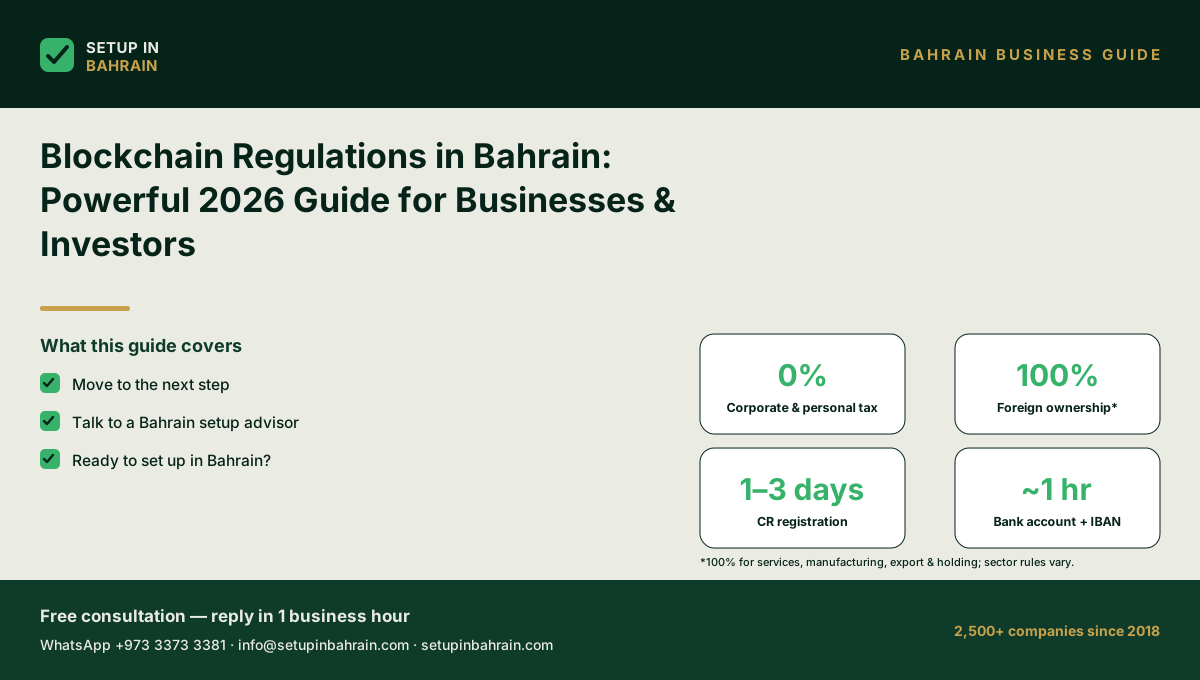
Blockchain regulations in Bahrain have evolved greatly in recent years, positioning the country as a regional leader in financial innovation. The Central Bank of Bahrain has introduced clear frameworks to support crypto-assets and fintech companies, making blockchain regulations in Bahrain more transparent and business-friendly. These efforts aim to attract global investors while ensuring compliance with international standards. As a result, blockchain regulations in Bahrain are often seen as a model for balancing innovation with risk management in the Gulf region.
At the same time, blockchain regulations in Bahrain continue to adapt to emerging technologies and market demands. Authorities regularly update policies to address concerns such as cybersecurity, anti-money laundering. And consumer protection, reinforcing trust in the system. Businesses operating under blockchain regulations in Bahrain benefit from regulatory clarity, which encourages growth and experimentation. Overall, blockchain regulations in Bahrain play a crucial role in shaping a secure and forward-looking digital economy
For foreign businesses looking to register a company in Bahrain , get an investor visa . And open a corporate bank account , this digital logistics boom offers massive potential for growth and regional expansion.
Blockchain Regulations in Bahrain: Complete 2026 Guide for Businesses & Investors
Table of Contents
- Introduction to Blockchain in Bahrain
- What is Blockchain Technology?
- Why Bahrain Supports Blockchain Innovation
- Key Regulatory Authorities in Bahrain
- Legal Framework for Blockchain Businesses
- Types of Blockchain Activities Regulated
- Licensing Requirements for Blockchain Companies
- Central Bank of Bahrain (CBB) Crypto-Asset Regulations
- Regulatory Sandbox in Bahrain
- Compliance Requirements for Blockchain Businesses
- AML and KYC Obligations
- Costs of Blockchain Licensing in Bahrain
- Challenges in Blockchain Regulation
- Future of Blockchain in Bahrain
- Frequently Asked Questions (FAQs)
1. Introduction to Blockchain in Bahrain
Bahrain has become one of the first countries in the Middle East to apply clear and structured blockchain regulations. By embracing innovation while maintaining strong oversight, Bahrain aims to attract global fintech companies and establish itself as a digital economy leader.
2. What is Blockchain Technology?
Blockchain is a decentralized digital ledger that records transactions across multiple computers. It is secure, transparent, and resistant to tampering.
Key Features:
- Decentralization
- Transparency
- Immutability
- Security
Blockchain is widely used in finance, supply chain, healthcare, and more.
3. Why Bahrain Supports Blockchain Innovation
Bahrain actively promotes blockchain adoption for several reasons:
- Diversification of the economy
- Strengthening the fintech sector
- Attracting foreign investment
- Enhancing financial transparency
- Supporting digital transformation
Government initiatives have made Bahrain a regional fintech hub.
4. Key Regulatory Authorities in Bahrain
Several authorities oversee blockchain-related activities:
Authority | Role |
Regulates crypto-assets and financial services | |
Business registration and licensing | |
Investment support and promotion |
The Central Bank of Bahrain plays the most critical role in blockchain regulation.
5. Legal Framework for Blockchain Businesses
Bahrain has introduced a comprehensive legal framework for blockchain and crypto-assets, especially through financial regulations.
Key Legal Aspects:
- Licensing requirements for crypto firms
- Consumer protection measures
- Anti-money laundering regulations
- Operational standards
The framework balances innovation with risk management.
6. Types of Blockchain Activities Regulated
Blockchain businesses may fall under different regulatory categories.
Common Activities:
Activity Type | Regulation Level |
Cryptocurrency Exchange | High |
Wallet Services | High |
Blockchain Development | Low |
Smart Contract Platforms | Medium |
Token Issuance | High |
The level of regulation depends on the nature of the activity.
7. Licensing Requirements for Blockchain Companies
Companies offering financial services using blockchain must get a license.
Requirements Include:
- Business registration (CR)
- Detailed business plan
- Risk management framework
- Compliance policies
- Capital requirements
Licensing ensures accountability and transparency.
8. Central Bank of Bahrain (CBB) Crypto-Asset Regulations
The Central Bank of Bahrain has established clear rules for crypto-asset services.
Key Regulations:
- Licensing of crypto exchanges
- Custody and wallet services regulation
- Capital adequacy requirements
- Consumer protection rules
These regulations are part of Bahrain’s effort to create a safe crypto environment.
9. Regulatory Sandbox in Bahrain
Bahrain offers a regulatory sandbox for fintech and blockchain startups.
Benefits:
- Test products in a controlled environment
- Reduced regulatory burden
- Faster market entry
- Access to regulators
The sandbox encourages innovation while managing risks.
10. Compliance Requirements for Blockchain Businesses
Blockchain companies must adhere to strict compliance standards.
Key Requirements:
- Maintain accurate records
- Apply risk management systems
- Ensure cybersecurity measures
- Conduct regular audits
- Follow reporting obligations
Compliance is essential for maintaining licenses.
11. AML and KYC Obligations
Anti-Money Laundering (AML) and Know Your Customer (KYC) rules are critical.
Obligations Include:
- Verifying customer identity
- Monitoring transactions
- Reporting suspicious activities
- Maintaining transaction records
These measures prevent financial crimes.
12. Costs of Blockchain Licensing in Bahrain
Costs vary depending on business type.
Estimated Costs
Cost Component | Estimated Cost (BHD) |
Company Registration | 100 – 300 |
Licensing Fees | 500 – 5000+ |
Compliance Setup | 300 – 2000 |
Legal & Consultancy | 500 – 3000+ |
13. Challenges in Blockchain Regulation
Despite its advantages, blockchain regulation presents challenges:
- Rapid technological changes
- Regulatory uncertainty in some areas
- High compliance costs
- Market volatility
Businesses must stay adaptable.
14. Future of Blockchain in Bahrain
The future of blockchain in Bahrain looks promising.
Key Trends:
- Expansion of fintech ecosystem
- Increased adoption of digital assets
- Enhanced regulatory clarity
- Integration with AI and digital finance
Bahrain is expected to remain a leader in blockchain innovation.
15. Frequently Asked Questions (FAQs)
Q1: Is blockchain legal in Bahrain?
Yes, blockchain is legal and regulated.
Q2: Do I need a license for blockchain business?
Only if you provide financial or crypto services.
Q3: Who regulates blockchain in Bahrain?
The Central Bank of Bahrain.
Q4: What is the regulatory sandbox?
A platform for testing fintech innovations.
Q5: Are crypto exchanges allowed?
Yes, with proper licensing.
Q6: Is Bahrain crypto-friendly?
Yes, it has a progressive regulatory framework.
Q7: What are AML requirements?
Identity verification and transaction monitoring.
Q8: How long does licensing take?
It depends on the business complexity.
Final Thoughts
Bahrain has established itself as a forward-thinking jurisdiction for blockchain and fintech innovation. With clear regulations, supportive authorities, and a growing digital ecosystem, it offers significant options for businesses and investors.
But, operating in the blockchain space requires strict compliance with regulatory requirements, especially in areas like licensing, AML. And risk management.
As blockchain technology continues to evolve, Bahrain’s balanced approach—supporting innovation while ensuring security—positions it as a key player in the global digital economy.
For entrepreneurs and companies looking to enter the blockchain space, Bahrain provides a strong foundation for growth, innovation. And long-term success in 2026 and beyond.
Quick Facts
- Bahrain: generally no corporate income tax for most sectors
- Foreign ownership: 100% allowed
- Setup time: 15 to 20 days
- Company formation: Standard BHD 1,340 with 3 months of office address; Gold BHD 1,700 with 6 months; Premium BHD 2,150 with 12 months and a cabin, officer table and chair, and two guest chairs. No formation package includes visas, including Premium. Investor/work visas are priced separately: BHD 755 for one year or BHD 953 for two years, in addition to the formation package. Ask for a written, itemized quotation confirming government fees and all inclusions before payment.
- Company renewal packages: BHD 530 with 3 months of office address; BHD 980 with 6 months; BHD 1,520 with 12 months. These are separate renewal packages, not visa fees.
- Rating: 4.8 stars on Google
- Clients served: 2,500 and more
Why Choose Bahrain?
Bahrain has no income tax. It is easy to set up a firm here. The rules are clear and fair.
You can own 100% of your firm. No local partner is needed. This is rare in the Gulf region.
You can open a bank account with ease. You can hire staff from any country. You can live and work here too.
Bahrain has free trade deals with the US and the GCC. This gives you access to large markets. It is a smart base for your business.
Why Set Up in Bahrain?
Bahrain is a great place to run a firm. It has no tax. You keep all your profits. This is rare in the Gulf.
You can own your firm 100%. No local partner is needed. The law is clear and fair.
It is fast to set up. You can have a CR in 15 to 20 days. We file all forms for you.
Bahrain has a free trade deal with the US. Your goods face low or no tariffs. This gives you access to big markets.
The banks are good. The roads are good. The schools are good. It is a well-run state.
We have served 2,800+ clients from 44+ countries and maintain records to substantiate that total where needed. We have 113 Google reviews; reviews represent only some clients and are not the same as the total clients served.
Our Services
- Company formation: Standard BHD 1,340 with 3 months of office address; Gold BHD 1,700 with 6 months; Premium BHD 2,150 with 12 months and a cabin, officer table and chair, and two guest chairs. No formation package includes visas, including Premium. Investor/work visas are priced separately: BHD 755 for one year or BHD 953 for two years, in addition to the formation package. Ask for a written, itemized quotation confirming government fees and all inclusions before payment.
- Company renewal packages: BHD 530 with 3 months of office address; BHD 980 with 6 months; BHD 1,520 with 12 months. These are separate renewal packages, not visa fees.
- Investor Visa — from BHD 755
- Work Visa — LMRA managed
- Virtual office — from BHD 600 per year
- Bank account opening — 3 to 6 weeks
- Family visa — for spouse and kids
- UBO filing — as required by law
Bahrain at a Glance
- Tax rate: 0%
- Foreign ownership: 100%
- Setup time: 15 to 20 days
- Free trade deal: Yes, with the US
- Language: Arabic and English
- Currency: Bahraini Dinar (BHD)
- Time zone: UTC+3
- GDP growth: Steady and strong
How to Start
- Fill in the form on this page. It takes 3 minutes.
- We call you back the same day.
- We map the best plan for your firm type and goals.
- We file all forms. We deal with MOICT for you.
- You get your CR in 15 to 20 days.
- We help you open a bank account and get your visa.
- You are ready to trade. We stay with you.
Common Questions
Do I need to visit Bahrain to set up?
No. You can do it all from home. We file online. You may need one visit to open a bank account.
Is Bahrain safe for business?
Yes. Bahrain is a stable state. It has a clear legal system. Your firm and funds are safe here.
Can I hire staff from any country?
Yes. You can hire from any country. Each hire needs a work permit from LMRA. We manage this for you.
What type of firm should I set up?
Most clients choose a WLL. This is a limited liability firm. It is flexible and well-known in Bahrain. We advise you on the best type for your case.
How do I get in touch?
Fill in our form. We call you back the same day. You can also email us or use the chat on this page.
Common Questions
Is it hard to set up a firm in Bahrain?
No. It is one of the easiest places in the Gulf. We do all the hard work for you. You can be set up in 20 days.
Do I need to live in Bahrain?
No. You can run your firm from home. You may visit once to open a bank account. The rest is done online.
How do I get started?
Fill in our form on this page. We call you back the same day. Our team maps your best plan at no cost to you.
Ready to set up in Bahrain?
Tell us your business idea. We'll map the right entity, ownership and timeline — then handle the filing while you build.
Official Bahrain government references
- Sijilat — MOICT commercial registration portalsijilat.bh
- Bahrain Economic Development Boardbahrainedb.com