Explore the best Middle Eastern countries to start a business in 2026, including the UAE, Saudi Arabia, Bahrain, and Qatar, based on costs, taxes, ease of...
View details
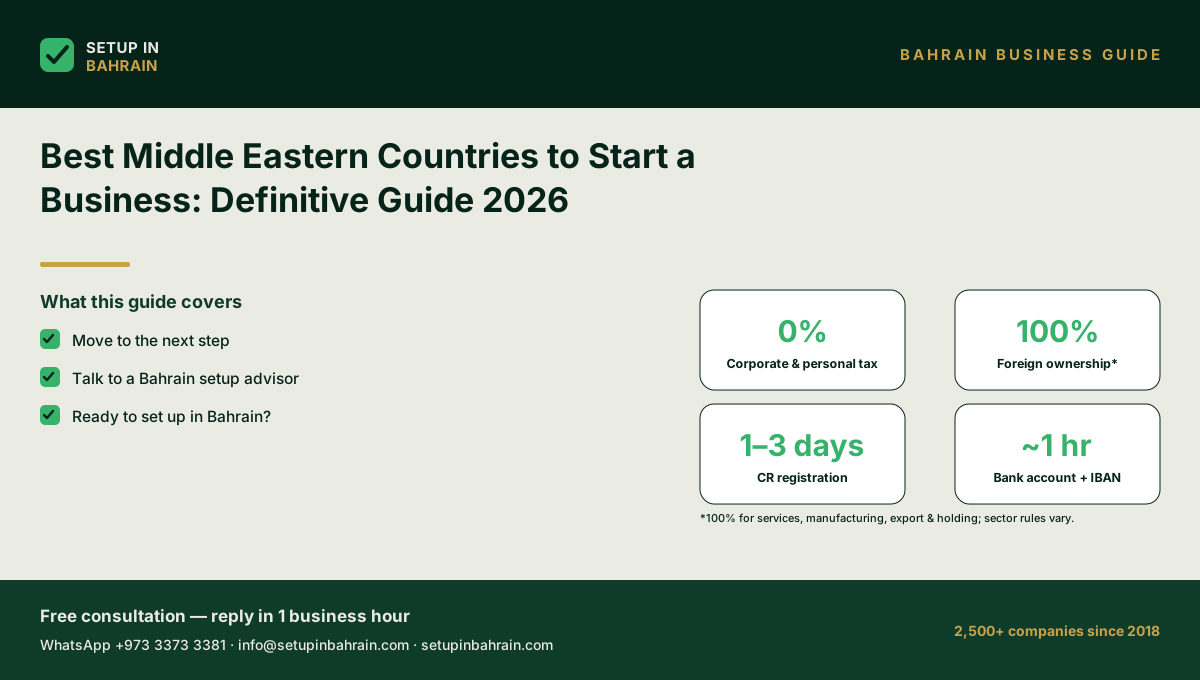
The Middle East has rapidly transformed into one of the most powerful global business hubs, attracting entrepreneurs, startups, and multinational corporations. With strong economic diversification plans, tax-friendly policies, and world-class infrastructure, the region offers exceptional opportunities for company formation and expansion. In 2026, choosing the best Middle Eastern countries to start a business has become a key strategic decision for investors seeking growth and stability.
Countries like the UAE, Saudi Arabia, Bahrain, Qatar, and Oman are leading this transformation with investor-friendly reforms and long-term economic visions. However, each country offers different advantages in terms of cost, taxation, ownership rules, and ease of doing business. This guide provides a complete breakdown of the best Middle Eastern countries to start a business in 2026 to help you make an informed decision.
For foreign businesses looking to register a company in Bahrain, obtain an investor visa, and open a corporate bank account, this digital logistics boom offers massive potential for growth and regional expansion.
Best Middle Eastern Countries to Start a Business: A Definitive Guide 2026
Table of Contents
- What is Business Setup in the Middle East
- Key Benefits
- Eligibility Criteria
- Minimum Investment Requirement
- Comparison: Top Middle Eastern Countries
- Required Documents
- Application Process
- Processing Time
- Costs & Fees
- Business Setup Requirements
- Job/Operational Requirements
- Property Ownership Rules
- Taxation
- Common Reasons for Rejection
- Advantages & Future Outlook
- FAQs
- Final Thoughts
1. What is Business Setup in the Middle East
Business setup in the Middle East refers to the legal process of registering and operating a company within GCC and surrounding countries. When analyzing the best Middle Eastern countries to start a business in 2026, investors typically consider regulatory ease, tax advantages, and market access. The region offers multiple business structures including mainland companies, free zone entities, and offshore setups. These structures vary across countries like the UAE, Saudi Arabia, Bahrain, Qatar, and Oman, each providing unique advantages depending on your business model.
2. Key Benefits
- Strategic global location connecting Asia, Europe, and Africa
- Tax-friendly environments in many jurisdictions
- 100% foreign ownership in selected sectors
- Strong infrastructure and logistics networks
- Growing digital economy and innovation hubs
These benefits make the best Middle Eastern countries to start a business highly attractive for global investors.
3. Eligibility Criteria
To start a business in the Middle East, investors must:
- Be at least 18 years old
- Hold a valid passport
- Define a business activity
- Select a legal structure
- Meet financial and regulatory requirements
Each country has slightly different rules, but overall the process is investor-friendly.
4. Minimum Investment Requirement
Investment requirements vary across countries.
| Country | Minimum Investment |
|---|---|
| UAE | AED 10,000 – 50,000 |
| Saudi Arabia | SAR 100,000+ |
| Bahrain | BHD 1,000 – 5,000 |
| Qatar | QAR 10,000 – 50,000 |
| Oman | OMR 2,000 – 10,000 |
Bahrain and Oman are generally more affordable, while Saudi Arabia and UAE offer larger market opportunities.
5. Comparison: Top Middle Eastern Countries
| Country | Setup Cost | Market Size | Taxation | Ease of Setup |
|---|---|---|---|---|
| UAE | Moderate | Very High | Low | Very High |
| Saudi Arabia | High | Very High | Medium | High |
| Bahrain | Low | Medium | Very Low | Very High |
| Qatar | High | High | Medium | Moderate |
| Oman | Low-Med | Medium | Low | High |
This comparison highlights the strengths of the best Middle Eastern countries to start a business in 2025.
6. Required Documents
- Passport copies of shareholders
- Business plan
- Proof of address
- Company structure documents
- Financial statements (if required)
Proper documentation is essential across all jurisdictions.
7. Application Process
- Choose country and business activity
- Select company structure
- Reserve trade name
- Submit application
- Provide required documents
- Pay registration fees
- Obtain license
Most countries now offer digital registration systems for faster processing.
8. Processing Time
- UAE: 3–10 days
- Bahrain: 5–10 days
- Saudi Arabia: 2–4 weeks
- Qatar: 7–20 days
- Oman: 7–15 days
Faster approvals are available in UAE and Bahrain.
9. Costs & Fees
| Expense Type | Range (USD Equivalent) |
|---|---|
| Registration Fees | 300 – 5,000 |
| License Fees | 500 – 10,000 |
| Office Space | 1,000 – 20,000 |
| Visa Costs | 300 – 2,000 per person |
Cost differences strongly influence decisions when selecting the best Middle Eastern countries to start a business in 2025.
10. Business Setup Requirements
- Valid trade license
- Registered office address
- Corporate bank account
- Compliance with local regulations
Requirements vary slightly by country but remain straightforward.
11. Job/Operational Requirements
- Hiring employees under labor laws
- Annual license renewal
- Financial reporting
- Regulatory compliance
Saudi Arabia has stricter workforce localization policies compared to others.
12. Property Ownership Rules
- UAE: Foreign ownership allowed in designated zones
- Bahrain: Flexible property ownership
- Qatar: Limited ownership zones
- Saudi Arabia: Restricted but improving
- Oman: Selective ownership areas
These rules are important for long-term investment planning.
13. Taxation
- UAE: 0% personal tax, 9% corporate tax (applicable)
- Bahrain: generally no corporate income tax for most sectors (most sectors)
- Saudi Arabia: 20% foreign corporate tax
- Qatar: 1generally no corporate income tax for most sectors
- Oman: 15% corporate tax
Tax advantages are a major factor in choosing the best Middle Eastern countries to start a business in 2025.
14. Common Reasons for Rejection
- Incomplete documentation
- Incorrect business activity selection
- Financial inconsistencies
- Non-compliance with regulations
Proper planning reduces rejection risks significantly.
15. Advantages & Future Outlook
The Middle East continues to experience rapid economic diversification, driven by initiatives like UAE Vision 2030, Saudi Vision 2030, and national investment reforms across GCC countries. The best Middle Eastern countries to start a business in 2025 are focusing heavily on technology, tourism, renewable energy, and logistics. This creates long-term opportunities for entrepreneurs and global investors seeking stable and high-growth markets.
16. FAQs
- Which is the best Middle Eastern country to start a business?
UAE and Bahrain are the most popular choices. - Which country is cheapest for business setup?
Bahrain and Oman are the most affordable. - Which country has the largest market?
Saudi Arabia has the largest economy. - Can foreigners own 100% of a business?
Yes, in many sectors across the region. - Which country has lowest taxes?
Bahrain has the lowest taxes. - Is UAE good for startups?
Yes, it is one of the best startup ecosystems globally. - How long does setup take?
3 to 20 days depending on country. - Is Saudi Arabia good for investment?
Yes, especially for large-scale projects. - Are there free zones in the Middle East?
Yes, especially in UAE and Bahrain. - Can I operate internationally?
Yes, most countries allow it. - Is banking easy in the region?
Yes, but requirements vary. - Are visas included in setup?
Often yes, depending on license. - Which country is best for SMEs?
Bahrain and Oman are ideal. - Are there hidden costs?
Yes, depending on structure. - Which country is best overall?
It depends on budget and business goals.
17. Final Thoughts
Selecting the best Middle Eastern countries to start a business in 2025 depends on your investment size, industry, and expansion goals. The UAE leads in global connectivity and innovation, Saudi Arabia offers massive growth potential, while Bahrain and Oman provide cost-effective and flexible options. Understanding these differences helps entrepreneurs make informed decisions and choose the right jurisdiction for long-term success in the Middle East.
Ready to set up in Bahrain?
Tell us your business idea. We'll map the right entity, ownership and timeline — then handle the filing while you build.
Official Bahrain government references
- Sijilat — MOICT commercial registration portalsijilat.bh
- Bahrain Economic Development Boardbahrainedb.com