Bahrain's Role in the Global Halal Economy: Opportunities for Startups highlights how Bahrain’s strategic position, supportive regulations, and growing
View details
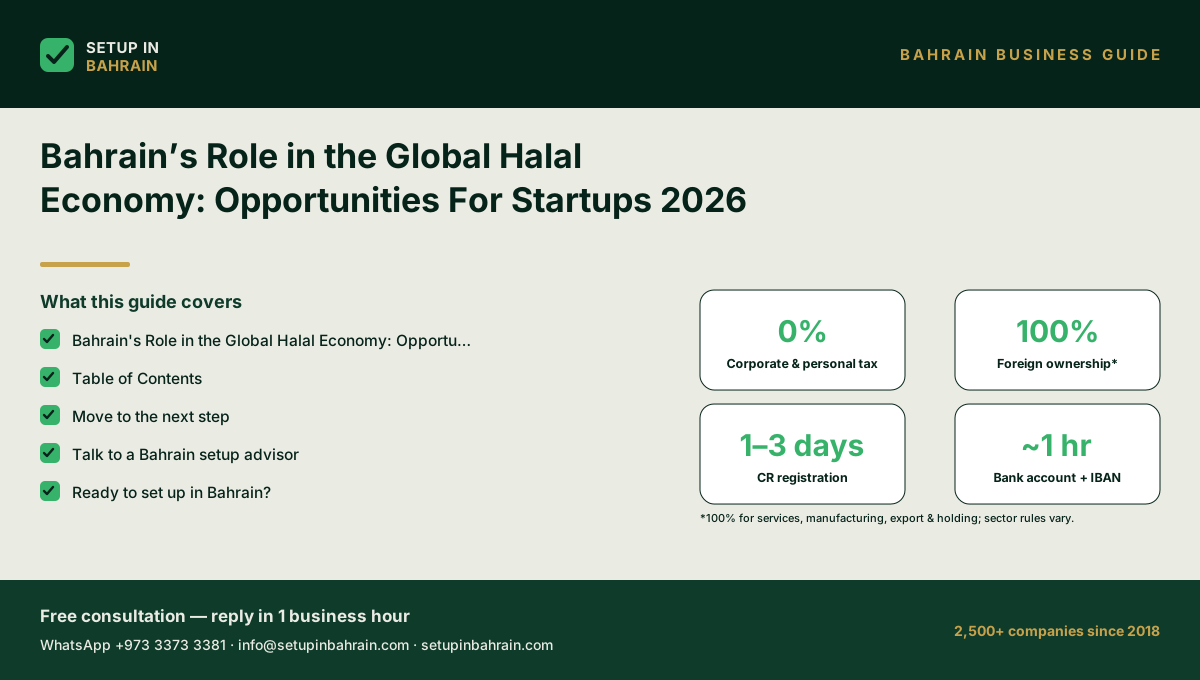
Bahrain’s role in the global halal economy has grown significantly in recent years, making it a strategic hub for startups and entrepreneurs seeking to tap into the $2 trillion global halal market. With its progressive regulatory environment, strong financial infrastructure, and strategic geographic location, Bahrain is uniquely positioned to help businesses expand regionally and internationally.
The halal economy spans a wide range of sectors, including food and beverages, pharmaceuticals, cosmetics, tourism, and logistics. For startups, Bahrain’s proactive policies, supportive funding initiatives, and access to regional and global markets create an ideal environment to innovate, scale, and compete globally.
For foreign businesses looking to register a company in Bahrain, obtain an investor visa, and open a corporate bank account, this digital logistics boom offers massive potential for growth and regional expansion.
Bahrain's Role in the Global Halal Economy: Opportunities for Startups 2026
Table of Contents
- Why is Bahrain a key player in the Global Halal Economy?
- What sectors in Bahrain’s halal economy offer the most opportunities for startups?
- How does Bahrain support startups in the halal sector?
- What regulatory frameworks guide the halal industry in Bahrain?
- How can startups leverage Bahrain’s geographic location for regional expansion?
- What financial incentives and funding options are available for halal startups?
- How is technology shaping Bahrain’s halal economy?
- What partnerships and collaborations can startups pursue in Bahrain?
- What challenges might startups face in the halal economy?
- How can startups establish themselves in Bahrain’s halal ecosystem?
- FAQs – Common Questions About Bahrain and the Global Halal Market
1. Why is Bahrain a key player in the global halal economy?
Bahrain’s strategic location in the Gulf region makes it a gateway to the Middle East, North Africa, and South Asia, regions with large Muslim populations and high halal product demand. The government has recognized the halal economy as a priority sector for economic diversification and global competitiveness.
Key factors positioning Bahrain as a global halal hub include:
- Regulatory Alignment: Bahrain has implemented halal certification and compliance standards recognized internationally.
- Trade Connectivity: Bahrain has strong trade agreements with countries in the GCC and beyond, facilitating export of halal products.
- Business-Friendly Environment: Simplified company registration, free zones, and investor protection attract global halal entrepreneurs..
2. What sectors in Bahrain’s halal economy offer the most opportunities for startups?
The halal economy spans multiple industries. In Bahrain, startups can explore:
Sector | Opportunities for Startups | Market Potential |
|---|---|---|
| Food & Beverages | Halal-certified food products, organic snacks, beverages | High demand regionally and globally, export-ready products |
| Pharmaceuticals & Nutraceuticals | Halal medicines, supplements, vitamins compliant with Islamic dietary laws | Growing health-conscious consumer base; global export potential |
| Cosmetics & Personal Care | Halal skincare, haircare, and cosmetic products free from forbidden ingredients | Expanding Muslim consumer market worldwide |
| Tourism & Hospitality | Sharia-compliant hotels, resorts, and travel services | High demand from Muslim travelers; regional and international tourism growth |
| Logistics & Supply Chain | Halal-certified storage, transportation, cold chain services | Essential for international trade; high potential for cross-border operations |
3. How does Bahrain support startups in the halal sector?
Bahrain’s startup ecosystem is highly supportive, offering:
- Incubators & Accelerators: Programs tailored to halal businesses, including mentorship, market access, and funding.
- Simplified Business Registration: Entrepreneurs can establish halal-certified companies quickly, including free zone options.
- Networking Opportunities: Regular trade fairs, halal expos, and business forums connect startups with investors and international partners.
- Research & Development Support: Universities and innovation centers assist with product testing, certification, and innovation strategies.
4. What regulatory frameworks guide the halal industry in Bahrain?
Bahrain has established comprehensive halal certification and regulatory standards to maintain credibility and global acceptance:
- Halal Certification Authority: Ensures compliance with international halal standards across food, pharma, and cosmetic industries.
- GCC Standards Alignment: Bahrain’s regulations are harmonized with GCC halal requirements, facilitating cross-border trade.
- Quality & Safety Regulations: Food safety, labeling, and production standards ensure products meet consumer expectations globally.
Startups that adhere to these frameworks gain international recognition and trust, enabling exports to GCC, Southeast Asia, and Western markets.
5. How can startups leverage Bahrain’s geographic location for regional expansion?
Bahrain’s strategic location allows startups to tap into major regional markets:
- GCC Access: Close proximity to Saudi Arabia, UAE, and Qatar with large halal markets.
- Shipping & Logistics: Modern ports and free zones streamline exports of halal goods.
- Trade Agreements: Bahrain’s trade agreements enable duty-free or reduced-tariff exports.
By establishing a base in Bahrain, startups can scale operations regionally before entering global markets like Europe or North America.
6. What financial incentives and funding options are available for halal startups?
Bahrain offers a variety of funding mechanisms and incentives to encourage halal entrepreneurship:
Funding & Incentive Type | Description | Benefits for Startups |
|---|---|---|
| Government Grants & Subsidies | Support for product development, halal certification, and export readiness | Reduces initial costs, accelerates product launch, ensures compliance |
| Venture Capital & Private Equity | Investment from local investors focused on halal startups | Provides growth capital, mentorship, and networking opportunities |
| Tax Incentives in Free Zones | Exemptions on corporate taxes and import duties for export-oriented businesses | Lowers operational costs, increases profitability, encourages exports |
| Innovation Funds | Financing for R&D, digital solutions, and tech-enabled halal products | Promotes innovation, supports product development, and facilitates global competitiveness |
7. How is technology shaping Bahrain’s halal economy?
Technology is a major driver of innovation in Bahrain’s halal ecosystem:
- E-commerce Platforms: Online marketplaces for halal food, cosmetics, and lifestyle products.
- Blockchain & Traceability: Ensures halal compliance throughout the supply chain.
- FoodTech & Biotech Innovations: Development of plant-based halal proteins and supplements.
- Digital Marketing: Targeted campaigns for Muslim consumers globally.
Tech-enabled solutions help startups increase transparency, consumer trust, and global reach.
8. What partnerships and collaborations can startups pursue in Bahrain?
Startups can explore strategic partnerships to strengthen market presence:
- Local Distributors: Access regional retail and wholesale networks.
- Academic Institutions: Collaborate for R&D, testing, and certification.
- International Halal Bodies: Gain certification and credibility for global exports.
- Investors & Venture Funds: Scale operations and expand internationally.
These partnerships help startups accelerate growth while maintaining halal integrity.
9. What challenges might startups face in the halal economy?
While opportunities are vast, startups may encounter:
- Regulatory Compliance Complexity: Strict halal certification standards require careful attention.
- High Competition: Established halal brands dominate certain markets.
- Supply Chain Limitations: Sourcing certified raw materials can be challenging.
- Consumer Awareness: Marketing must educate consumers about halal compliance and quality.
Proactive planning, strong compliance, and innovative marketing are key to overcoming these challenges.
10. How can startups establish themselves in Bahrain’s halal ecosystem?
Steps for entrepreneurs:
- Business Registration: Choose a legal structure suitable for halal operations.
- Halal Certification: Obtain approval from Bahrain’s halal authorities.
- Funding & Incentives: Apply for grants, free zone benefits, and venture support.
- Supply Chain Development: Partner with certified suppliers and distributors.
- Marketing & Sales Strategy: Leverage e-commerce and international trade fairs.
These steps ensure startups build credibility and competitiveness in Bahrain and beyond.
Ready to set up in Bahrain?
Tell us your business idea. We'll map the right entity, ownership and timeline — then handle the filing while you build.
Official Bahrain government references
- Sijilat — MOICT commercial registration portalsijilat.bh
- Bahrain Economic Development Boardbahrainedb.com