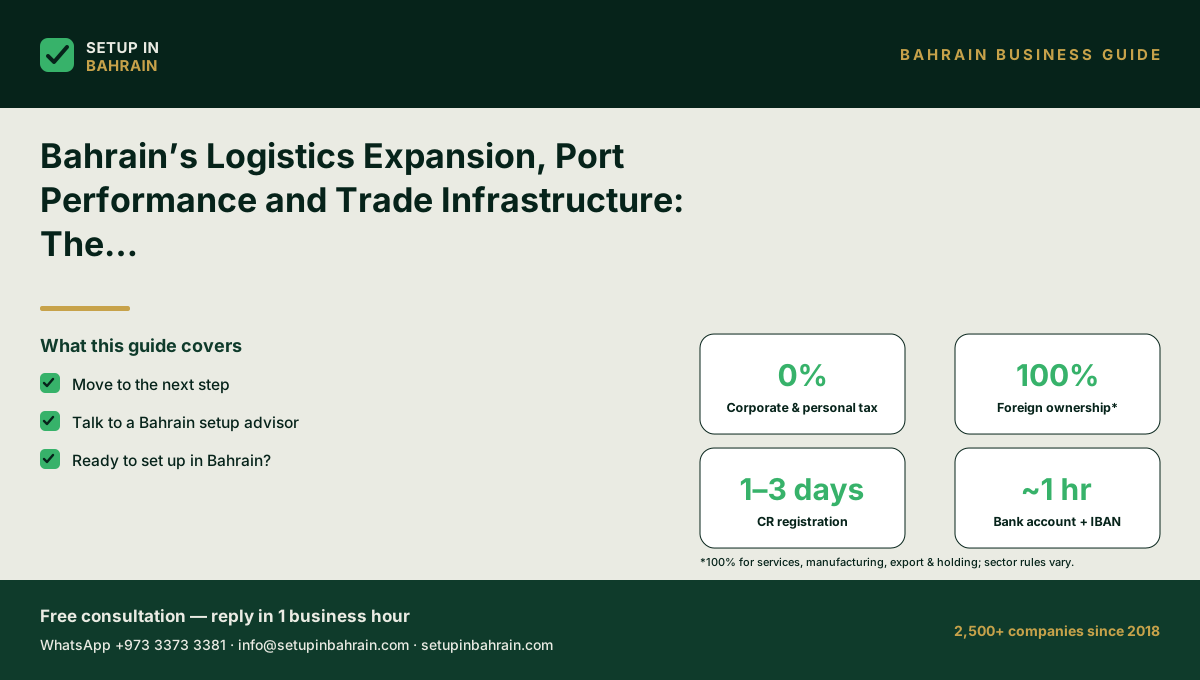
Explore Bahrain’s logistics expansion, port performance, and trade infrastructure in 2026. Discover key investments, free zones, cargo growth, and...
Quick Summary
- Bahrain: generally no corporate income tax for most sectors. 100% foreign ownership.
- Company formation in 15–20 business days.
- We have served 2,800+ clients from 44+ countries and maintain records to substantiate that total where needed. We have 113 Google reviews; reviews represent only some clients and are not the same as the total clients served.
- Full support from our team of experts.
- Company renewal packages: BHD 530 with 3 months of office address; BHD 980 with 6 months; BHD 1,520 with 12 months. These are separate renewal packages, not visa fees.
Key Takeaways
- Bahrain’s Logistics Expansion, Port Performance and Trade Infrastructure: The Strategic Guide 2026
View details
The rapid growth of Bahrain’s logistics expansion, port performance and trade infrastructure has positioned the Kingdom as one of the GCC’s most strategic trade and transportation hubs in 2026. Bahrain continues investing heavily in logistics modernization, customs efficiency, port development, warehousing facilities. And transportation connectivity to strengthen its role in regional and international trade.
As global supply chains become more dependent on speed, efficiency. And digital integration, Bahrain’s logistics ecosystem is evolving to support growing demand across e-commerce, manufacturing, freight forwarding, maritime trade. Industrial distribution. Advanced port operations, improved trade infrastructure. Government-backed logistics initiatives continue attracting foreign investment and supporting economic diversification. This guide explores the major developments in Bahrain’s logistics expansion, port performance and trade infrastructure, including investment options, operational advantages, infrastructure projects. And future market trends.
For foreign businesses looking to register a company in Bahrain , get an investor visa . And open a corporate bank account , this digital logistics boom offers massive potential for growth and regional expansion.
Bahrain’s Logistics Expansion, Port Performance and Trade Infrastructure: The Strategic Guide 2026
Table of Contents
- 1. Overview of Bahrain’s Logistics Industry
- 2. Strategic Importance of Bahrain’s Trade Infrastructure
- 3. Expansion of Bahrain’s Logistics Sector
- 4. Port Performance and Maritime Operations
- 5. Khalifa Bin Salman Port Operations
- 6. Warehousing and Distribution Infrastructure
- 7. Road and Transportation Connectivity
- 8. Air Cargo and Aviation Logistics Growth
- 9. Customs and Trade Facilitation Systems
- 10. E-Commerce and Supply Chain Expansion
- 11. Industrial Zones and Logistics Parks
- 12. Technology and Smart Logistics Development
- 13. Investment Options in Logistics Infrastructure
- 14. Challenges Facing the Logistics Sector
- 15. Government Initiatives and Economic Diversification
- 16. Profitability and Future Market Trends
- 17. Final Thoughts
1. Overview of Bahrain’s Logistics Industry
The logistics industry is becoming one of Bahrain’s fastest-growing economic sectors due to increasing regional trade and industrial development.
Major logistics segments include:
- Freight forwarding
- Maritime shipping and port operations
- Warehousing and distribution
- Transportation and trucking
- Air cargo logistics
- E-commerce fulfillment services
The continued expansion of trade infrastructure is strengthening Bahrain’s position as a regional logistics gateway.
2. Strategic Importance of Bahrain’s Trade Infrastructure
Bahrain’s geographic location provides direct access to major GCC markets and international trade routes.
Key strategic advantages include:
- Connectivity to Saudi Arabia via King Fahd Causeway
- Access to Gulf shipping lanes
- Efficient import-export systems
- Modern logistics infrastructure
- Strong regional distribution capabilities
These factors continue to support Bahrain’s logistics expansion, port performance, and trade infrastructure development in 2026.
3. Expansion of Bahrain’s Logistics Sector
Bahrain continues investing in logistics sector modernization to increase trade competitiveness and regional connectivity.
Key expansion areas include:
- Port infrastructure upgrades
- Smart warehousing systems
- Transportation network improvements
- Industrial logistics zones
- Digital customs and clearance systems
These investments support both local industries and international trade operations.
4. Port Performance and Maritime Operations
Port efficiency remains one of the strongest components of Bahrain’s logistics ecosystem.
Major maritime activities include:
- Container handling
- Cargo transportation
- Import-export processing
- Regional shipping coordination
- Industrial goods movement
Efficient maritime logistics help reduce shipping delays and operational costs for businesses.
5. Khalifa Bin Salman Port Operations
Khalifa Bin Salman Port remains Bahrain’s primary commercial port and a key driver of regional trade activity.
Core operational strengths include:
- Advanced cargo handling systems
- Efficient customs clearance procedures
- Large container handling capacity
- Strategic GCC shipping connectivity
- Modern port logistics infrastructure
The port plays a central role in Bahrain’s regional trade and supply chain operations.
| Port Service Area | Operational Importance | Growth Potential |
|---|---|---|
| Container Handling | High | High |
| Industrial Cargo | High | High |
| Maritime Logistics | Medium-High | High |
| GCC Distribution Services | High | High |
Port modernization initiatives continue improving operational performance.
6. Warehousing and Distribution Infrastructure
Warehousing demand has increased greatly due to industrial growth and e-commerce expansion.
Popular logistics facilities include:
- Distribution centers
- Bonded warehouses
- Cold storage facilities
- E-commerce fulfillment centers
- Industrial storage units
Smart warehousing technologies are improving inventory control and operational efficiency.
7. Road and Transportation Connectivity
Bahrain’s transportation infrastructure supports efficient movement of goods across GCC markets.
Key transportation advantages include:
- Strong highway connectivity
- Direct Saudi Arabia access
- Efficient cargo transportation systems
- Expanding trucking and fleet services
- Regional logistics integration
Road transportation remains critical for regional supply chain operations.
8. Air Cargo and Aviation Logistics Growth
Air cargo operations continue expanding due to increasing demand for fast international shipping and e-commerce logistics.
Popular aviation logistics services include:
- Express cargo transportation
- High-value goods shipping
- Pharmaceutical logistics
- Perishable goods transportation
- E-commerce air freight solutions
Air logistics growth supports Bahrain’s broader trade expansion strategy.
9. Customs and Trade Facilitation Systems
Bahrain continues modernizing customs procedures to improve trade efficiency.
Major customs improvements include:
- Digital customs systems
- Faster cargo clearance processes
- Reduced administrative delays
- Improved trade transparency
- Smart logistics integration
Efficient customs operations strengthen Bahrain’s competitiveness in international trade.
10. E-Commerce and Supply Chain Expansion
The rapid rise of e-commerce is increasing demand for advanced logistics and supply chain infrastructure.
Key growth areas include:
- Last-mile delivery systems
- Order fulfillment centers
- Inventory management solutions
- Delivery tracking technologies
- Automated warehouse systems
E-commerce continues driving major changes across Bahrain’s logistics ecosystem.
11. Industrial Zones and Logistics Parks
Industrial and logistics zones support manufacturing and distribution businesses across Bahrain.
Key advantages include:
- Access to industrial infrastructure
- Proximity to ports and transportation networks
- Warehousing and operational facilities
- Utility and logistics support services
- Export-focused operational advantages
Industrial logistics parks continue attracting regional and international investors.
12. Technology and Smart Logistics Development
Technology integration is transforming Bahrain’s logistics and supply chain operations.
Popular logistics technologies include:
- AI-driven route optimization
- Warehouse automation systems
- Fleet tracking software
- Real-time shipment monitoring
- Smart inventory management solutions
Technology adoption improves operational efficiency and reduces supply chain costs.
13. Investment Options in Logistics Infrastructure
The continued growth of Bahrain’s logistics expansion, port performance and trade infrastructure is creating significant investment options.
Popular investment sectors include:
- Warehousing and storage facilities
- Freight forwarding companies
- Transportation and fleet operations
- E-commerce logistics platforms
- Smart logistics technologies
Investors focusing on automation and scalable infrastructure are expected to benefit the most.
14. Challenges Facing the Logistics Sector
Despite strong growth, logistics businesses still face several operational challenges.
Common issues include:
- Rising fuel and transportation costs
- Regional supply chain disruptions
- Global shipping fluctuations
- Workforce and labor shortages
- Increasing operational competition
Businesses with strong operational planning and technology integration generally perform better.
15. Government Initiatives and Economic Diversification
The Bahraini government continues prioritizing logistics development as part of its economic diversification strategy.
Key government initiatives include:
- Infrastructure modernization projects
- Logistics sector investment incentives
- Smart trade and customs systems
- Industrial zone expansion
- Transportation network improvements
These initiatives continue improving Bahrain’s regional trade competitiveness.
16. Profitability and Future Market Trends
The future of Bahrain’s logistics expansion, port performance. And trade infrastructure remains highly positive due to growing regional trade and digital commerce.
| Logistics Segment | Demand Level | Future Growth Potential |
|---|---|---|
| E-Commerce Logistics | High | Very High |
| Warehousing Services | High | High |
| Maritime Trade Operations | High | High |
| Air Cargo Logistics | Medium-High | High |
| Smart Logistics Technology | High | Very High |
Key future trends include:
- Increased logistics automation
- Smart port technologies
- Expansion of GCC trade routes
- Growth in regional distribution centers
- Higher demand for integrated supply chain solutions
These trends are expected to strengthen Bahrain’s position as a regional logistics leader.
17. Final Thoughts
The continued growth of Bahrain’s logistics expansion, port performance. And trade infrastructure is transforming the Kingdom into one of the GCC’s most competitive trade and transportation hubs in 2026. Strong government investment, advanced logistics infrastructure, modern customs systems. And strategic regional connectivity continue creating major options across warehousing, transportation, freight forwarding, and supply chain management. But, long-term success in the logistics industry depends on operational efficiency, digital transformation, infrastructure scalability. And customer-focused service delivery. Businesses and investors who leverage Bahrain’s logistics ecosystem effectively can establish highly profitable and sustainable operations within the Kingdom’s rapidly expanding trade and supply chain sector.
Quick Facts
- Bahrain: generally no corporate income tax for most sectors
- Foreign ownership: 100% allowed
- Setup time: 15 to 20 days
- Company formation: Standard BHD 1,340 with 3 months of office address; Gold BHD 1,700 with 6 months; Premium BHD 2,150 with 12 months and a cabin, officer table and chair, and two guest chairs. No formation package includes visas, including Premium. Investor/work visas are priced separately: BHD 755 for one year or BHD 953 for two years, in addition to the formation package. Ask for a written, itemized quotation confirming government fees and all inclusions before payment.
- Company renewal packages: BHD 530 with 3 months of office address; BHD 980 with 6 months; BHD 1,520 with 12 months. These are separate renewal packages, not visa fees.
- Rating: 4.8 stars on Google
- Clients served: 2,500 and more
Why Choose Bahrain?
Bahrain has no income tax. It is easy to set up a firm here. The rules are clear and fair.
You can own 100% of your firm. No local partner is needed. This is rare in the Gulf region.
You can open a bank account with ease. You can hire staff from any country. You can live and work here too.
Bahrain has free trade deals with the US and the GCC. This gives you access to large markets. It is a smart base for your business.
Why Set Up in Bahrain?
Bahrain is a great place to run a firm. It has no tax. You keep all your profits. This is rare in the Gulf.
You can own your firm 100%. No local partner is needed. The law is clear and fair.
It is fast to set up. You can have a CR in 15 to 20 days. We file all forms for you.
Bahrain has a free trade deal with the US. Your goods face low or no tariffs. This gives you access to big markets.
The banks are good. The roads are good. The schools are good. It is a well-run state.
We have served 2,800+ clients from 44+ countries and maintain records to substantiate that total where needed. We have 113 Google reviews; reviews represent only some clients and are not the same as the total clients served.
Our Services
- Company formation: Standard BHD 1,340 with 3 months of office address; Gold BHD 1,700 with 6 months; Premium BHD 2,150 with 12 months and a cabin, officer table and chair, and two guest chairs. No formation package includes visas, including Premium. Investor/work visas are priced separately: BHD 755 for one year or BHD 953 for two years, in addition to the formation package. Ask for a written, itemized quotation confirming government fees and all inclusions before payment.
- Company renewal packages: BHD 530 with 3 months of office address; BHD 980 with 6 months; BHD 1,520 with 12 months. These are separate renewal packages, not visa fees.
- Investor Visa — from BHD 755
- Work Visa — LMRA managed
- Virtual office — from BHD 600 per year
- Bank account opening — 3 to 6 weeks
- Family visa — for spouse and kids
- UBO filing — as required by law
Bahrain at a Glance
- Tax rate: 0%
- Foreign ownership: 100%
- Setup time: 15 to 20 days
- Free trade deal: Yes, with the US
- Language: Arabic and English
- Currency: Bahraini Dinar (BHD)
- Time zone: UTC+3
- GDP growth: Steady and strong
How to Start
- Fill in the form on this page. It takes 3 minutes.
- We call you back the same day.
- We map the best plan for your firm type and goals.
- We file all forms. We deal with MOICT for you.
- You get your CR in 15 to 20 days.
- We help you open a bank account and get your visa.
- You are ready to trade. We stay with you.
Common Questions
Do I need to visit Bahrain to set up?
No. You can do it all from home. We file online. You may need one visit to open a bank account.
Is Bahrain safe for business?
Yes. Bahrain is a stable state. It has a clear legal system. Your firm and funds are safe here.
Can I hire staff from any country?
Yes. You can hire from any country. Each hire needs a work permit from LMRA. We manage this for you.
What type of firm should I set up?
Most clients choose a WLL. This is a limited liability firm. It is flexible and well-known in Bahrain. We advise you on the best type for your case.
How do I get in touch?
Fill in our form. We call you back the same day. You can also email us or use the chat on this page.
Common Questions
Is it hard to set up a firm in Bahrain?
No. It is one of the easiest places in the Gulf. We do all the hard work for you. You can be set up in 20 days.
Do I need to live in Bahrain?
No. You can run your firm from home. You may visit once to open a bank account. The rest is done online.
How do I get started?
Fill in our form on this page. We call you back the same day. Our team maps your best plan at no cost to you.
Ready to set up in Bahrain?
Tell us your business idea. We'll map the right entity, ownership and timeline — then handle the filing while you build.
Official Bahrain government references
- Sijilat — MOICT commercial registration portalsijilat.bh
- Bahrain Economic Development Boardbahrainedb.com