
Discover the key differences between Bahrain vs Singapore for company formation (2026), including costs, taxes, setup process, and business benefits to...
View details
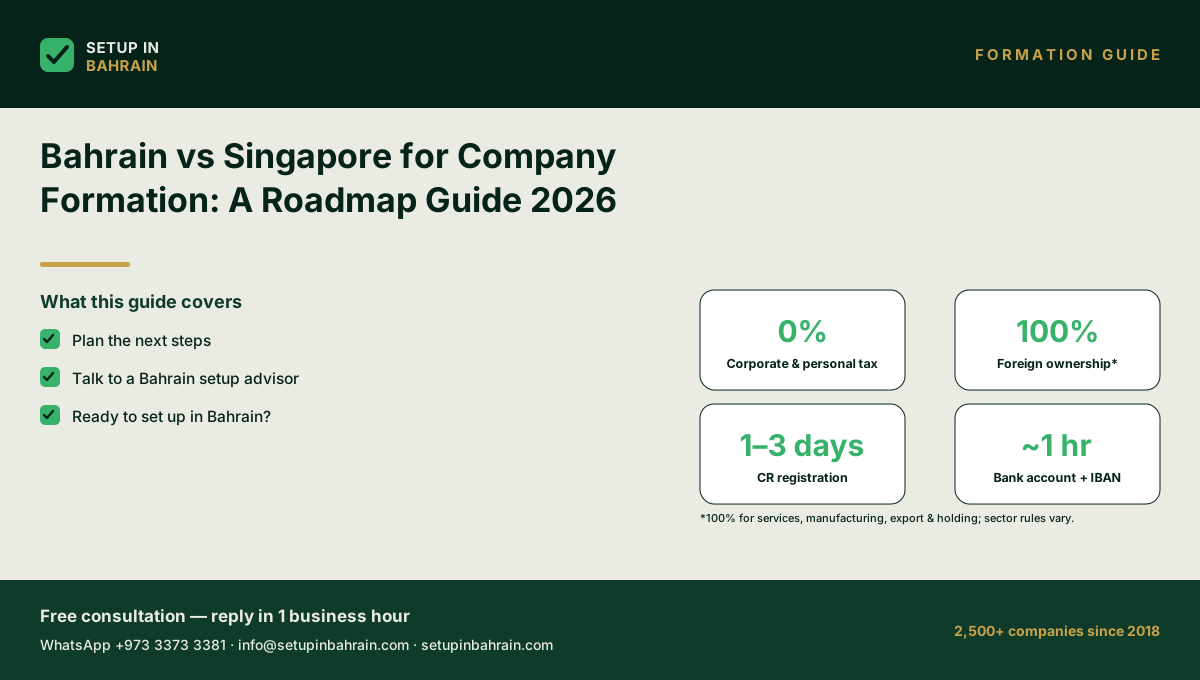
Choosing the right country for business setup is one of the most critical decisions for entrepreneurs and investors. Both Bahrain and Singapore have established themselves as leading global business hubs, offering investor-friendly environments, strategic locations, and strong economic frameworks. However, when comparing Bahrain vs Singapore for company formation, each country presents unique advantages, costs, and regulatory structures that can significantly impact your business success.
In 2026, global entrepreneurs are increasingly evaluating Bahrain vs Singapore for company formation based on factors such as taxation, ownership rules, ease of doing business, and operational costs. Bahrain is known for its cost-effective setup and access to the Gulf market, while Singapore stands out for its global reputation, financial stability, and strong legal system. This guide provides a detailed comparison to help you decide which destination best aligns with your business goals.
For foreign businesses looking to register a company in Bahrain, obtain an investor visa, and open a corporate bank account, this digital logistics boom offers massive potential for growth and regional expansion.
Bahrain vs Singapore for Company Formation: A Roadmap Guide 2026
Table of Contents
- What is Company Formation in Bahrain and Singapore
- Key Benefits
- Eligibility Criteria
- Minimum Investment Requirement
- Comparison: Bahrain vs Singapore
- Required Documents
- Application Process
- Processing Time
- Costs & Fees
- Business Setup Requirements
- Job/Operational Requirements
- Property Ownership Rules
- Taxation
- Common Reasons for Rejection
- Advantages & Future Outlook
- FAQs
- Final Thoughts
1. What is Company Formation in Bahrain and Singapore
Company formation refers to the legal process of registering a business entity in a specific country. When comparing Bahrain vs Singapore for company formation, both countries offer streamlined procedures, digital registration systems, and flexible ownership structures. Bahrain allows 100% foreign ownership in most sectors and provides direct access to the GCC market. Singapore, on the other hand, is recognized globally for its ease of doing business, strong financial ecosystem, and robust legal framework. Understanding Bahrain vs Singapore for company formation helps investors choose the right jurisdiction based on their operational needs.
2. Key Benefits
- 100% foreign ownership in many sectors
- Strategic international business locations
- Strong banking and financial systems
- Business-friendly regulations
- Access to regional and global markets
Both countries excel in providing advantages, but the choice between Bahrain vs Singapore for company formation depends on your target market and budget.
3. Eligibility Criteria
To establish a company in Bahrain or Singapore, you must:
- Be at least 18 years old
- Hold a valid passport
- Define a business activity
- Choose a company structure
- Meet local compliance requirements
These criteria are relatively simple, making Bahrain vs Singapore for company formation accessible for international investors.
4. Minimum Investment Requirement
Investment requirements differ between the two countries.
| Country | Minimum Investment |
|---|---|
| Bahrain | BHD 1,000 – 5,000 |
| Singapore | SGD 1 – 50,000 |
Bahrain is generally more affordable, while Singapore offers flexibility with minimal capital requirements depending on the business type.
5. Comparison: Bahrain vs Singapore
| Feature | Bahrain | Singapore |
|---|---|---|
| Ownership | 100% Foreign | 100% Foreign |
| Setup Cost | Low | Moderate to High |
| Market Access | GCC Market | Global Markets |
| Corporate Tax | 0% (most sectors) | 17% |
| Ease of Business | High | Very High |
This comparison clearly shows the differences in Bahrain vs Singapore for company formation, helping investors make informed decisions.
6. Required Documents
- Passport copies of shareholders
- Passport-size photographs
- Business plan (if required)
- Proof of address
- Memorandum of Association
Accurate documentation is essential when comparing Bahrain vs Singapore for company formation processes.
7. Application Process
- Choose business activity
- Select company structure
- Reserve company name
- Submit application
- Provide required documents
- Pay registration fees
- Obtain business license
The process is efficient in both countries, though Singapore is known for faster digital processing.
8. Processing Time
- Bahrain: 5–10 working days
- Singapore: 1–5 working days
Singapore offers faster processing, which is a key factor in Bahrain vs Singapore for company formation.
9. Costs & Fees
| Expense Type | Bahrain (BHD) | Singapore (SGD) |
|---|---|---|
| Registration Fees | 200 – 500 | 300 – 1,000 |
| License Fees | 300 – 1,000 | 500 – 2,000 |
| Office Space | 1,000+ | 2,000+ |
| Visa Costs | 200 – 800 | 1,000+ |
Bahrain generally offers lower overall costs compared to Singapore.
10. Business Setup Requirements
- Registered office address
- Business license
- Local compliance
- Corporate bank account
Both jurisdictions maintain high standards for compliance and transparency.
11. Job/Operational Requirements
- Hiring employees as per labor laws
- Maintaining accounting records
- Annual renewals and filings
- Compliance with regulations
Singapore has stricter compliance requirements compared to Bahrain.
12. Property Ownership Rules
- Bahrain allows property ownership in designated areas
- Singapore has restrictions for foreign ownership in certain sectors
Understanding these rules is important when comparing Bahrain vs Singapore for company formation.
13. Taxation
- Bahrain: generally no corporate income tax for most sectors (most sectors)
- Singapore: 17% corporate tax with exemptions
- VAT/GST applicable in both countries
Taxation is one of the biggest differentiators in Bahrain vs Singapore for company formation.
14. Common Reasons for Rejection
- Incomplete documentation
- Incorrect business activity
- Non-compliance with regulations
- Financial inconsistencies
Avoiding these issues ensures a smooth registration process.
15. Advantages & Future Outlook
Bahrain is rapidly growing as a cost-effective business hub in the Middle East, supported by government initiatives and digital transformation. Singapore continues to dominate as a global financial center with strong innovation and investor confidence. The decision between Bahrain vs Singapore for company formation in 2026 depends on your business goals. Bahrain is ideal for regional expansion with lower costs, while Singapore is perfect for global operations and financial services.
16. FAQs
- Which is cheaper, Bahrain or Singapore?
Bahrain is generally more affordable. - Which country is better for global business?
Singapore offers better global access. - Can foreigners own 100% of a company?
Yes, in both countries. - Which has lower taxes?
Bahrain has lower taxes. - How long does company formation take?
1–10 days depending on country. - Is Singapore better for startups?
Yes, especially tech startups. - Is Bahrain good for GCC market access?
Yes, it provides direct access. - Are compliance requirements strict?
More strict in Singapore. - Can I open a bank account easily?
Yes, in both countries. - Is office space mandatory?
Yes, in most cases. - Which country has better infrastructure?
Singapore has more advanced infrastructure. - Are there hidden costs?
Yes, depending on business type. - Can I expand internationally from Bahrain?
Yes, especially within GCC. - Is taxation complex in Singapore?
Moderate but well-structured. - Which is better overall?
Depends on business goals and budget.
17. Final Thoughts
When comparing Bahrain vs Singapore for company formation, there is no one-size-fits-all answer. Both countries offer excellent opportunities but cater to different types of businesses. Bahrain stands out for affordability and regional access, while Singapore excels in global reach, financial services, and innovation. Carefully evaluating your business objectives, budget, and target market will help you choose the right destination. Whether you prioritize cost efficiency or global expansion, understanding Bahrain vs Singapore for company formation is key to making a successful investment decision in 2026.
Ready to set up in Bahrain?
Tell us your business idea. We'll map the right entity, ownership and timeline — then handle the filing while you build.
Official Bahrain government references
- Sijilat — MOICT commercial registration portalsijilat.bh
- Ministry of Industry, Commerce & Tourismmoic.gov.bh
- Ministry of Justice (notary)moj.gov.bh