
Compare the investor Visa vs Self-Employed Visa in Bahrain in 2026. Learn key differences, eligibility, benefits, costs, and which option is best for
View details
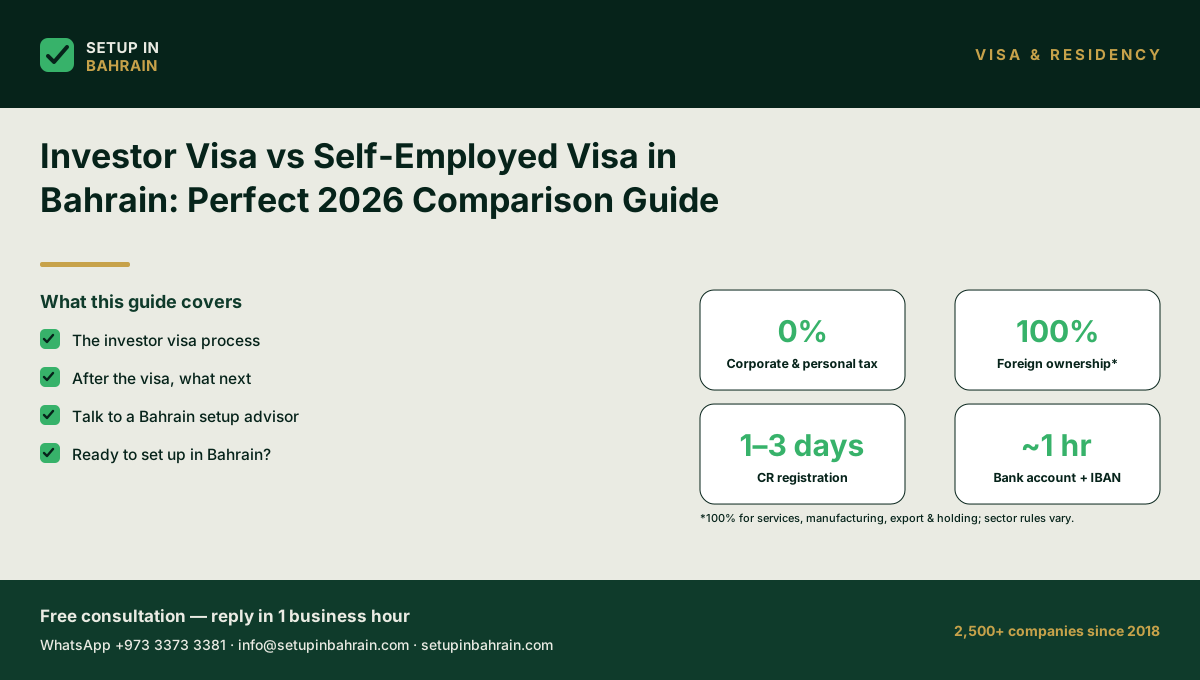
Bahrain offers multiple residency options for foreign entrepreneurs and professionals, with the Investor Visa vs Self-Employed visa (Self-Sponsored) Visa being the most popular choices. While both allow foreign nationals to live and work in Bahrain without a traditional employer, they differ significantly in structure, requirements, and long-term benefits. In this comprehensive 2026 guide, we’ll break down the key differences between investor visa vs self-employed visa in Bahrain, helping you choose the right option based on your goals, budget, and business model.
When comparing an Investor Visa vs Self-Employed Visa, it’s important to understand how each option aligns with your business goals and financial capacity. An Investor Visa vs Self-Employed Visa differs mainly in scale an Investor Visa is ideal for individuals planning to invest significant capital into a company or multiple ventures, while a Self-Employed Visa suits professionals who want to independently offer services or run a small business. Choosing between an Investor Visa vs Self-Employed Visa depends on factors like investment size, risk tolerance, and long-term expansion plans, making it essential to evaluate which structure best supports your growth in a competitive market like Bahrain
For foreign businesses looking to register a company in Bahrain, obtain an investor visa, and open a corporate bank account, this digital logistics boom offers significant growth and regional expansion potential.
Investor Visa vs Self-Employed Visa in Bahrain: Complete 2026 Comparison Guide
Table of Contents
- Introduction to Visa Options in Bahrain
- What is an Investor Visa in Bahrain?
- What is a Self-Employed Visa in Bahrain?
- Key Differences Between Investor and Self-Employed Visas
- Eligibility Criteria Comparison
- Investment and Financial Requirements
- Business Ownership and Activities
- Costs and Fees Comparison
- Benefits of Investor Visa
- Benefits of Self-Employed Visa
- Limitations of Each Visa Type
- Which Visa is Better for You?
- Common Mistakes to Avoid
- Expert Tips for Choosing the Right Visa
- Frequently Asked Questions (FAQs)
1. Introduction to Visa Options in Bahrain
Bahrain has become a top destination for entrepreneurs due to its:
- 100% foreign ownership in most sectors
- Low business setup costs
- Flexible visa options
- Digital registration systems
Two key visa pathways dominate the landscape:
- Investor Visa (business ownership-based)
- Self-Employed Visa (income or financial capability-based)
2. What is an Investor Visa in Bahrain?
The Investor Visa is a residency permit granted to foreign nationals who own or hold shares in a Bahrain-registered company.
Key Characteristics:
- Linked to a Commercial Registration (CR)
- Requires business ownership
- Issued through LMRA
- Renewable every 1–2 years
- Allows full business operations
The visa is directly tied to your company; your residency depends on maintaining an active business.
3. What is a Self-Employed Visa in Bahrain?
The Self-Employed Visa (often called a self-sponsored residency permit) is designed for individuals who want to live in Bahrain without setting up a full business.
- No employer sponsorship required
- No mandatory company ownership
- Based on financial capability or income
- Flexible residency option
- Limited business activity rights
This visa is ideal for freelancers, consultants, or individuals with passive income.
4. Key Differences Between Investor and Self-Employed Visas
Comparison Table
Feature | Investor Visa | Self-Employed Visa |
Business Requirement | Mandatory | Not required |
Residency Basis | Company ownership | Financial capability |
Income Source | Business revenue | Personal income/savings |
Setup Complexity | Medium–High | Low |
Control Over Business | Full | Limited |
Renewal Dependency | Active business | Financial stability |
5. Eligibility Criteria Comparison
Investor Visa Requirements:
- Ownership in a Bahrain company
- Active Commercial Registration (CR)
- Business activity proof
- Compliance with LMRA
Self-Employed Visa Requirements:
- Proof of financial stability (income or deposit)
- Clean legal record
- Valid passport
- Medical clearance
Investor visas are more business-focused, while self-employed visas are income-based.
6. Investment and Financial Requirements
Investor Visa:
- No strict minimum investment in many cases
- Capital depends on the business type
- Requires operational expenses
Self-Employed Visa:
- Bank deposit or steady income required
- Example: Fixed deposit or monthly income proof
Financial Comparison
Requirement Type | Investor Visa | Self-Employed Visa |
Capital Investment | Business-based | Not required |
Financial Proof | Optional | Mandatory |
Risk Level | Medium | Low |
7. Business Ownership and Activities
- Full business ownership allowed
- Can hire employees
- Can expand operations
- Access to corporate banking
- Limited business scope
- Cannot operate large-scale business
- Suitable for freelancers or consultants
8. Costs and Fees Comparison
Estimated Costs
Cost Component | Investor Visa (BHD) | Self-Employed Visa (BHD) |
Visa Fees | 195 – 390 | 150 – 300 |
Business Setup | 100 – 1000+ | Not required |
Monthly Fees | Applicable | Minimal |
Total Cost | Higher | Lower |
Investor visas involve higher costs due to business setup.
9. Benefits of Investor Visa
Key Advantages:
- Full business ownership
- Self-sponsorship (no employer)
- Ability to hire staff
- Family sponsorship
- Long-term growth potential
- Access to Bahrain’s tax-free economy
This visa is ideal for entrepreneurs and business owners.
10. Benefits of Self-Employed Visa
- Simple and fast application
- No business setup required
- Lower cost
- Flexible lifestyle
- Ideal for freelancers
This visa is best for individuals who do not plan to run a full company.
11. Limitations of Each Visa Type
Investor Visa Limitations:
- Requires active business
- Ongoing compliance obligations
- Higher costs
- Business risk involved
Self-Employed Visa Limitations:
- Limited business activities
- No large-scale operations
- Income proof required
- Less credibility for business expansion
12. Which Visa is Better for You?
Choose Investor Visa If:
- You want to start or own a business
- You plan to hire employees
- You want long-term growth
- You need full operational control
Choose Self-Employed Visa If:
- You are a freelancer or consultant
- You have stable income or savings
- You want a low-cost residency option
- You don’t need a full business structure
13. Common Mistakes to Avoid
- Choosing investor visa without business plan
- Underestimating business costs
- Not meeting financial requirements
- Ignoring compliance obligations
- Confusing visa types
Selecting the wrong visa can lead to unnecessary expenses.
14. Expert Tips for Choosing the Right Visa
Best Practices:
- Define your long-term goals
- Assess your financial capacity
- Evaluate business plans
- Consider scalability
- Seek professional advice
Your visa should align with your business strategy.
15. Frequently Asked Questions (FAQs)
Q1: Can I switch from self-employed to investor visa?
Yes, by setting up a company.
Q2: Is investor visa better than self-employed visa?
It depends on your business goals.
Q3: Do both visas allow family sponsorship?
Investor visa does; self-employed may have limitations.
Q4: Which visa is cheaper?
Self-employed visa is more affordable.
Q5: Do I need a local sponsor?
No, both options allow self-sponsorship.
Q6: Can I hire employees with self-employed visa?
No, only investor visa allows this.
Q7: How long does approval take?
Typically 5–15 days for investor visa.
Q8: Which visa is best for startups?
Investor visa is the best option.
Final Thoughts
Both the Investor Visa and Self-Employed Visa in Bahrain offer excellent opportunities for foreign nationals—but they serve different purposes.
- The Investor Visa is ideal for entrepreneurs looking to build and scale a business.
- The Self-Employed Visa is better suited for freelancers and individuals seeking flexible residency without business commitments.
In 2026, Bahrain continues to offer one of the most flexible immigration systems in the region. By understanding the differences between these two visa types, you can make an informed decision that aligns with your financial goals, lifestyle, and long-term business plans. Choosing the right visa is not just about residency; it’s about setting the foundation for your success in Bahrain.
The investor visa process
Four steps. The visit to Bahrain is reserved for three days, although most clients finish in two — we hold the third day as a buffer.
- 1
LMRA registration
Register your company as an employer with the Labour Market Regulatory Authority. This unlocks the investor and work permit pipeline.
- 2
Visa application
Submit the investor visa application through NPRA channels with your CR, MOA and partner documents.
- 3
Visa payment and printing
Government fees are settled and the visa is issued and printed. You're cleared to travel to Bahrain.
- 4
3-day visit to Bahrain
You fly in for the final formalities. We schedule everything back-to-back across three days:
Day 1BiometricsFingerprints and photo at the immigration centre.
Day 2MedicalStandard medical examination at an approved clinic.
Day 3CPR + bankingPick up your Bahrain ID card (CPR), activate the corporate bank account, set up online banking, and open personal or additional bank accounts.
Day 3 is held in reserve. Two days is enough for most clients — the third is your buffer.
This is an educational page — for current government visa fees, see Cost of investor visa in Bahrain.
Processing time: 10–15 days for investors · 10–15 days for workers inside Bahrain · 30–35 days for workers outside Bahrain (21-day newspaper advertisement required) · 5–10 days for dependents.
Ready to set up in Bahrain?
Tell us your business idea. We'll map the right entity, ownership and timeline — then handle the filing while you build.