
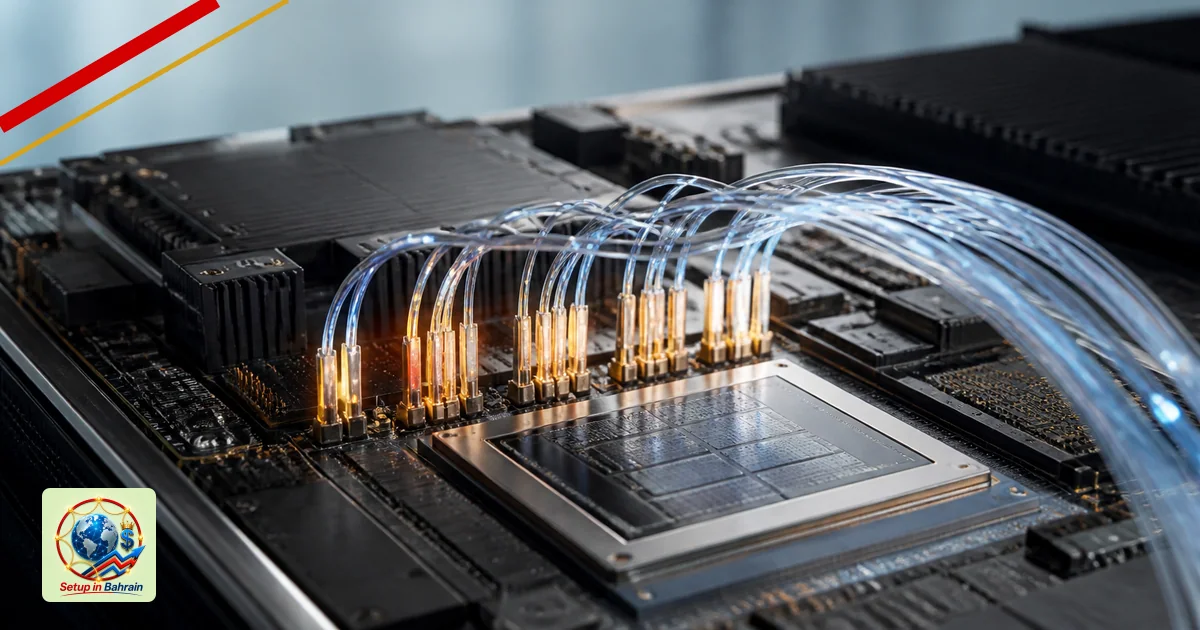
Huawei unveils Ascend 960 SuperPoD: first AI system using near-packaged optics
Huawei announced a new AI computing system, the Atlas 960E SuperPoD, built on near-packaged optics (NPO), at its Connect 2026 event in Shanghai. The company says the Ascend 960 chip is ahead of schedule and positions this system as part of its AI infrastructure strategy aimed at very large models and long-duration AI tasks.
What changed with Atlas 960E SuperPoD
The Atlas 960E SuperPoD is described as the first AI system in the industry built on near-packaged optics (NPO). This technology is a way of arranging optical components close to chips to boost data speeds and reduce energy use. Huawei also markets the Ascend 960 chip as advancing more quickly than expected. The company framed the announcements as part of its broader AI infrastructure strategy, intended to support very large AI models and long-running AI tasks.
Key facts to understand
- Near-packaged optics (NPO) refers to putting optical parts very close to processing chips to speed up data transfer and lower energy use.
- The Atlas 960E SuperPoD is billed as an AI computing system built on this NPO approach.
- Ascend 960 is the chip powering the system, claimed by Huawei to be ahead of its planned schedule.
- Huawei presented these as part of a broader AI infrastructure push, not a consumer product line announcement.
Who could be affected
Researchers and developers working with very large AI models and long-running AI tasks may be affected if Huawei’s new system scales as described. Data center operators and AI infrastructure teams could see implications for hardware choices and energy efficiency, depending on how soon and broadly the technology becomes available in the market.
Practical next steps
If you’re monitoring AI infrastructure trends, track Huawei’s demonstrations and any third-party assessments of NPO-based systems. Seek independent performance benchmarks and any details about availability, compatibility, and pricing before considering deployment in real workloads. Stay alert for follow-up disclosures from Huawei about real-world deployments or pilot programs.
Limits and questions to watch
Unclear details remain about real-world performance, power, cost, and integration with existing data-center stacks. The source presents Huawei’s claims without independent corroboration. Questions to ask include: How does NPO compare to other optical interconnect approaches in practice? What are the latency, throughput, and cooling implications in typical data-center environments? When will products be publicly available, and under what terms?
Which sources did Setup in Bahrain review?
Setup in Bahrain reviewed the following source material before preparing this explanatory article.
The links remain visible so readers can inspect the evidence, compare dates and context, and confirm current requirements with the relevant authority.
- saudishopper.com.sa — evidence source reviewed for this article.
Information and responsibility notice: This article is general information based on the cited material available when published. It is not legal, tax, immigration, medical, financial, banking, or investment advice; it does not create a professional-client relationship; and it is not a guarantee of outcome, availability, accuracy, or eligibility. Rules, schedules, prices, and third-party information can change. Confirm material decisions with the relevant authority and an appropriately qualified adviser before acting.