
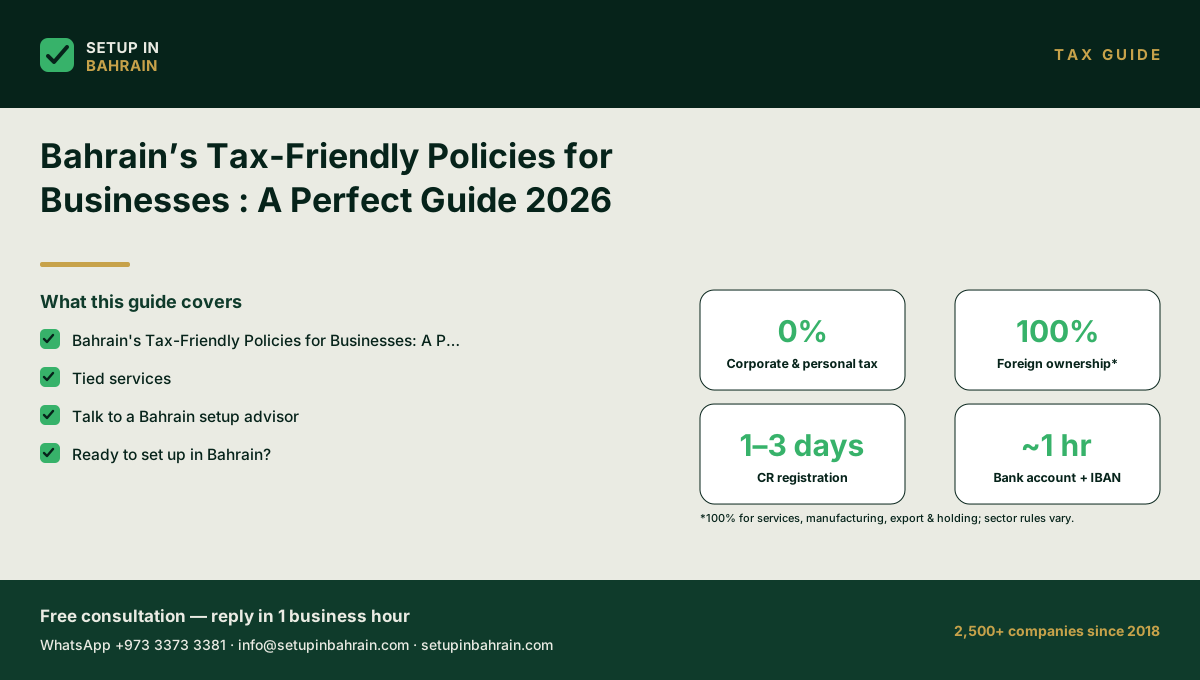
Bahrain’s tax-friendly policies for Businesses in 2026 are a major advantage for entrepreneurs, investors, and companies looking to establish a strong presence in the GCC. With zero corporate income tax and a simplified regulatory framework, Bahrain offers one of the most attractive business environments in the region. Understanding these policies is critical for maximizing profitability, staying compliant, and leveraging government incentives effectively.
In 2026, Bahrain continues to strengthen its position as a tax-friendly hub, providing businesses with financial stability, low operational costs, and a transparent system for taxation. This guide covers key tax policies, compliance requirements, and strategies for companies to benefit from Bahrain’s favorable fiscal environment.
For foreign businesses looking to register a company in Bahrain, obtain an investor visa, and open a corporate bank account, this digital logistics boom offers massive potential for growth and regional expansion.
Bahrain's Tax-Friendly Policies for Businesses: A Perfect Guide 2026
Table of Contents
- Overview of Tax-Friendly Policies
- Corporate Income Tax-Friendly Policies
- Value-Added Tax (VAT) Regulations
- Social Insurance Contributions
- Customs Duties and Import Regulations
- Tax Incentives for Foreign Investors
- Free Zone Benefits and Tax Exemptions
- Tax Compliance Requirements
- Government Support Programs
- Future Outlook of Tax-Friendly Policies in Bahrain
- FAQs
1. Overview of Tax-Friendly Policies
- Zero Corporate Income Tax: Bahrain imposes no corporate income tax on most businesses, except oil companies and certain natural resource operations.
- No Personal Income Tax: Salaries, wages, and professional income are not taxed.
- VAT Introduction: A 10% Value-Added Tax (VAT) applies to goods and services.
- Simplified Filing: Bahrain offers straightforward tax filing processes that reduce administrative burdens for businesses.
Pro Tip: Take advantage of Bahrain’s low-tax environment to reinvest profits and expand operations across the region.
2. Corporate Income Tax-Friendly Policies
Type of Business | Tax Rate in 2026 | Notes |
Most Businesses | 0% | No corporate tax on profits |
Oil and Hydrocarbon Sector | 46% | Applied to profits from natural resources |
Special Sectors | Case-specific | Subject to agreements with EDB |
Bahrain’s zero corporate tax policy attracts startups and foreign investors, making it ideal for SMEs and multinational corporations.
3. Value-Added Tax (VAT) Regulations
- Standard VAT rate: 10% on most goods and services.
- Exemptions: Certain healthcare, education, and financial services.
- Filing Frequency: Monthly or quarterly depending on revenue.
- Compliance: Businesses must register with the National Bureau for Revenue (NBR) and maintain accurate VAT records.
Tip: Use digital accounting software to simplify VAT calculation and reporting, reducing errors and fines.
4. Social Insurance Contributions
- Employer Contribution: 12.5% of Bahraini employees’ monthly wages.
- Employee Contribution: 7% deducted from wages.
- Coverage: Social insurance covers pensions, healthcare, and end-of-service benefits.
Social insurance is the main statutory deduction for businesses, ensuring employee benefits without heavy taxation on profits.
5. Customs Duties and Import Regulations
Item Category | Customs Duty Rate | Notes |
General Goods | 5% | Standard rate on most imports |
Luxury Items | 10–20% | Higher rates for cars, electronics, luxury goods |
Free Zone Imports | 0% | Duty exemptions in designated free zones |
Customs duties are limited, further supporting Bahrain’s low-cost business environment.
6. Tax Incentives for Foreign Investors
- 100% Foreign Ownership: Allowed in most sectors, no need for local sponsors.
- Profit Repatriation: Investors can repatriate profits without additional tax.
- No Capital Gains Tax: Gains from sale of shares or assets are tax-free.
- R&D Incentives: Government programs encourage innovation and offer grants for startups.
These incentives make Bahrain highly attractive for global investors seeking low-tax jurisdictions.
7. Free Zone Benefits and Tax Exemptions
Free Zone Name | Benefits | Duration |
Bahrain International Investment Park | 100% tax exemption | 20–50 years |
Bahrain Logistics Zone | Customs and VAT exemptions | Duration of lease |
Bahrain Financial Harbour | Incentives for fintech and banking startups | Negotiable |
Free zones are ideal for export-oriented businesses seeking long-term tax advantages.
8. Tax Compliance Requirements
- VAT Registration: Mandatory for businesses exceeding threshold revenue.
- Record-Keeping: Maintain financial statements, invoices, and receipts.
- Regular Filing: Submit VAT returns and social insurance contributions on time.
- Audit Preparation: Be ready for periodic audits from the National Bureau for Revenue.
- Hire a professional accountant familiar with Bahraini tax regulations.
- Implement digital accounting tools.
- Review and reconcile accounts monthly.
9. Government Support Programs
Program Name | Type of Support | Target Beneficiaries |
Grants, subsidies, and training programs | Startups and SMEs | |
Mentorship, networking, and funding | Entrepreneurs and innovators | |
Market entry support, incentives | Foreign investors |
Leveraging these programs helps reduce operational costs and accelerates growth.
10. Future Outlook of Tax-Friendly Policies in Bahrain
- Bahrain plans to maintain a zero corporate tax policy for non-oil sectors.
- Digitalization of tax services will simplify compliance.
- Potential VAT adjustments may occur but remain moderate.
- Continued incentives for startups, SMEs, and foreign investors.
Pro Tip: Monitor updates from the National Bureau for Revenue and EDB to stay informed about policy changes.